Falcon 9 first stage recovery fails on Flight 1
“The stage hit the water hard -- parachute deployment was not observed and a debris field was reported.”
Read the reportA room in the archive
“This Grasshopper is a software testing rig, for tuning the flight control algorithms. It will begin with simple hops across the landscape.”
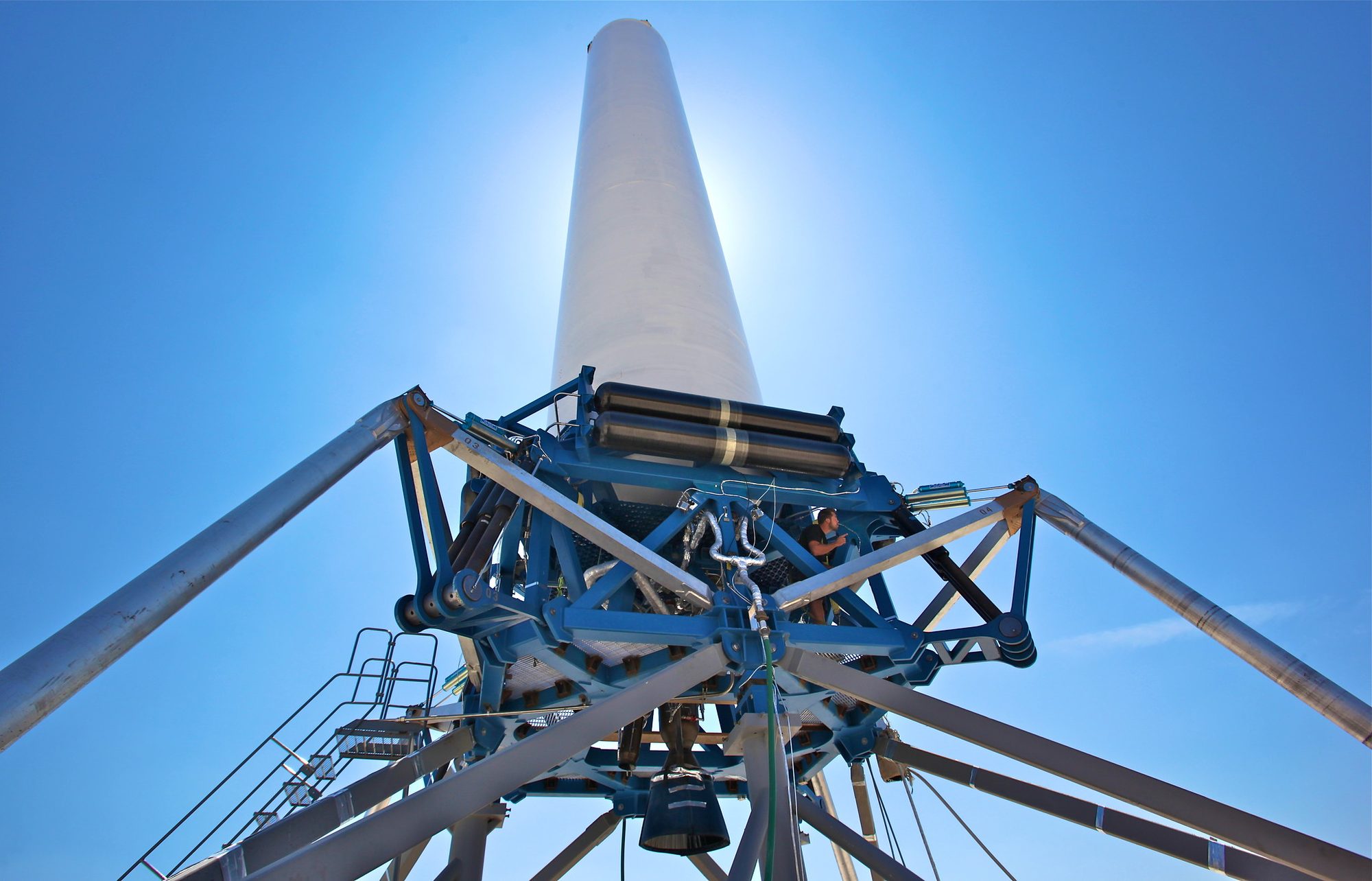
In 2012 and 2013, SpaceX flew a ten-story rocket stage eight times in a field in Texas. It went up, hovered and came back down. The point was not the rocket. It was the software that landed it.
Before the hops · 2010
Musk wanted the first stage back from the start. The first plan was a parachute.
“The stage hit the water hard -- parachute deployment was not observed and a debris field was reported.”
Read the reportFalcon 9’s first stage was built to come down under a parachute. On the first two flights it broke up instead. A stage falling from the edge of space at many times the speed of sound does not survive a parachute.
On Flight 2, in December 2010, Abhi Tripathi watched from Musk’s jet. “And then he saw it—a fireball streaking across the sky. … About five minutes later the satellite phone in the seat next to Tripathi began to ring. It was Musk calling. ‘Did you have eyes on it?’ Musk asked. … ‘Shit,’ Musk replied. ‘Okay, thank you.’ He hung up.”
Berger, Reentry, ch. 7, pp. 162–63Before the hops · 2011
So the stage would fly itself back down, on its own engine, and land on legs.
Musk called a weekend meeting in 2011. They chose a landing under the rocket’s own power. They had doubts: could an engine fire close to the ground, and could the altitude sensor read through the dust? “They needed some kind of a testbed.” Musk asked Chris Hansen, who led structures testing, to make one. “My team and I had responsibility for building a variety of test stands, so he asked me to go and build a flying test stand,” Hansen said.
Berger, Reentry, ch. 7, pp. 163–64Landing a rocket on its own engine had never been done with anything this big. SpaceX had a design that worked in simulation. Musk wanted to know whether it worked in the world. That needed a rocket built only to test the landing.
“And we look at him and go, you’re crazy. There’s no way this can happen.”

“we have a design that on paper, doing the calculations, doing the simulations, it does work. And now we need to make sure that those simulations and reality agree. Cuz generally when they don’t, reality wins.”
Repeated words (“we we”, “when when”) and “uh” are taken out of the spoken quotes.
Five weeks later, on November 4, the FAA found that Grasshopper’s flights at McGregor would have no significant impact. Read the record.
Outside, at the time
The FAA’s assessment planned the flights in three phases, from 240 feet up to 11,500 feet, daytime only. In practice the permit held McGregor to 2,500 feet.
Before the hops
A Falcon 9 stage coming back nearly empty cannot slow to a hover and feel its way down. Its engine is too strong for its weight.
“For large rocket engines, throttling down to a hover is technically challenging and inefficient—every second spent hovering is wasted propellant. … For F9R, the rocket has to hit zero velocity at exactly zero altitude. If it reaches zero velocity too low, it will crash; if it reaches zero too high, it will start going back up, at which point cutting the engines and falling is the only option.”
On the reusable Falcon 9.
A returning Falcon 9 stage would be too light to hover on its engine. Its computer would have to time the landing exactly, and work out its path in a fraction of a second. Grasshopper was built to test that software against the real world.
“This started out as mainly a GNC problem, but the scope quickly expanded once we realised we needed to make significant hardware changes to the rocket in order to make it land.”
Musk hired Blackmore from NASA’s Jet Propulsion Laboratory in 2011. At JPL he had co-invented G-FOLD, an algorithm to land a spacecraft on Mars with the least propellant.
Berger, Reentry, ch. 7, p. 167“… a very big team that started very small. I think at times I was the only person working at 100% on landing.”
JPL’s G-FOLD and SpaceX’s landing code share people and a kind of math, convex optimization. Blackmore says SpaceX used “different theoretical results” (IEEE Control Systems Magazine, 2016). No source says G-FOLD itself flew on Grasshopper.
Before the hops · 2011 to 2012
Hansen’s team built it from what they had at McGregor.
“They scrounged up parts in McGregor, using the old Falcon 1.0 first stage qualification tank and a Merlin engine that had undergone a spate of development tests. The avionics components were actually pulled out of the mothballed C1 Dragon spacecraft hanging in Hawthorne. The resulting clunky, kludged-together vehicle stood about 100 feet tall.”
Berger, Reentry, ch. 7, p. 164. Berger’s “Falcon 1.0” is Falcon 9 version 1.0; the record says “a Falcon 9 first stage”.Grasshopper was a used Falcon 9 tank, one Merlin 1D engine, four steel legs and a steel frame. Parts of its avionics came from an old Dragon capsule. Its flight software director said most of the company thought it a waste of time. It flew in September 2012.
Doug Bernauer did the avionics; Shana Diez, a propulsion engineer, did the plumbing. Musk wanted it flying in six months. It took a year.
Berger, Reentry, ch. 7, pp. 164–65“A bit sketchy in the beginning when we decided to use a piece of hardware that had been laying out there in Texas for so long.”
Dragon flies over the SpaceX #GrasshopperProject at our central Texas test site. It will jump soon.
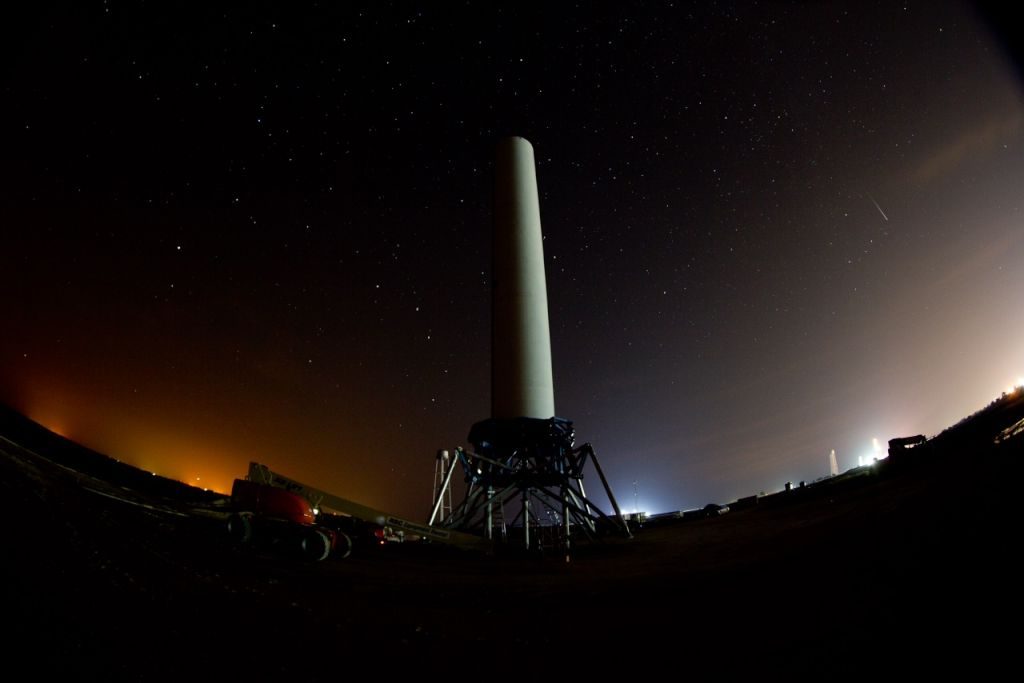
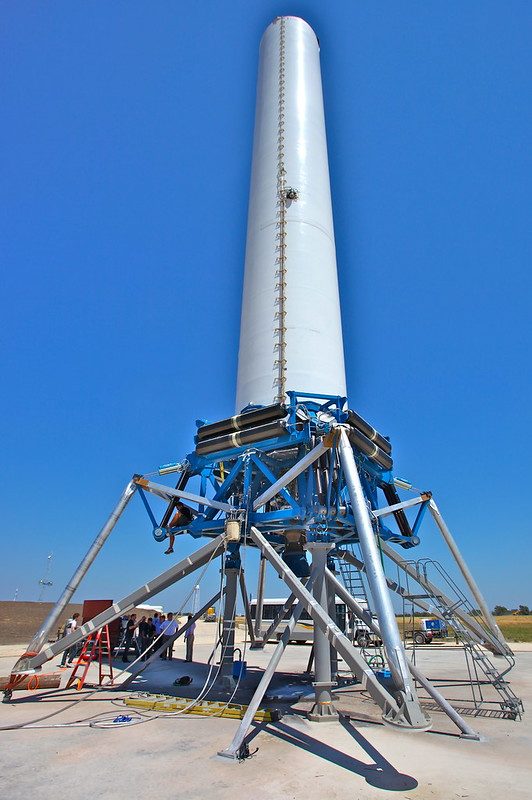
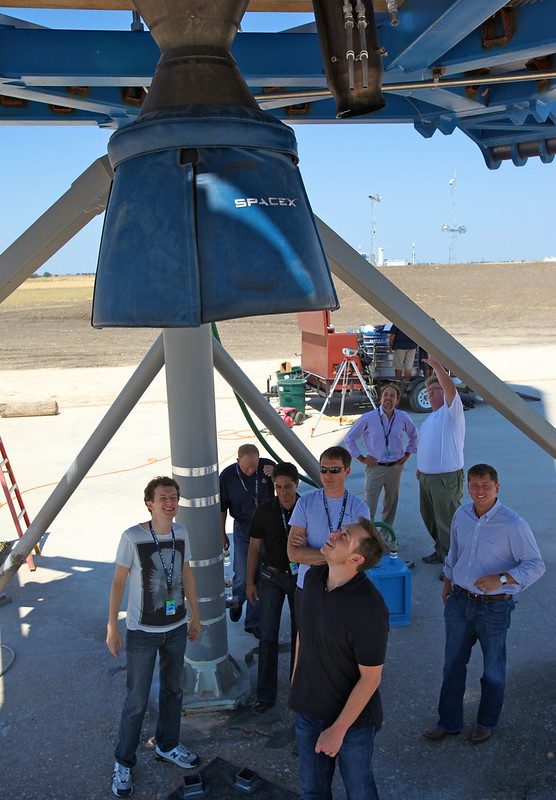
“Nobody within SpaceX, except for Elon and a few other people, thought Grasshopper was a good idea,” said Robert Rose, the director of flight software. “People treated it like this giant waste of time.”
Berger, Reentry, ch. 7, p. 165Hop 1
1.8 m6 ft · less than 3 seconds · September 21, 2012
Eight hops, September 2012 to October 2013. Each one added one thing.
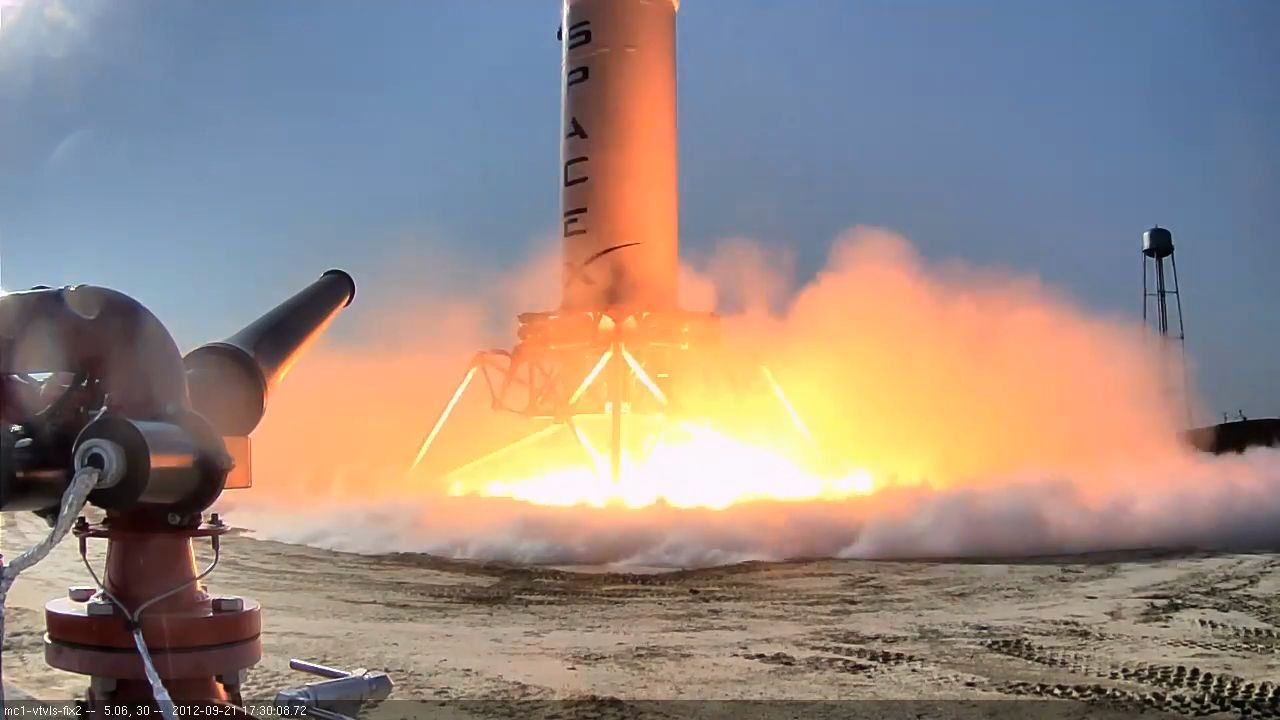
The first hop was barely a hop. The stage rose about six feet, held for a moment and came down on its legs. It showed that the rig could fly, and land again.
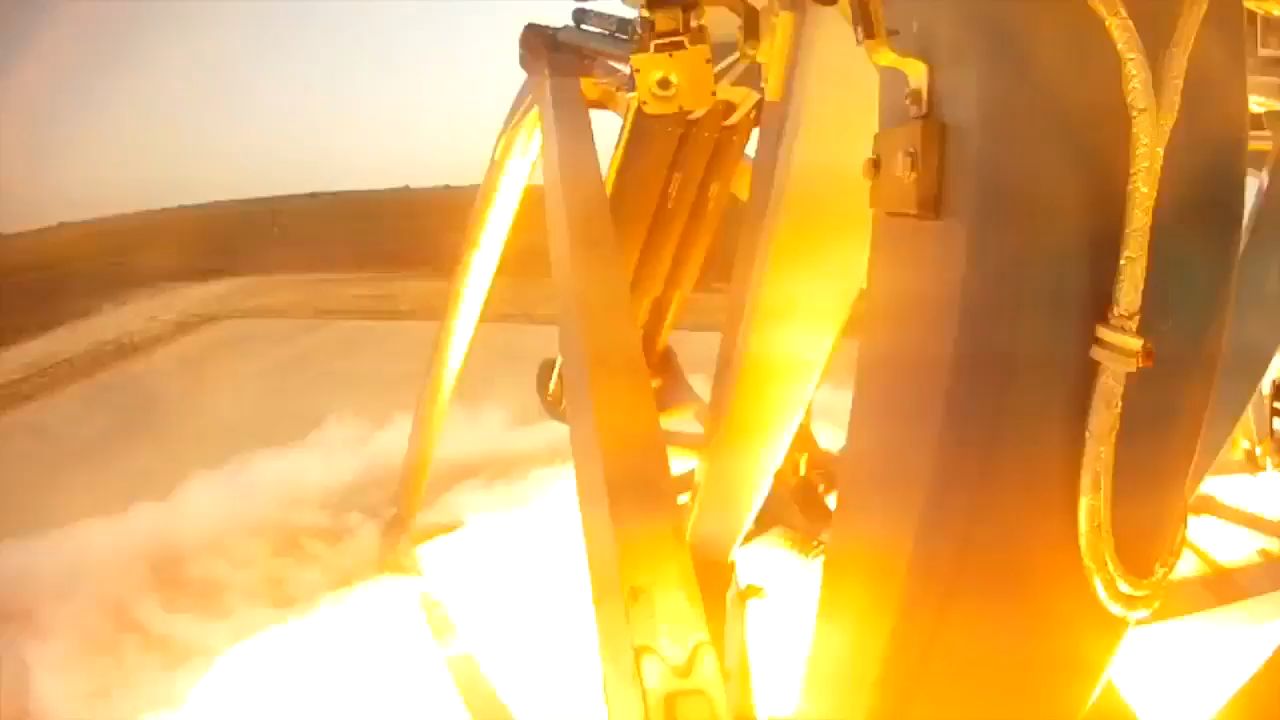
“The short hop of approximately 6 feet is the first major milestone for Grasshopper, and a critical step toward a reusable first stage for SpaceX’s proven Falcon 9 rocket. … Testing of Grasshopper continues, with the next big milestone — a hover at roughly 100 feet — expected in the next several months.”
Read the updateSpaceX said 1.8 m (6 ft) in 2012 and 2.5 m in 2013. The room uses the figure from the time.
The early tests were “crowd pleasers back in Hawthorne.” Staff watched on a projector on the third floor. Two avionics engineers, Edwin Chiu on violin and Bryan White on guitar, sang Johnny Cash’s “Ring of Fire” as the rig rose and fell.
Berger, Reentry, ch. 7, p. 166Not everyone was cheering it on. “During the early flights in the fall of 2012, some SpaceXers murmured and cheered when it looked as though Grasshopper might crash. There was some hope that, if the vehicle proved a disaster, they would not have to work on the project any longer.”
Berger, Reentry, ch. 7, p. 166Hop 2
5.4 m17.7 ft · 8 seconds · November 1, 2012
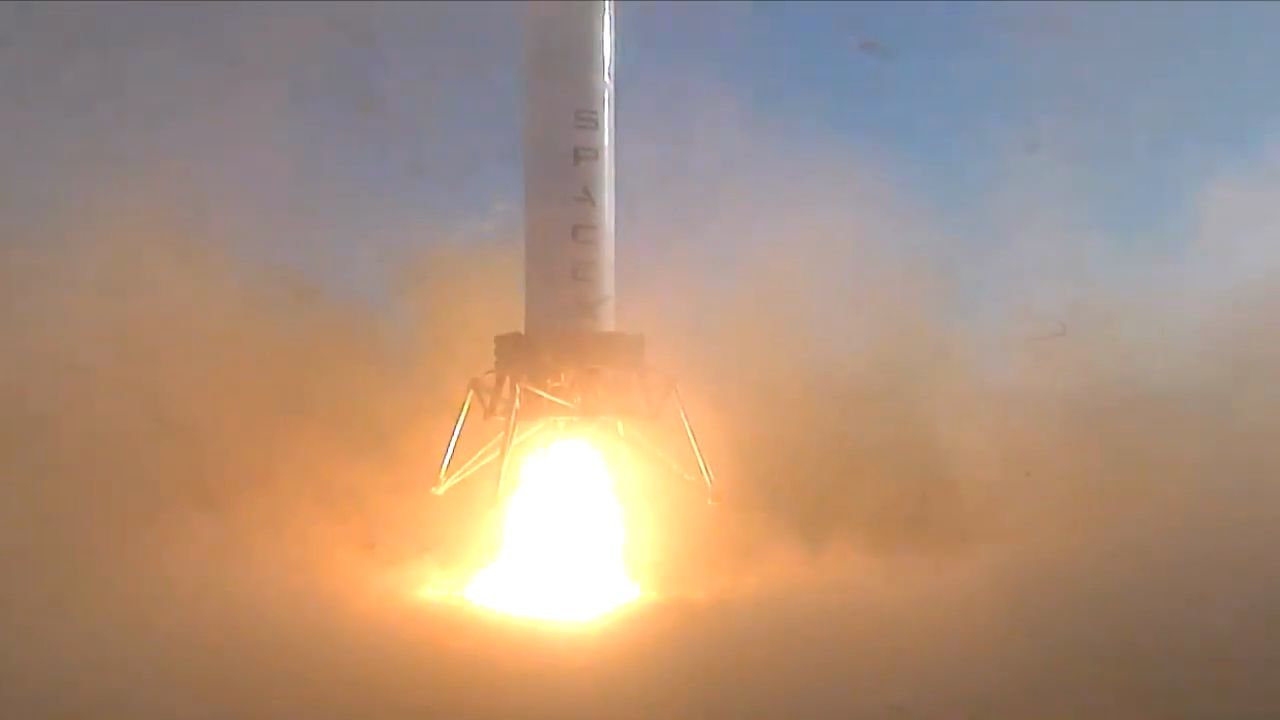
On the second hop the rig rose two stories and hovered. The computer held it there, steering the engine and setting its thrust. Musk named the method: go a little higher each time, and fix what wobbles before it crashes.
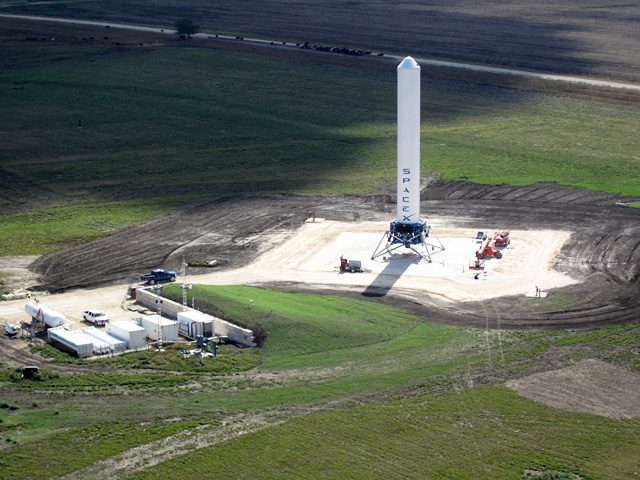
“SpaceX’s Grasshopper — a 10-story vertical takeoff and landing (VTVL) vehicle — lifted nearly two stories in an 8-second duration test hop. The rocket rose 17.7 feet (5.4 meters), hovered, and touched back down safely on the pad”
Read the update“First flight of 10 story tall Grasshopper rocket using closed loop thrust vector & throttle control”
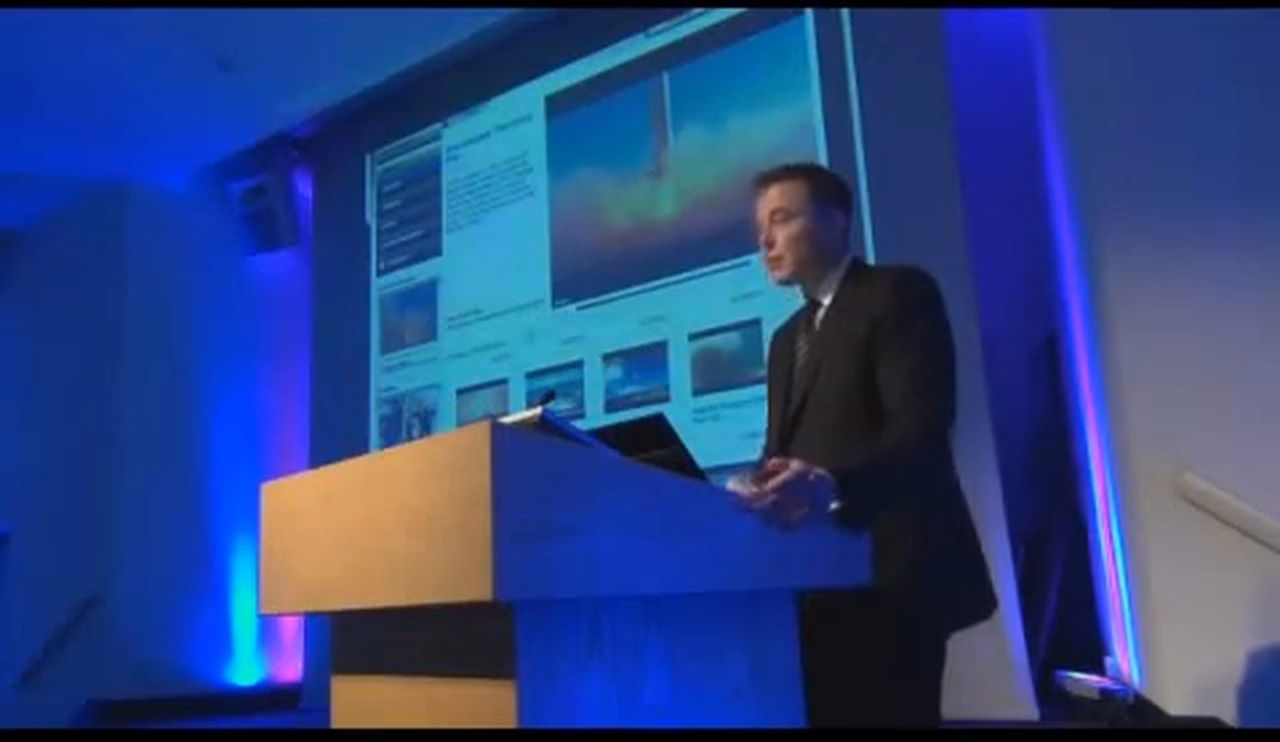
“In coming months we’ll be increasing the envelope, which is just the sort of thing you do with aircraft, where you have envelope expansion - you gradually increase the altitude and speed and as you see things getting a little wobbly, then you take corrective action - ideally before there’s a crater - and you can iterate to a successful outcome.”
Hop 3
40 m131 ft · 29 seconds · December 17, 2012
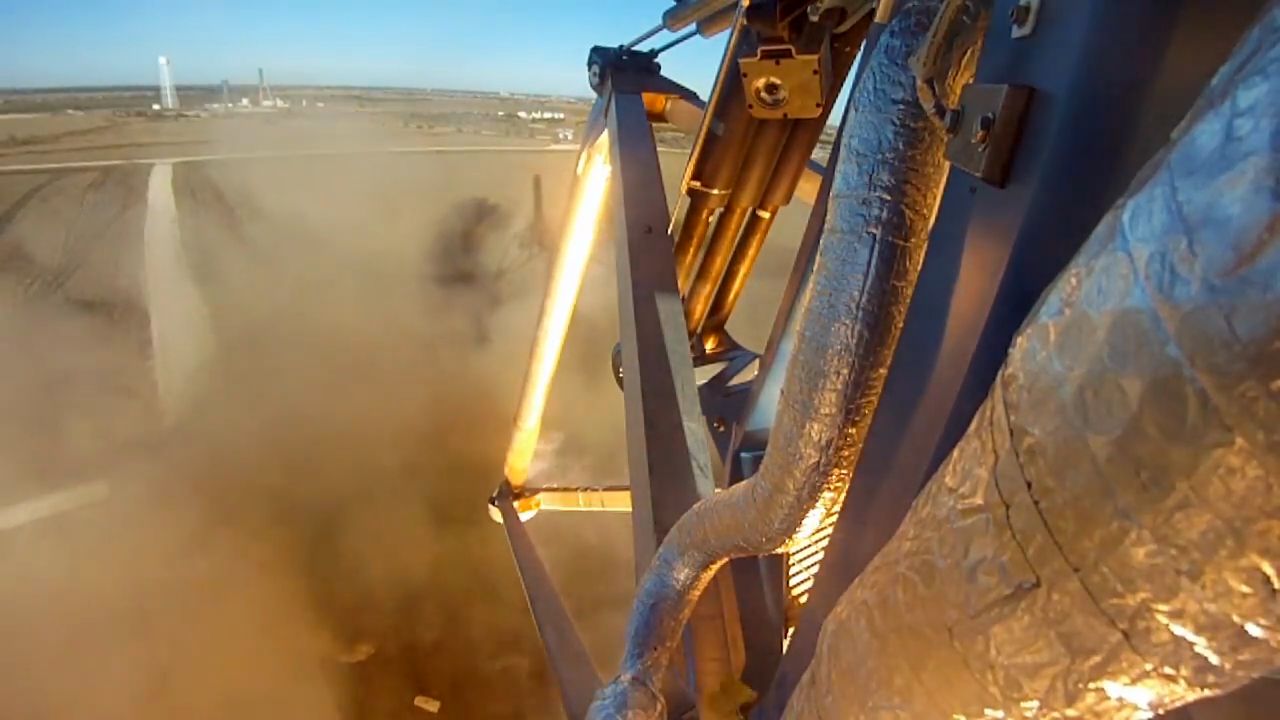
The third hop climbed higher than the rig was tall and hovered there. A six-foot cowboy dummy, bolted to the side, gave the scale. The computer steered the engine on two axes and held the roll with puffs of gas.
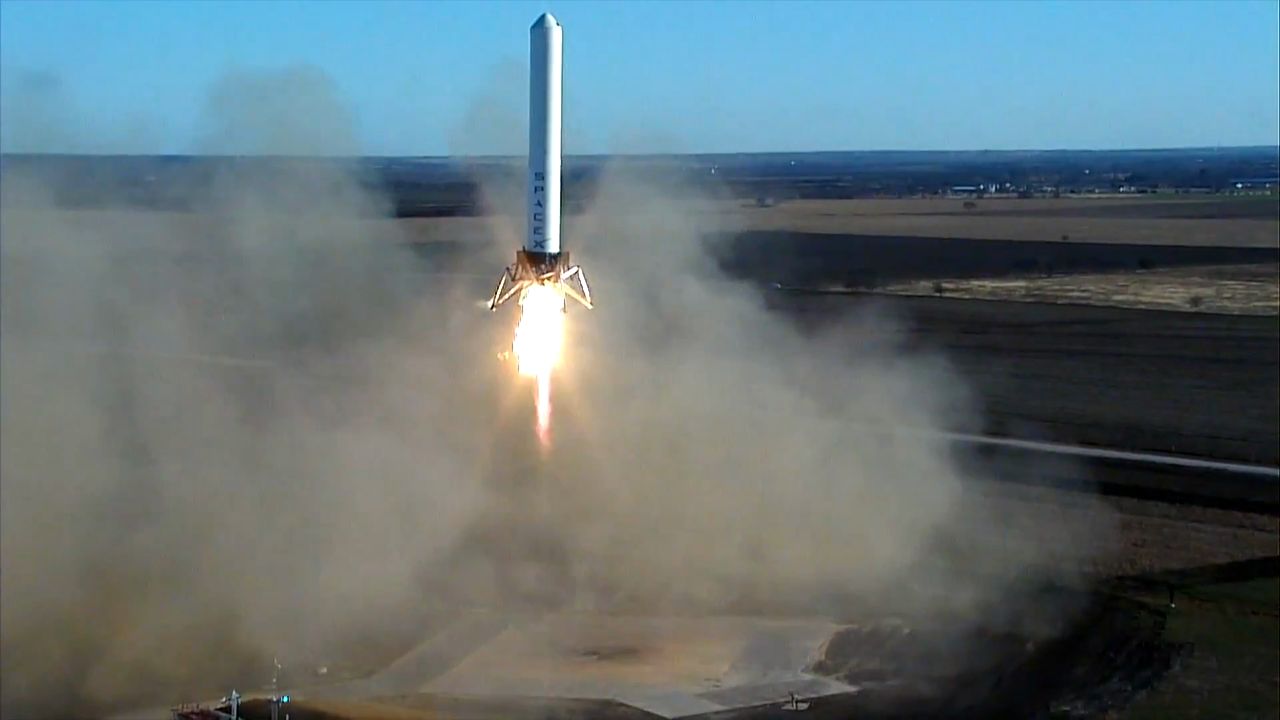
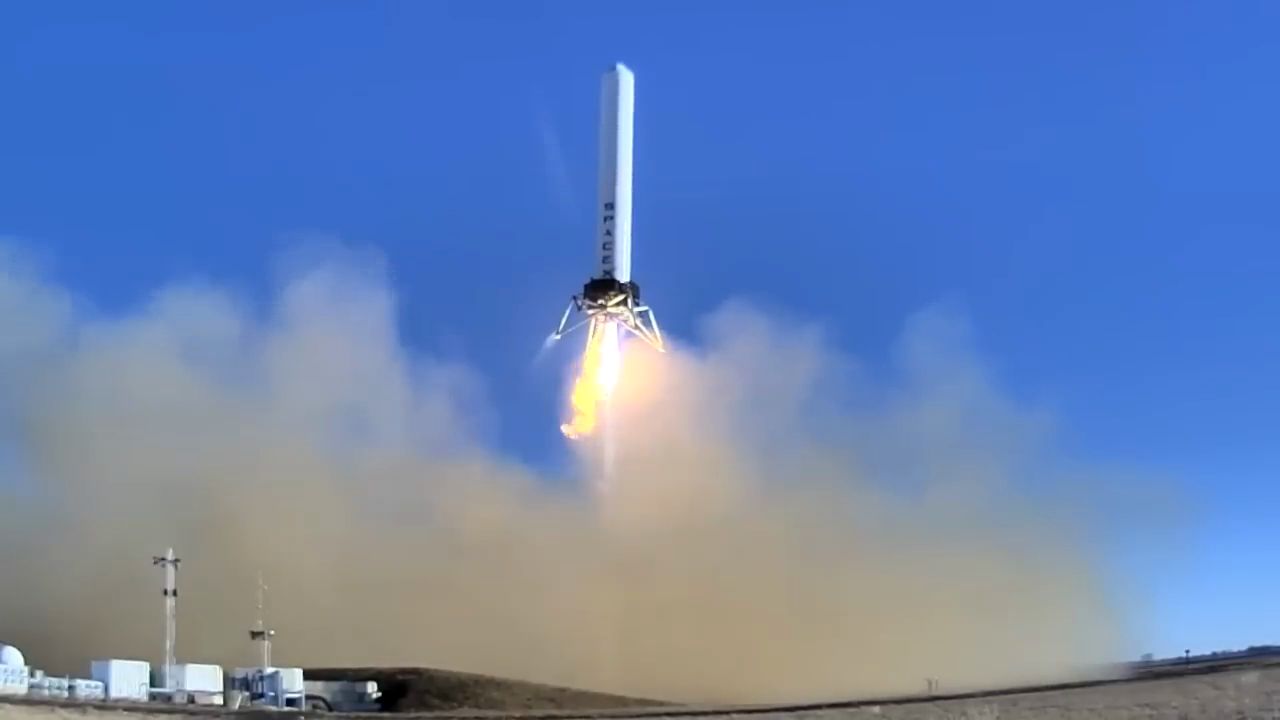
“Grasshopper, SpaceX’s vertical takeoff and landing vehicle (VTVL), rose 131 feet (40 meters), hovered and landed safely on the pad using closed loop thrust vector and throttle control. The total test duration was 29 seconds.”
Read the updateTo provide a little perspective on the size of Grasshopper, we added a 6 ft cowboy to the rocket
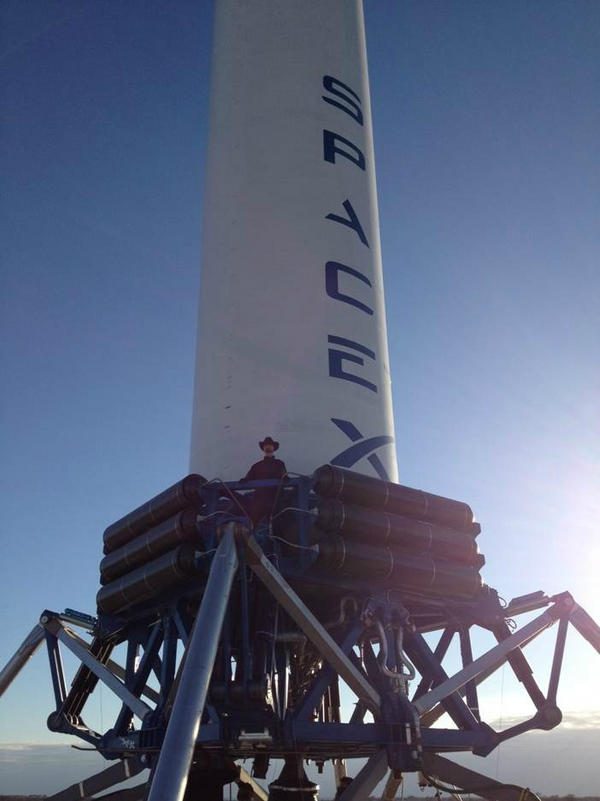
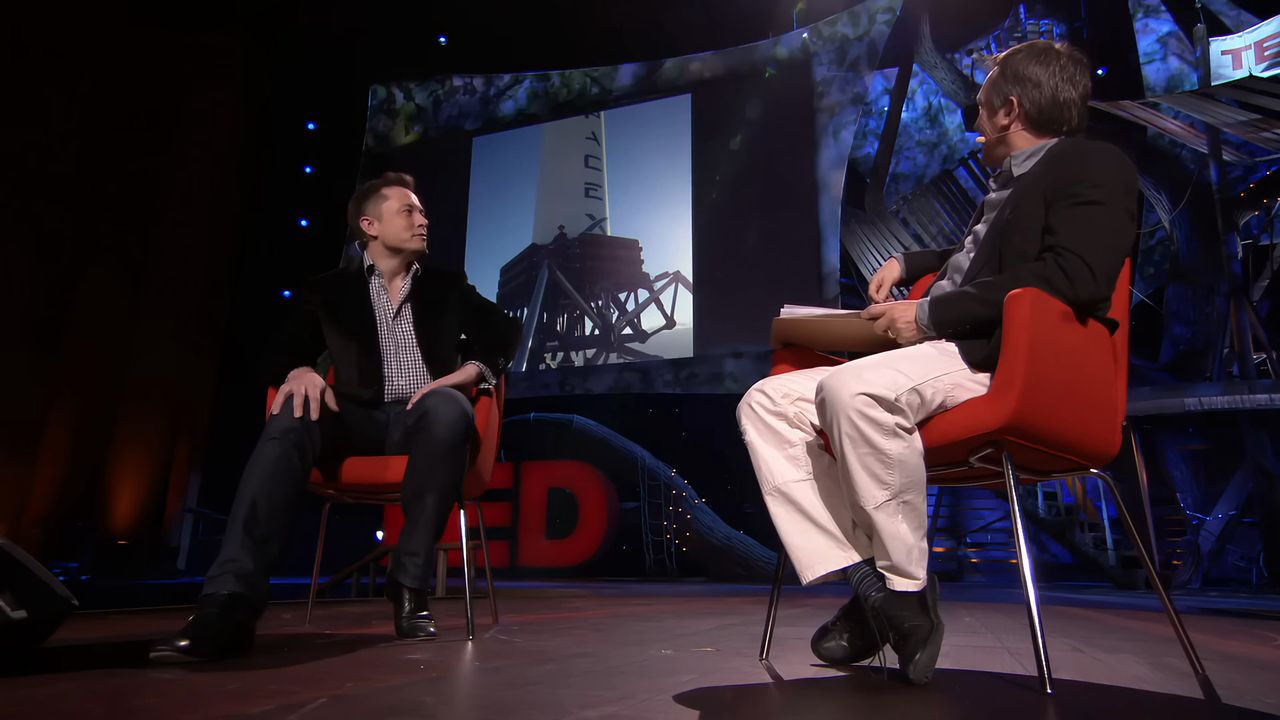
“We dressed a cowboy as Johnny Cash and bolted the mannequin to the rocket. … So now it’s hovering at about 40 meters, and it’s constantly adjusting the angle, the pitch and yaw of the main engine, and maintaining roll with cold gas thrusters.”
Hop 4
80.1 m262.8 ft · about 34 seconds · March 7, 2013
Before it, the record: “Next Grasshopper rocket test is called the Johnny Cash Hover Slam (yeah baby!). Might be our first smoking crater...” Musk, February 9, 2013 (the tweet).
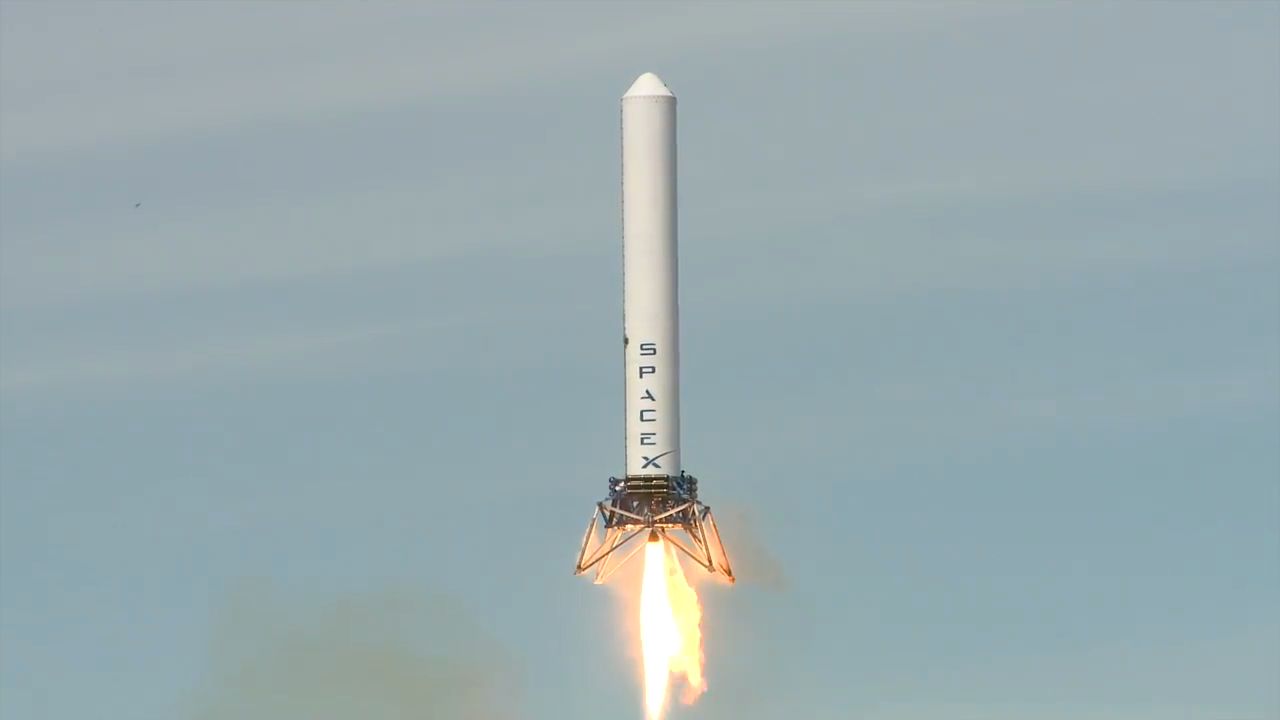
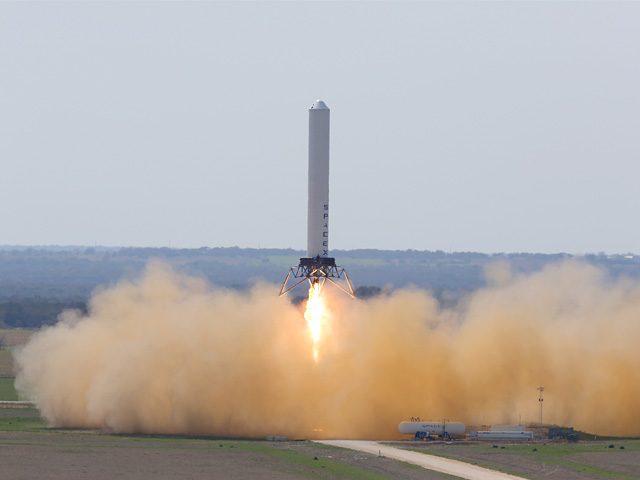
On the fourth hop the rig landed the way a Falcon 9 stage would have to. At touchdown its engine pushed harder than the stage weighed. The computer had to bring it to a stop exactly at the ground, and not a moment before.
“The Hover Slam: Demonstrating landing with a Thrust-to-Weight ratio greater than one” Lars Blackmore, his caption for the video, on his website
A working model
The stage comes down at 10 m/s. Press Brake once: from then the engine pushes 1.2 times the stage’s weight, and by the test’s rule it may not push less, so the stage cannot hover. Brake too soon and it stops in the air. Too late and it hits the pad.
Brake when its feet reach the line. A tap on the drawing, the space bar or B brakes too.
Then let the computer fly it
Sources. SpaceX, March 10, 2013: “At touchdown, the thrust to weight ratio of the vehicle was greater than one.” Blackmore, on Falcon 9, The Bridge, 2016, p. 17: zero velocity at exactly zero altitude, which needs “precise knowledge and control of vertical position and velocity”; too high, and the stage “will start going back up, at which point cutting the engines and falling is the only option.”
Where the drawing goes beyond them. The numbers are ours, not SpaceX’s. The stage comes down at 10 m/s with thrust equal to its weight. Your brake is a steady 1.2 times its weight. The computer plans the same brake, once braking sets the thrust anywhere from 1.05 to 1.6 times the weight, and measures its own acceleration to learn how hard the engine really pushes; the band shows where that still lands it, once braking. Stopped in the air, the stage climbs a moment before the engine is cut. A touchdown under 3 m/s counts as a landing. Grasshopper could hover: it carried unburned propellant as ballast to keep its thrust low against its weight (FAA, 2011). On hop 4 it landed as though it could not. No source gives Grasshopper’s mass, its throttle range, or the path of hop 4’s last seconds. The stage is at true size; its legs, frame and plume are drawn from SpaceX’s photos.
“Grasshopper touched down with its most accurate precision thus far on the centermost part of the launch pad. At touchdown, the thrust to weight ratio of the vehicle was greater than one, proving a key landing algorithm for Falcon 9.”
Read the update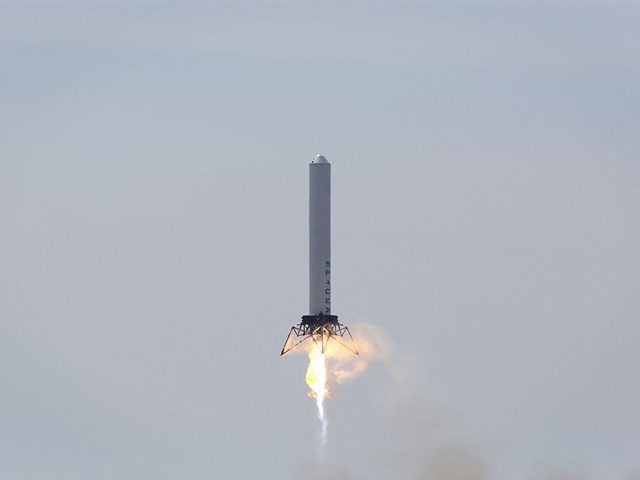
Hop 5
250 m820 ft · about 1 minute · April 19, 2013
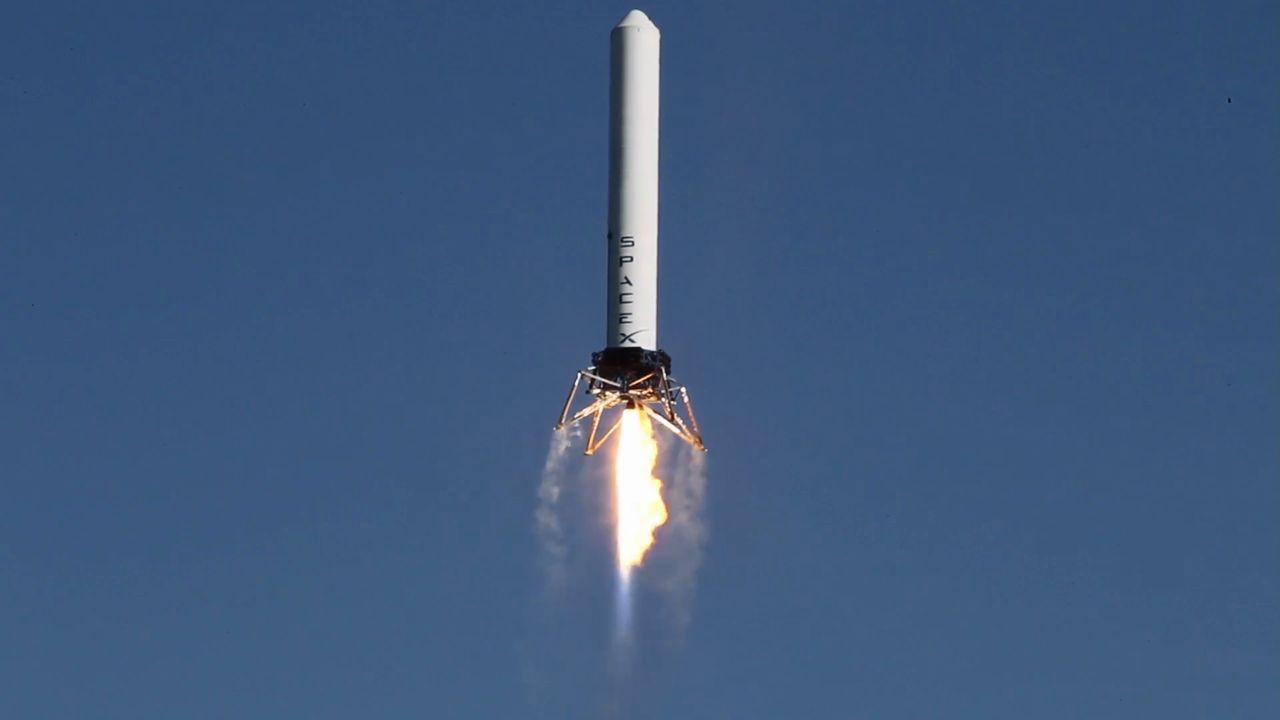
At 250 meters the rig met the wind. The computer had to hold the stage upright and over its pad while the air pushed it. Five hops, five landings. The company’s president said that meant they were not trying hard enough.
“The 250m hover: Demonstrating ability to maintain stability in wind” Lars Blackmore, his caption for the video, on his website
SpaceX filmed it from a six-rotor camera drone for the first time. Its own cut is set to “Ring of Fire”, the song Hawthorne sang at the early hops.
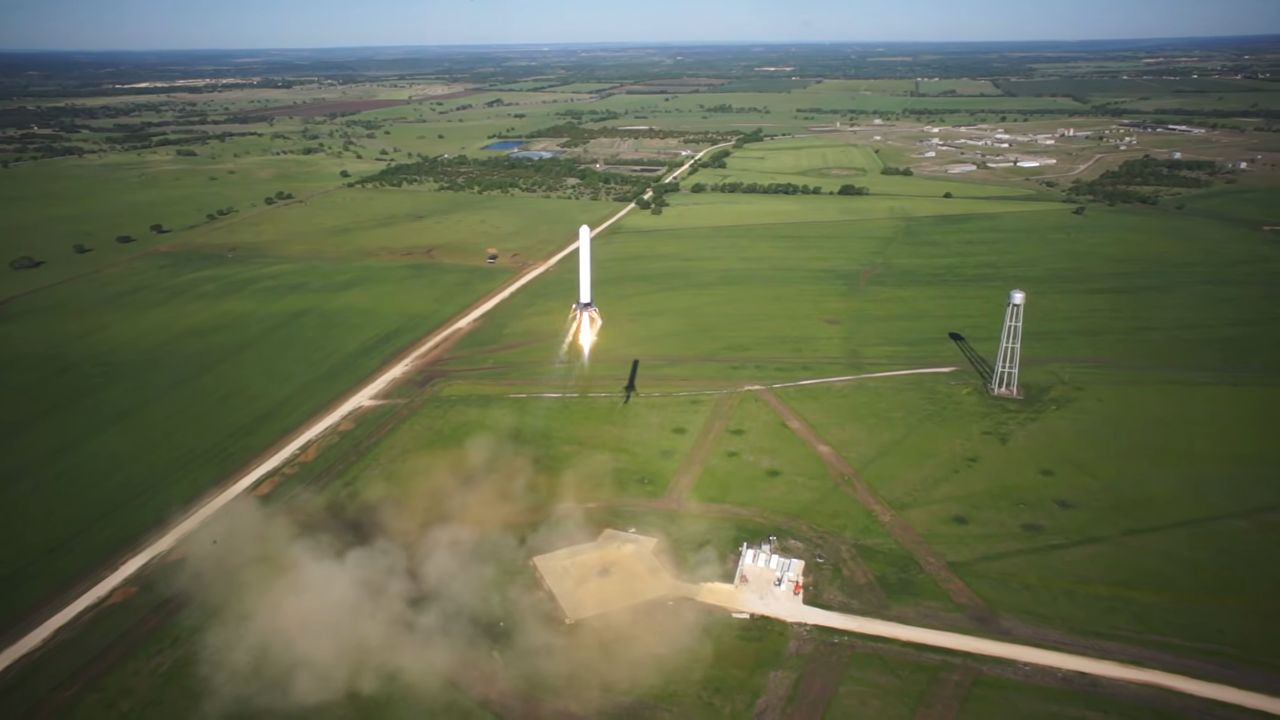
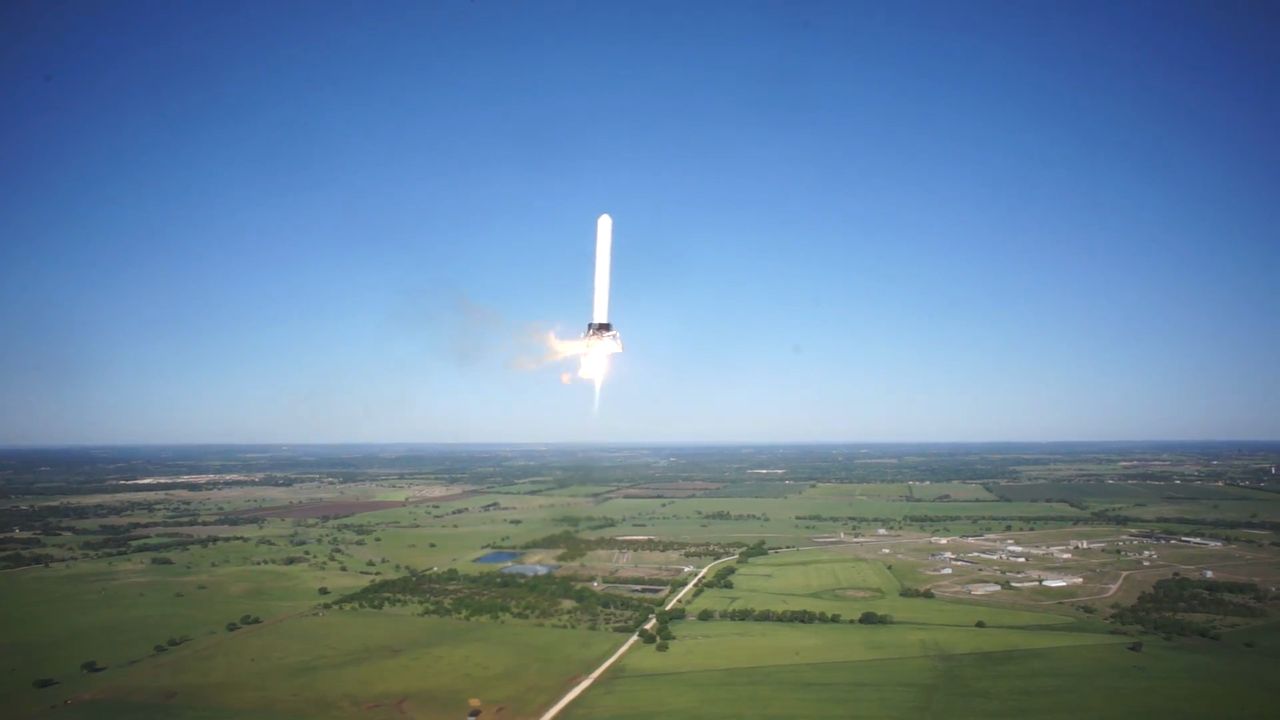
Grasshopper rocket flies up 250m, holds against wind and lands. Vid taken from our hexacopter
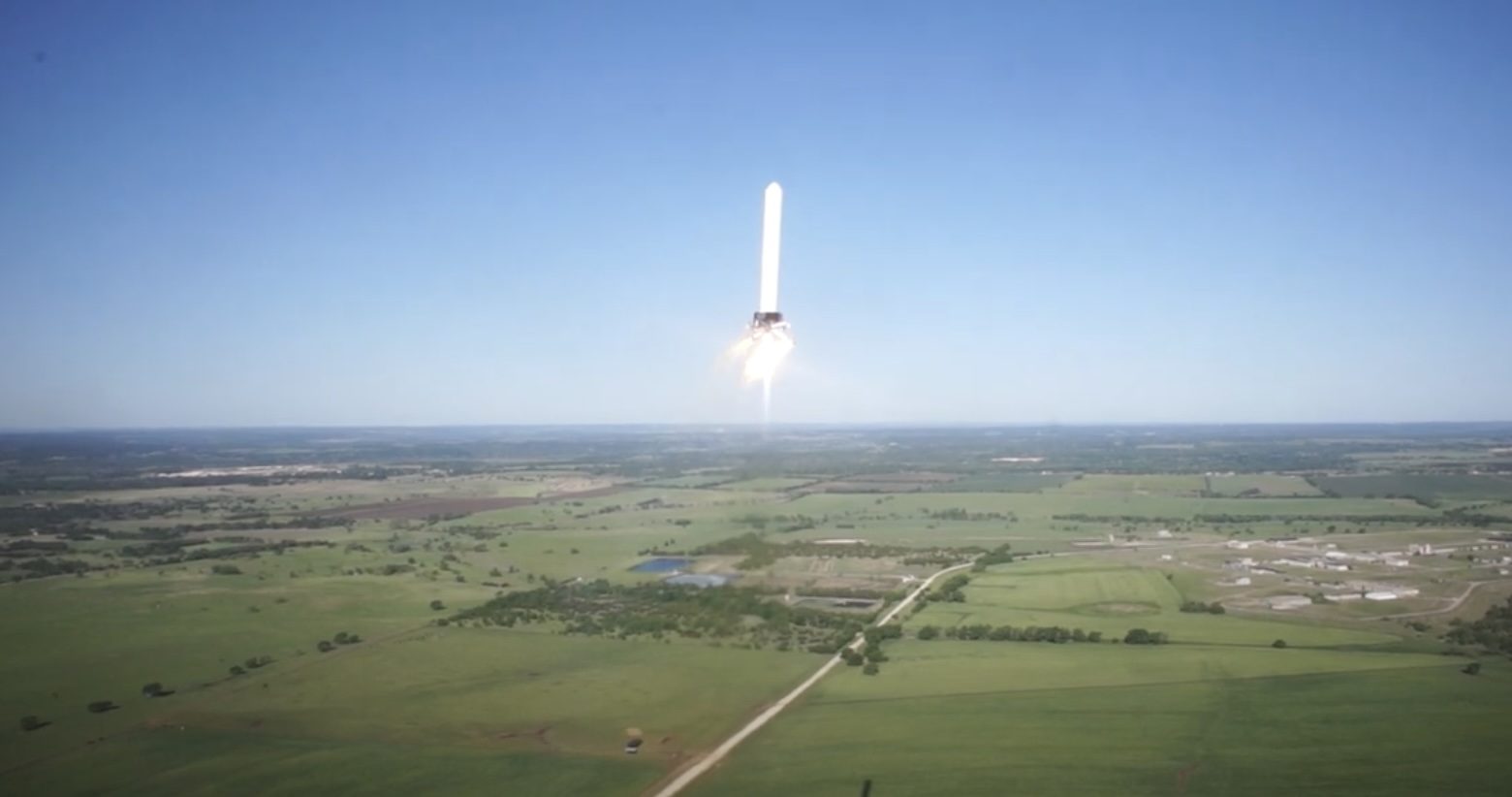
SpaceX’s update gives only the month. SpaceX told the Waco Tribune-Herald it flew on Friday, April 19 (Space.com agrees).
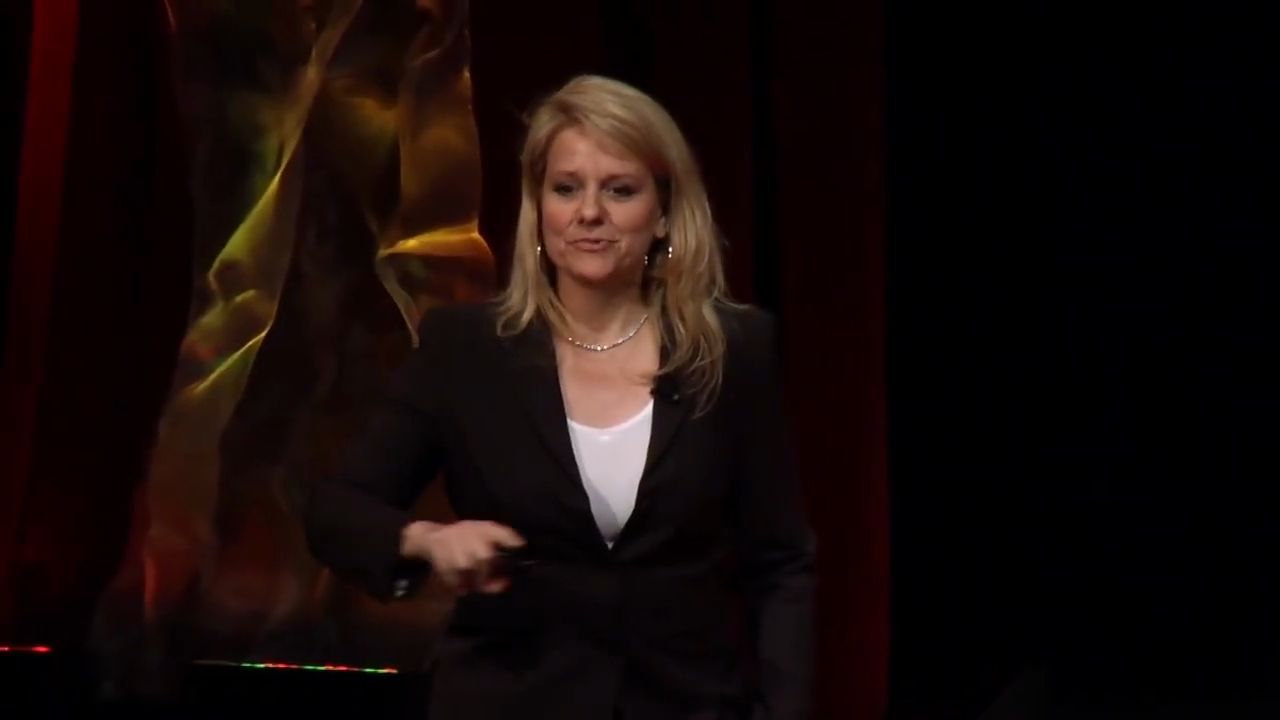
“we’re five for five testing on that grasshopper ... but that means we’re not pushing hard enough … we have to tunnel one of those vehicles into the ground by trying something really hard.”
Outside, at the time
The next phase would go higher, in New Mexico, under a three-year lease at Spaceport America.
“Spaceport America offers the physical and regulatory landscape needed to complete the next phase of Grasshopper testing, including the ability to coordinate tests to high altitudes”
Hop 6
325 m1,066 ft · about 68 seconds · June 14, 2013
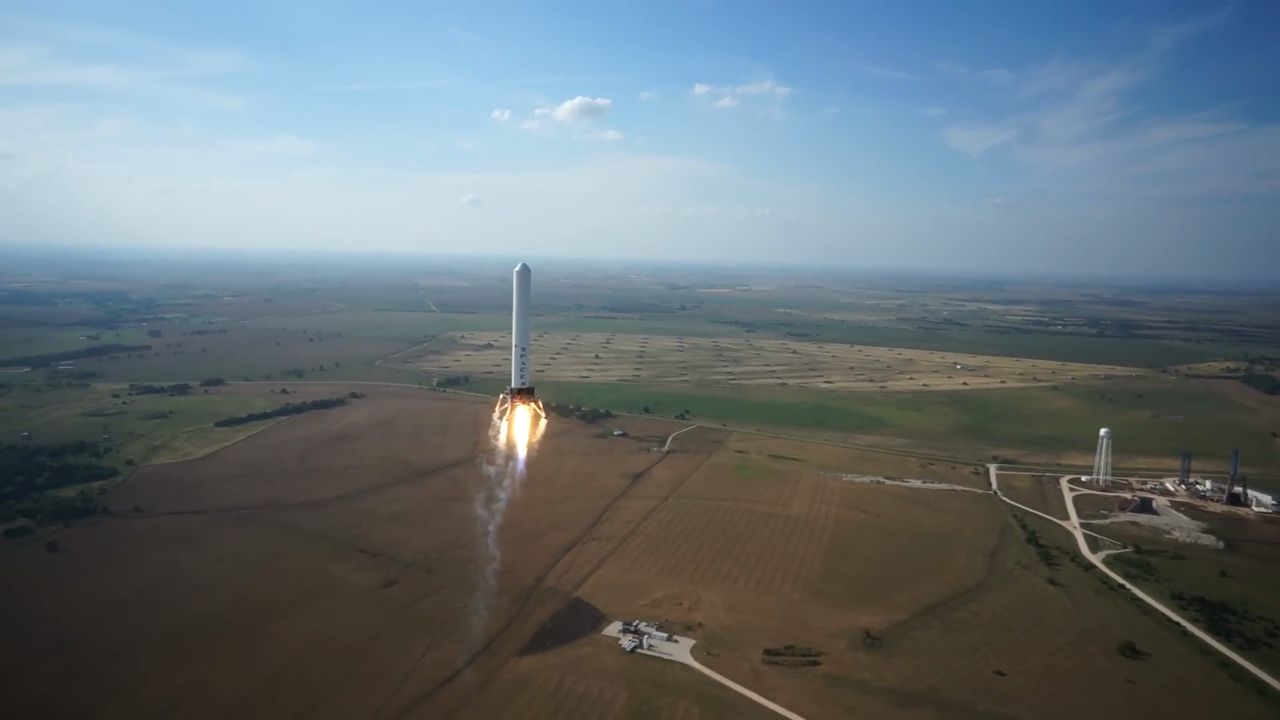
On the sixth hop the rig flew the sensors and control algorithms meant for the next rocket, a reusable Falcon 9, for the first time. A new sensor measured the distance to the ground. The test rig was now testing the next rocket’s software.
“The 325m hover: Testing out the navigation suite to be used on Falcon 9 Reusable (F9R)” Lars Blackmore, his caption for the video, on his website
Outside, at the time
An “additional, higher accuracy sensor was in the control loop”, for “sensing the distance between Grasshopper and the ground”.
“For the first time in this test, Grasshopper made use of its full navigation sensor suite with the F9-R closed loop control flight algorithms to accomplish a precision landing.”
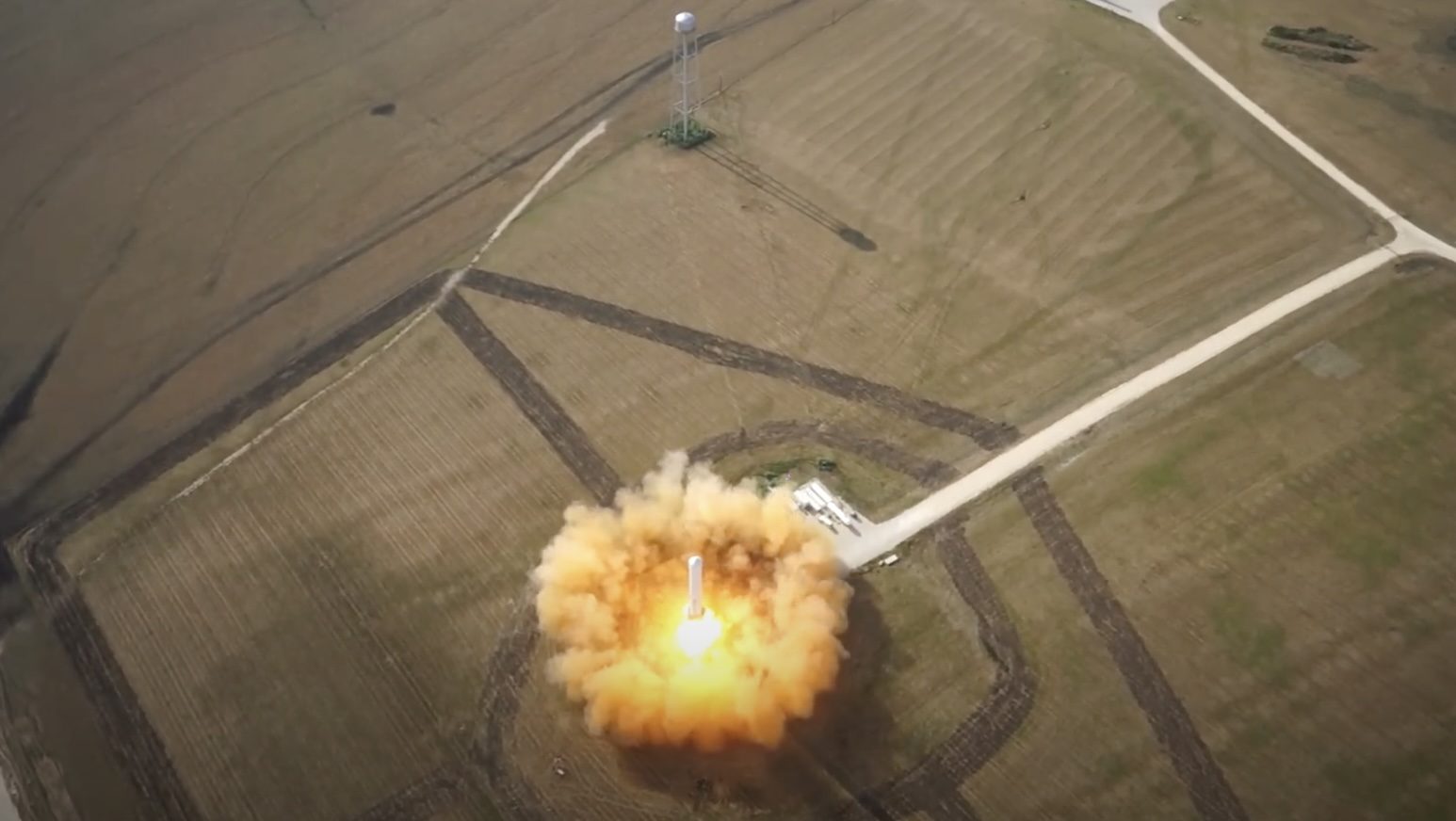
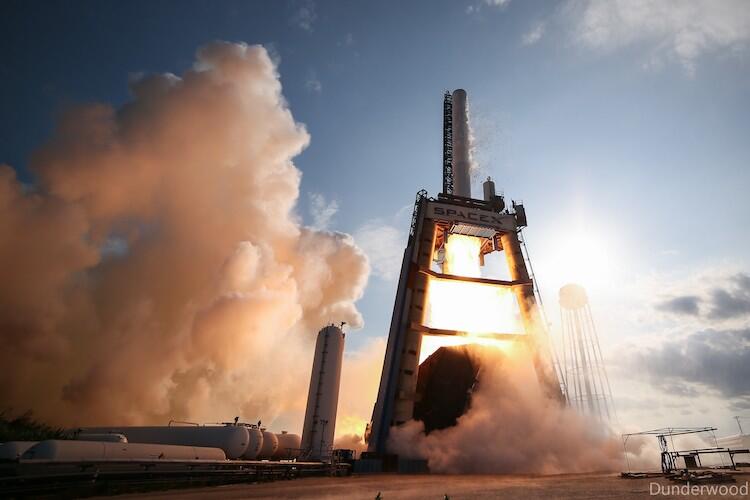
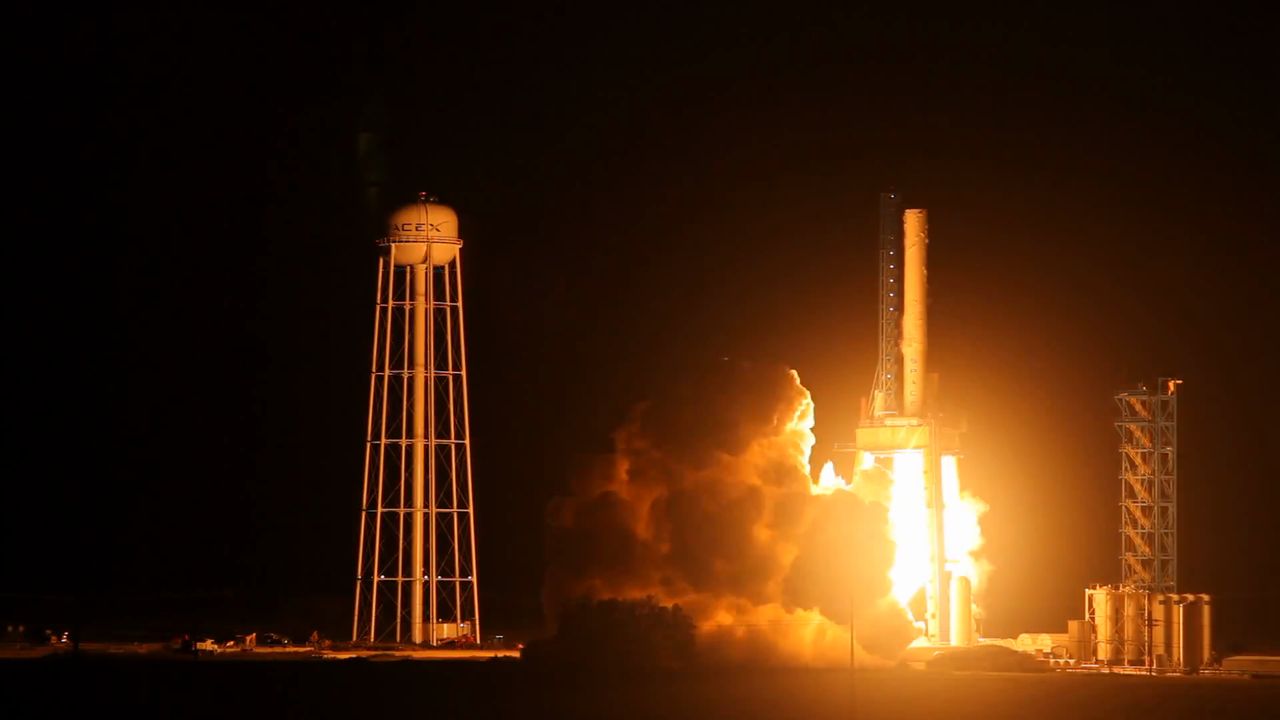
1st firing of Falcon 9-R advanced prototype rocket. Over 1M lbs thrust, enough to lift skyscraper
Hop 7
250 mand 100 m sideways820 ft · about 1 minute · August 13, 2013
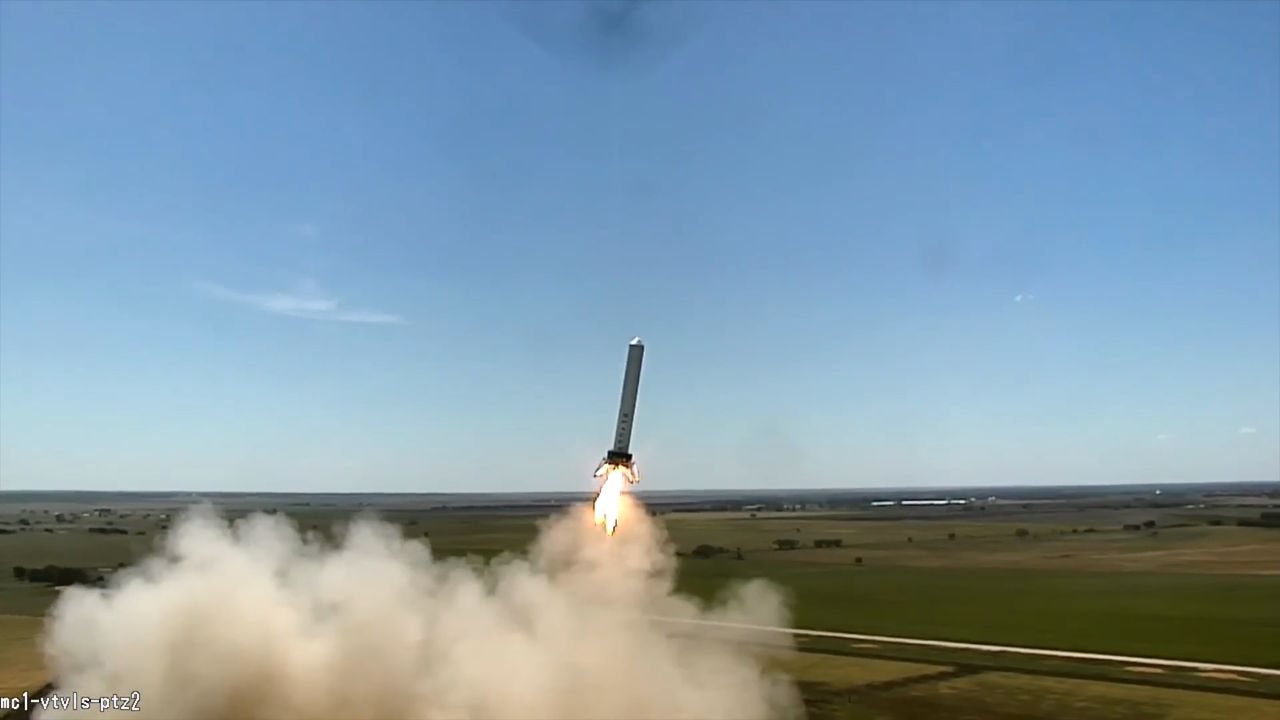
A stage coming back from space will not fall straight onto its target. It must steer sideways and land on the spot. On the seventh hop the rig moved 100 meters to the side and came back to the center of its pad.
“The divert: Demonstrating a sideways maneuver, required for precision landing after returning from space” Lars Blackmore, his caption for the video, on his website
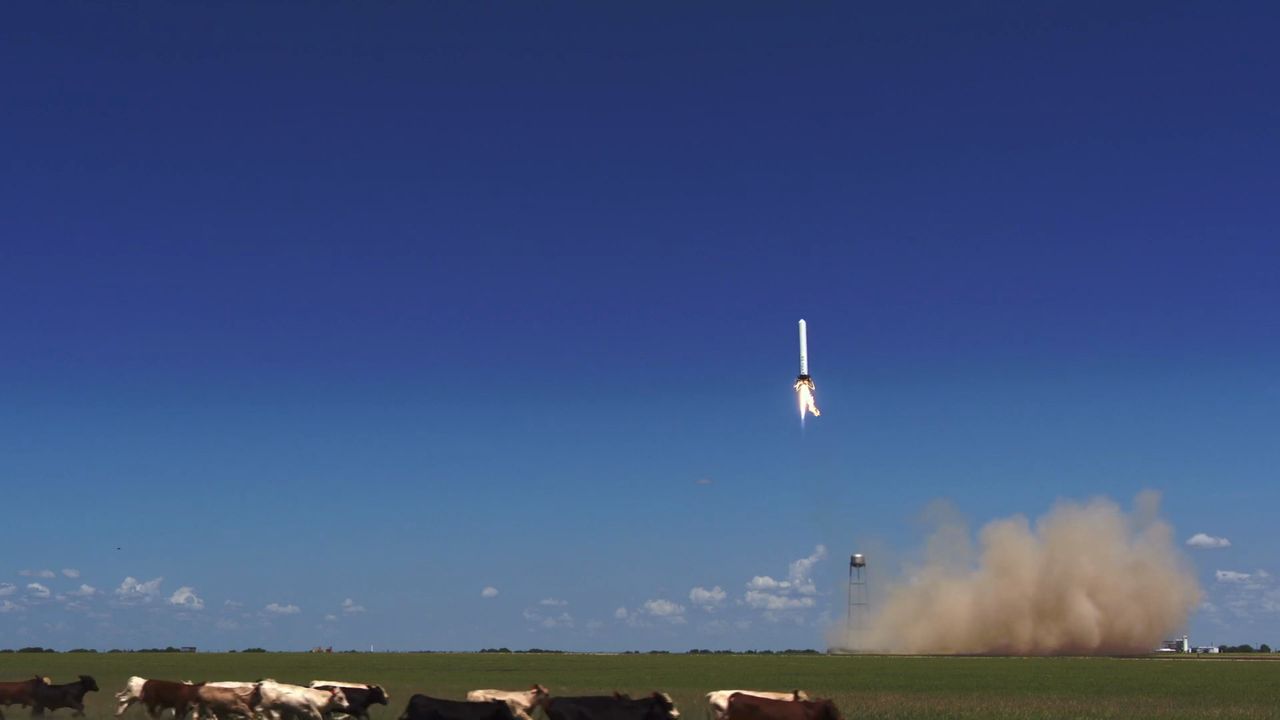
“The Grasshopper—described as, essentially, a Falcon 9 test rig—flew to an altitude of 250 meters and conducted a 100 meter lateral (horizontal) move.”
Read the report“The vehicle must compute a divert trajectory from its current location to the target, ending at rest and in a good orientation for landing without exceeding the capabilities of the hardware.”
Why sideways.
John Carmack’s rocket company
NASA’s lander
Masten’s small rig, with JPL’s G-FOLD
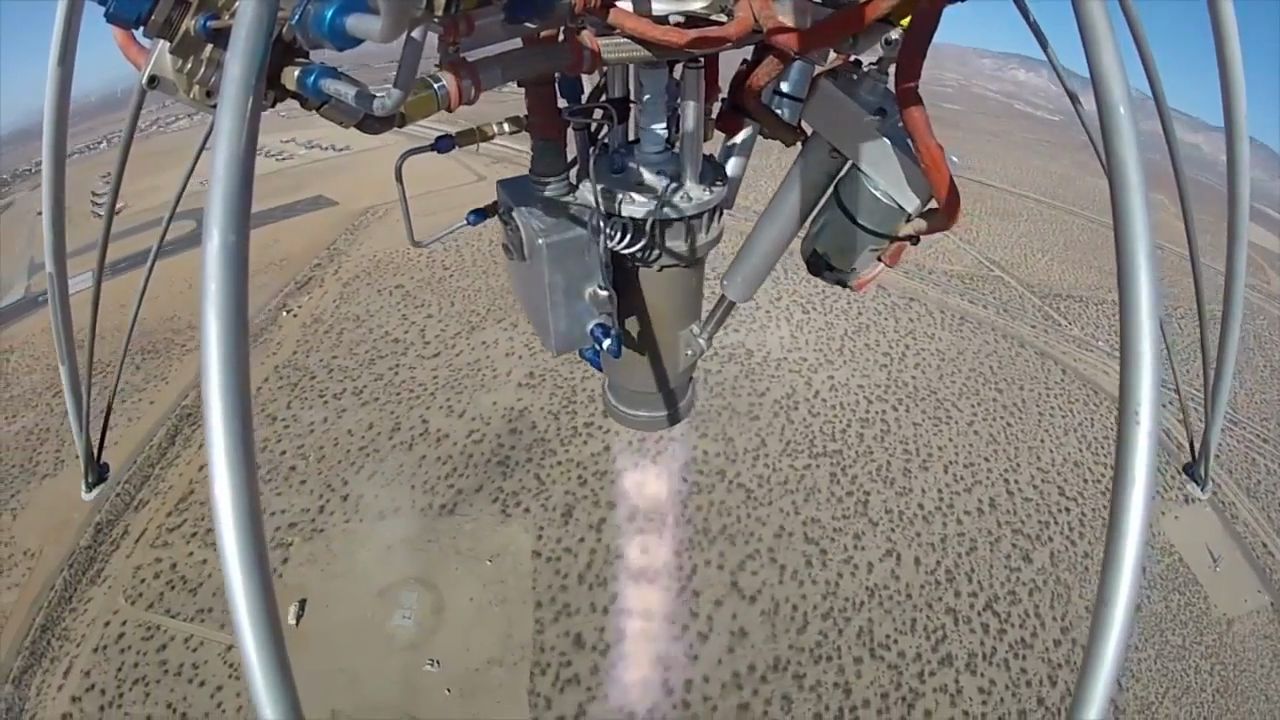
“as far as I know, [SpaceX] guys were also watching this”
Between
Eight days before the last hop, a real Falcon 9 first stage came back from space over the Pacific. It relit three engines to slow its fall, then one to land on the water. It spun, and the engine starved (the record). Musk tied it to the rig the same day:
“If you take the Grasshopper tests, where we were able to do a precision takeoff and landing of a Falcon 9 first stage, and you combine it with the results from this flight … We have all the pieces necessary to achieve a full recovery of the boost stage.”
Hop 8
744 m2,440 ft · 78.8 seconds · October 7, 2013
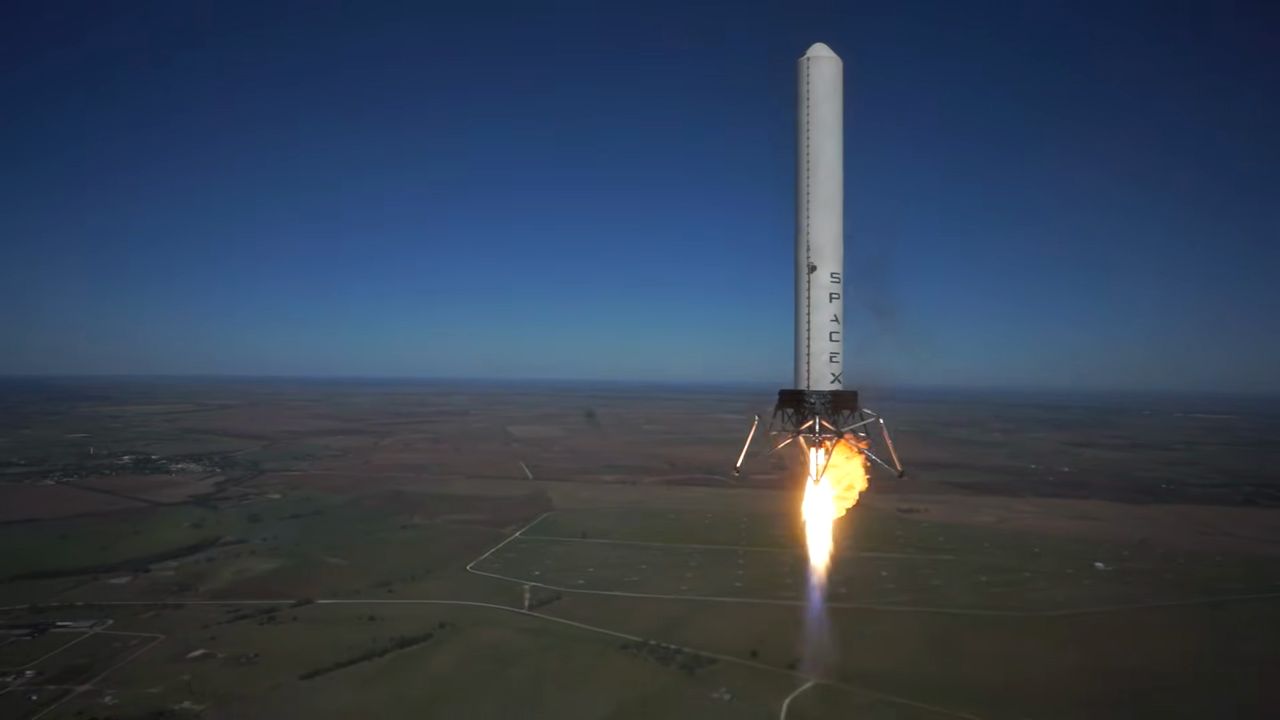
The last hop went to 744 meters, more than twice the height of the Eiffel Tower, and landed on its pad. The FAA allowed 2,500 feet at McGregor. Grasshopper stopped at about 2,440. In eight flights it never crashed.
“The 744m hover: The final, and highest, of Grasshopper’s missions” Lars Blackmore, his caption for the video, on his website
“The Grasshopper test flight on Oct. 7 reached an altitude of 744 meters, or 2,440 feet”
Read the report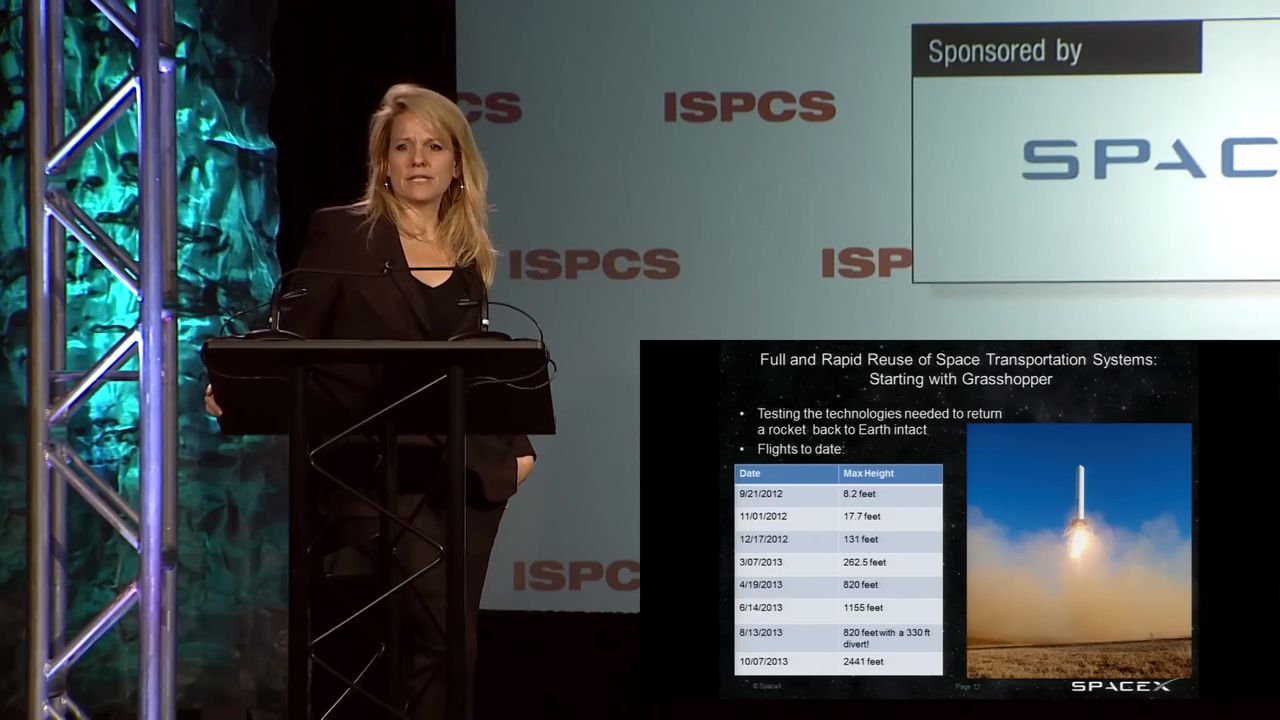
“we have about 25 people working the grasshopper program and there’s about 3,000 that actually want to.”
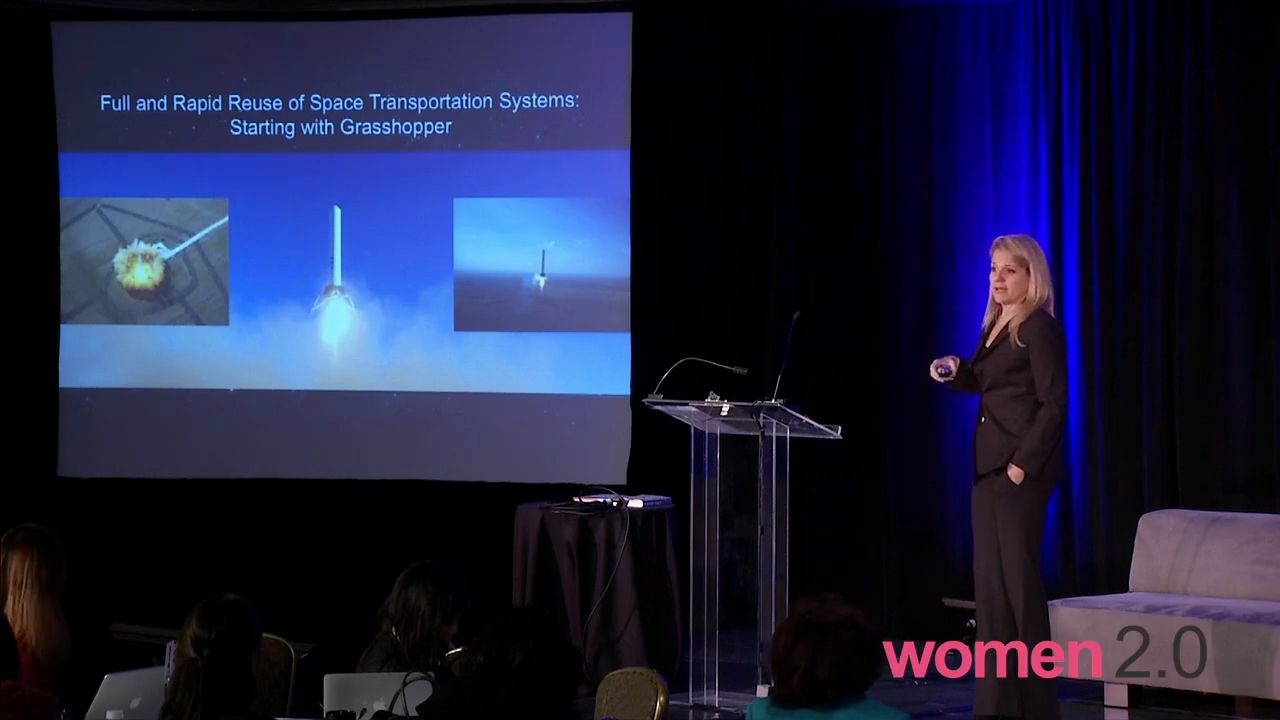
“It didn’t make a crater in the ground like everyone thought it would. Elon was a little upset about that. If you don’t crash the thing, you’re not pushing it hard enough.”
Shana Diez, by then chief engineer of the test flights, “brilliantly guided Grasshopper higher and higher. … By then the cheers in Hawthorne for her and the Grasshopper team were genuine. The scruffy test vehicle had taught SpaceX much, including the effects of firing an engine close to the ground, measuring altitude through dust and debris, rapid throttling of engine thrust, testing out landing legs, and landing with partially full fuel tanks.”
Berger, Reentry, ch. 7, pp. 166–67The finale
Hop 1 1.8 mFull video
Hop 2 5.4 mFull video
Hop 3 40 mFull video
Hop 4 80.1 mFull video
Hop 5 250 mFull video
Hop 6 325 mFull video
Hop 7 250 m, 100 m acrossFull video
Hop 8 744 mFull video
| Hop | Date | Height | Time in the air | What was new |
|---|---|---|---|---|
| 1 | September 21, 2012 | 1.8 m | less than 3 seconds | It flies and lands |
| 2 | November 1, 2012 | 5.4 m | 8 seconds | A hover under the computer’s control |
| 3 | December 17, 2012 | 40 m | 29 seconds | Above its own height; a long hover |
| 4 | March 7, 2013 | 80.1 m | about 34 seconds | Landing with thrust greater than weight |
| 5 | April 19, 2013 | 250 m | about 1 minute | Wind |
| 6 | June 14, 2013 | 325 m | about 68 seconds | The next rocket’s sensors and control algorithms |
| 7 | August 13, 2013 | 250 m up, 100 m sideways | about 1 minute | A sideways move |
| 8 | October 7, 2013 | 744 m | 78.8 seconds | The edge of the permit |
Eight hops in 381 days. Each one went past the last in one way: higher, longer, against wind, sideways, on new software. The rig was never lost. Next, SpaceX planned to fly a full Falcon 9 first stage.
“Imagine you threw away the jet after each flight. Flying would be expensive and impractical for most common applications. Same with rockets. To lower cost another 100x, they need to be fully reusable.”