T+03 05:18:026:02:40 a.m. Hawthorne · Friday, May 2513:02:40 UTC · Flight day 4
Distance to the station72 m
100 km10 km1 km100 m10 mStation
Only distances the record reports are marked. Between them the needle moves in a straight line.
A room in the archive
Docking
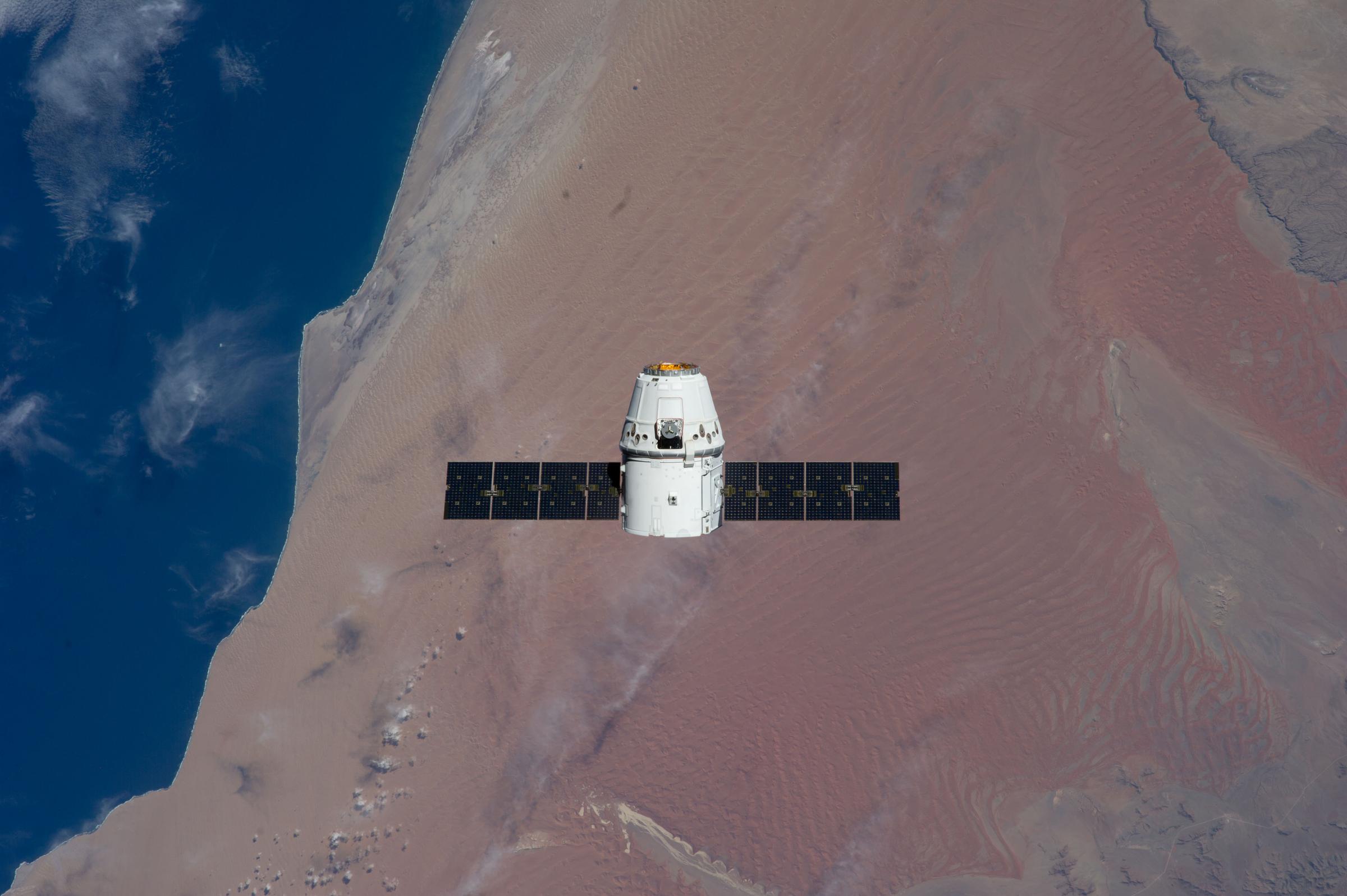
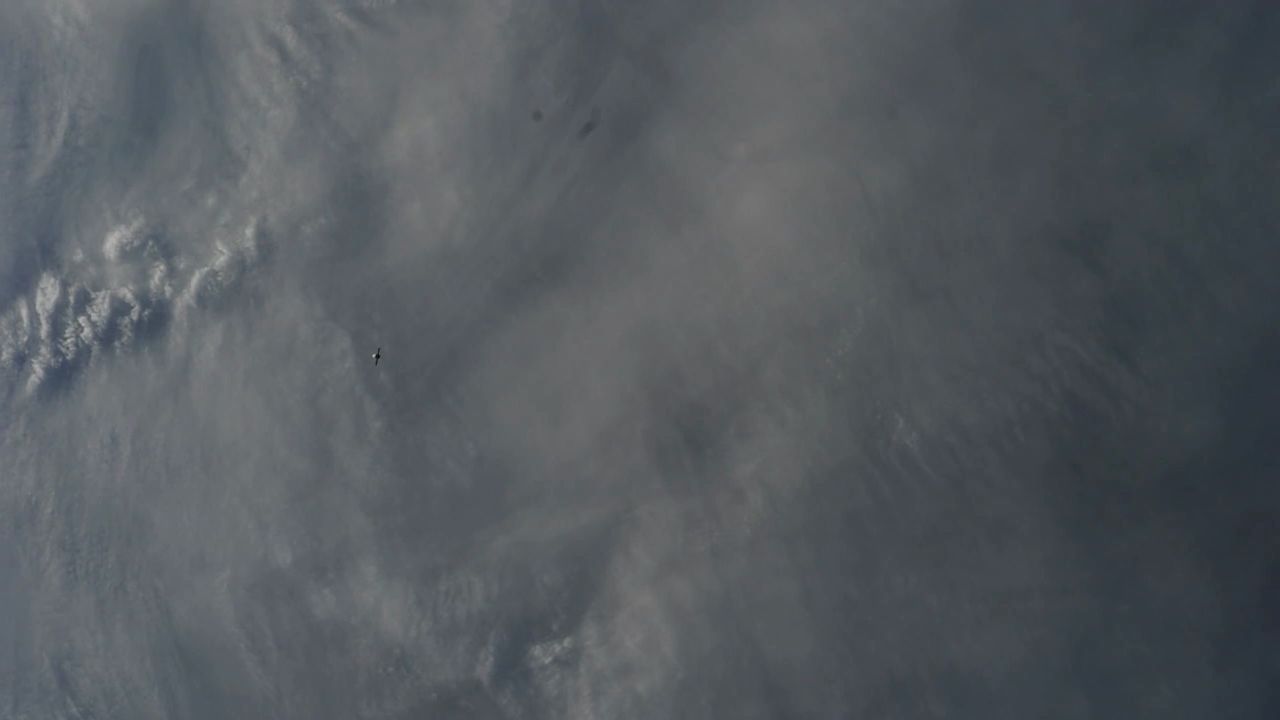
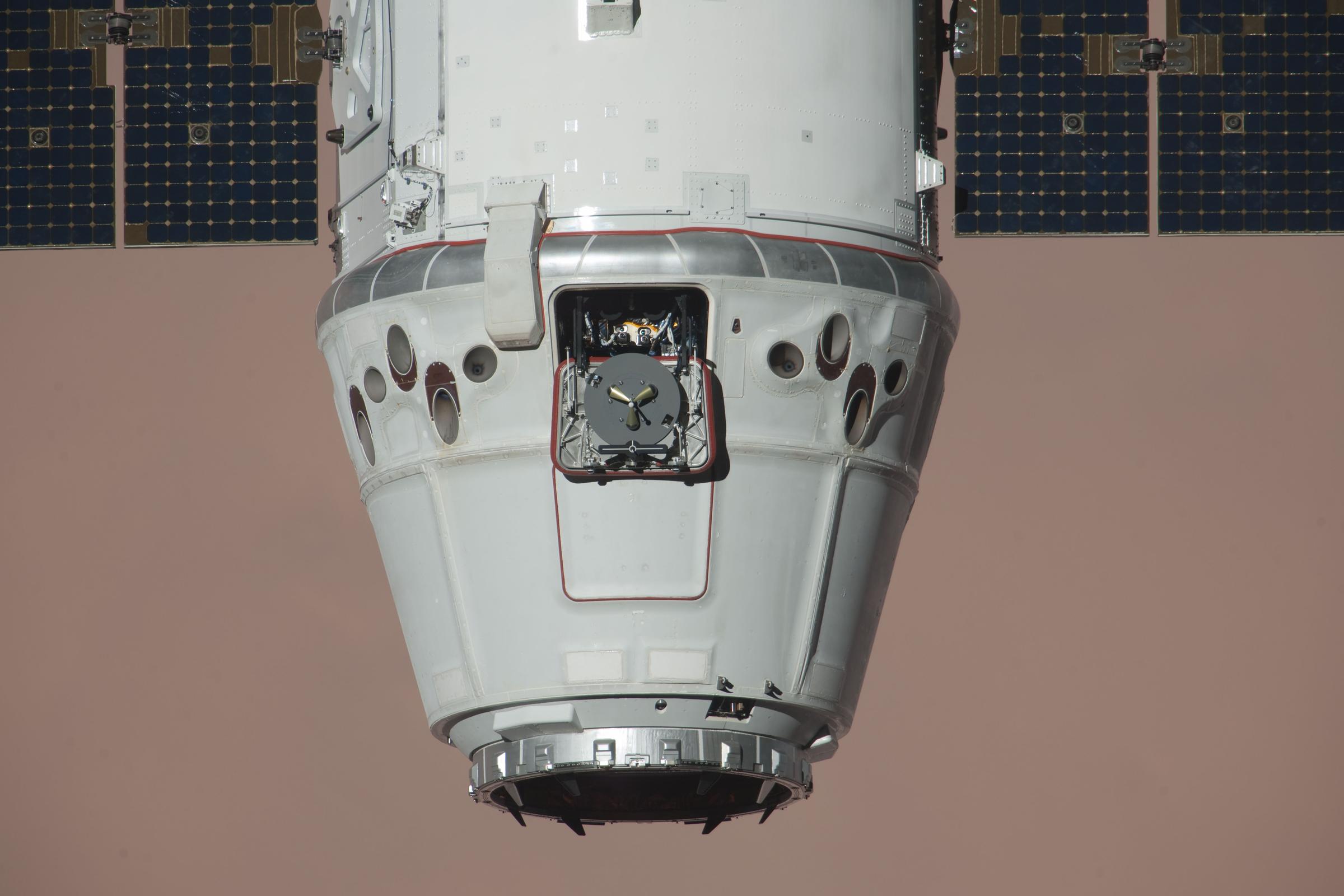
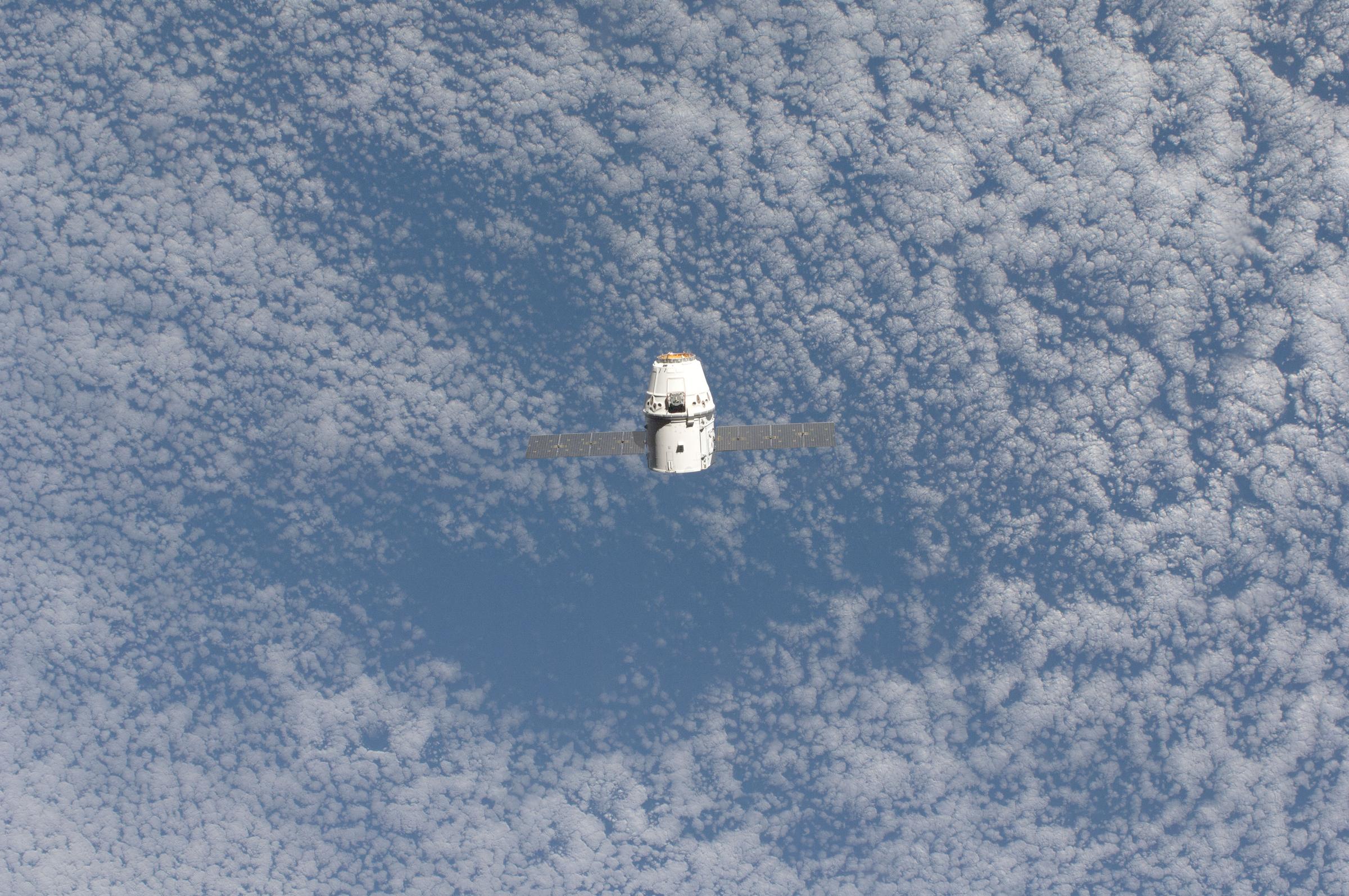
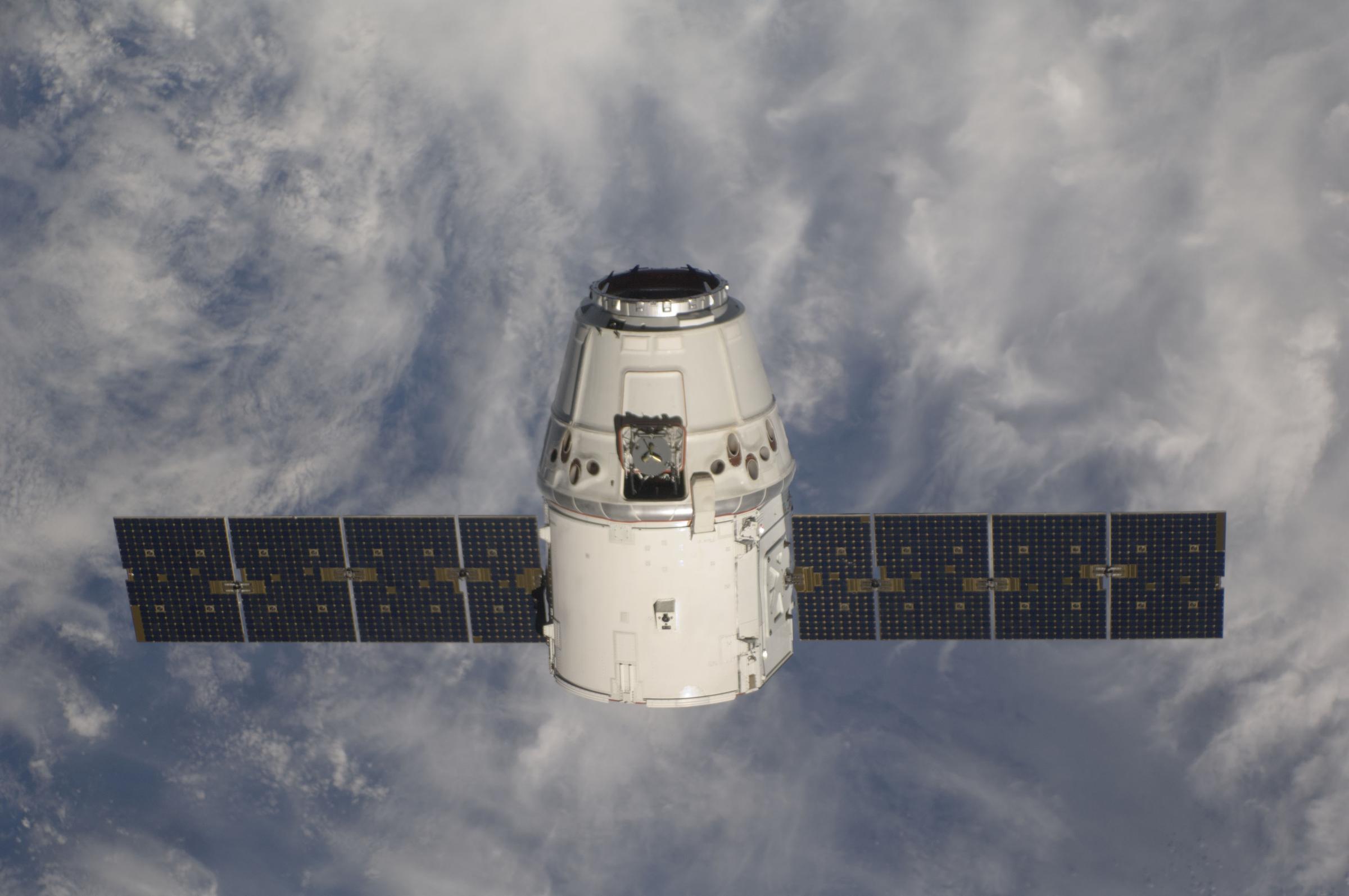
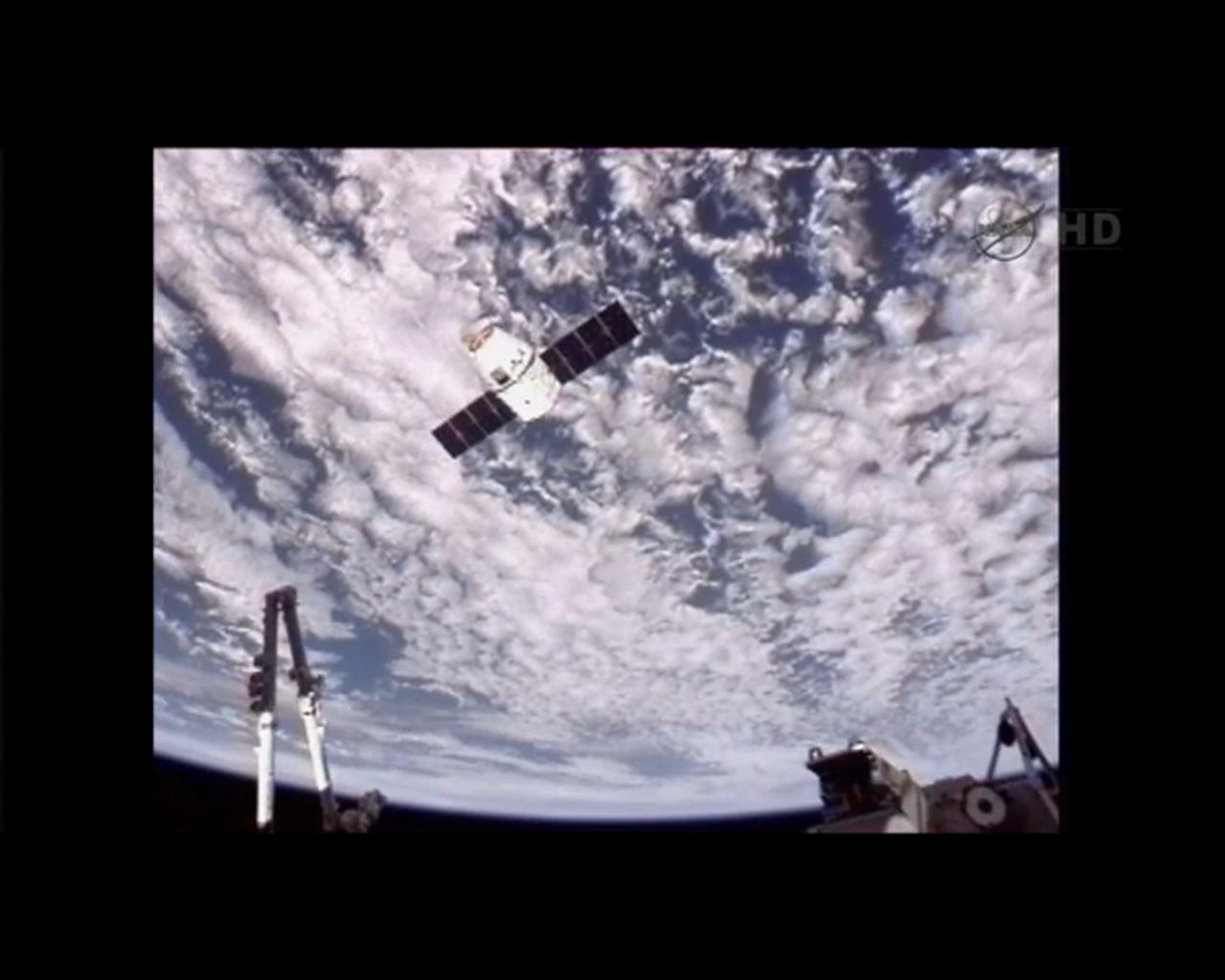
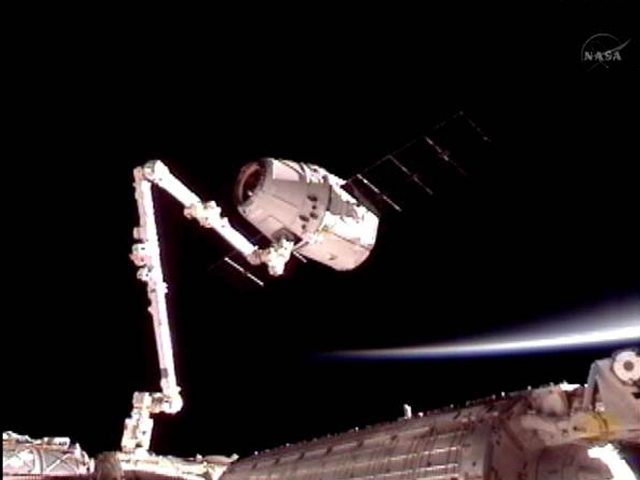
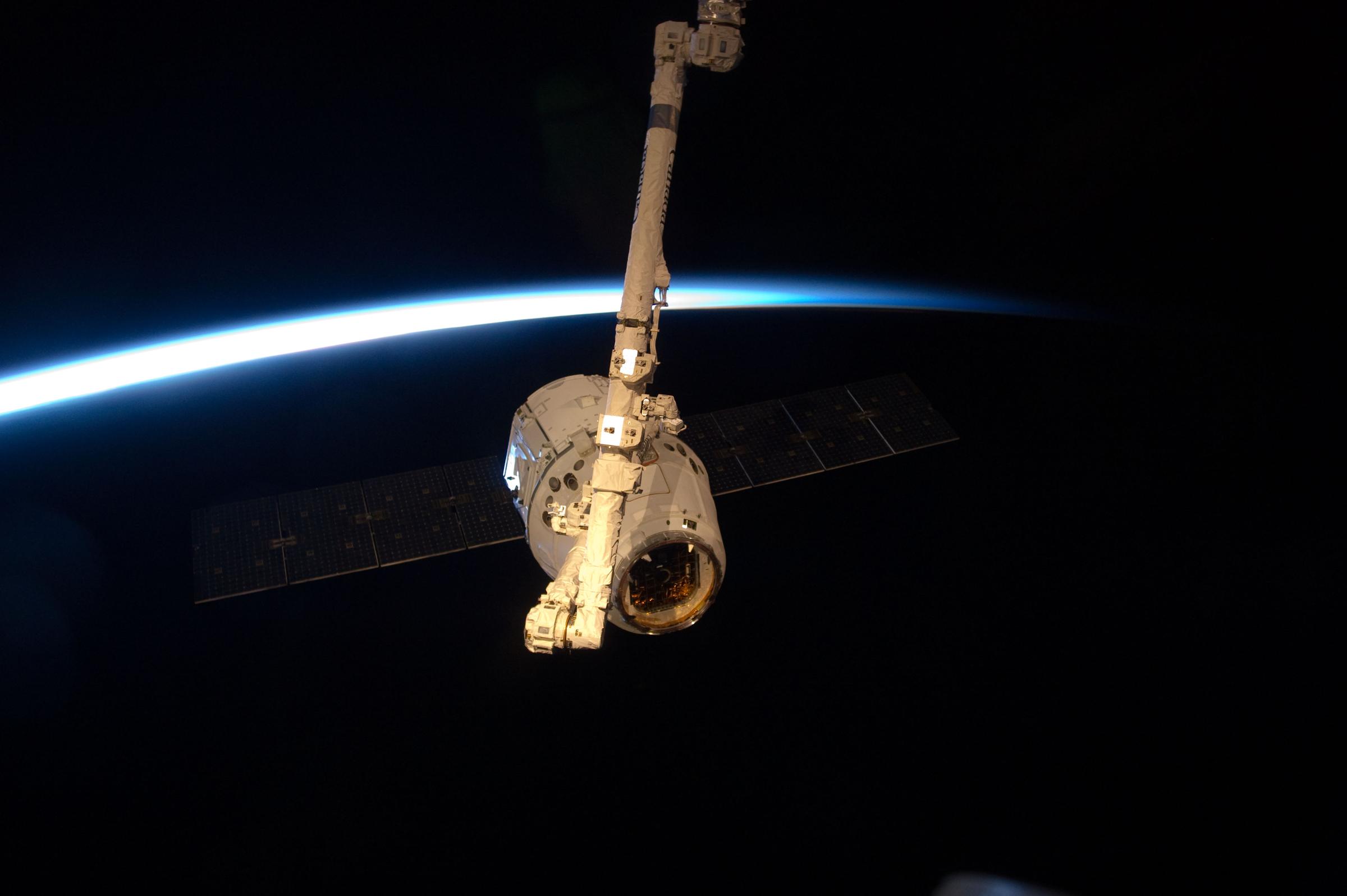
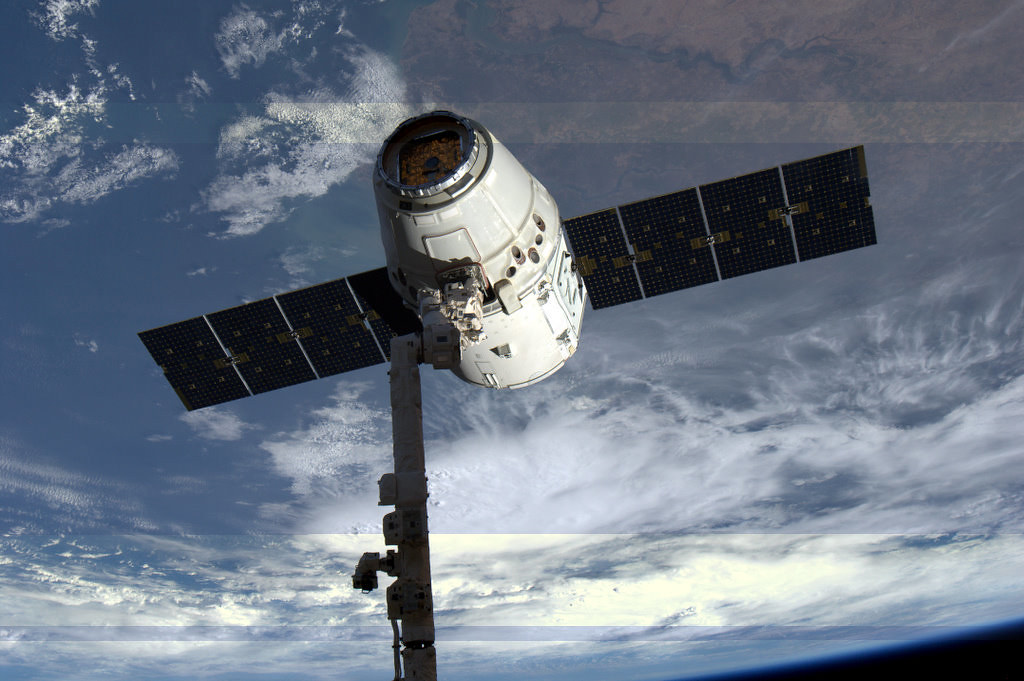
Dragon below the station, over Namibia, at 4:52 a.m. Hawthorne time. An hour later it was stuck at 72 meters.Photo: NASA, ISS031-E-070943
May 256:02 a.m. Hawthorne13:02 UTC · T+03 05:18
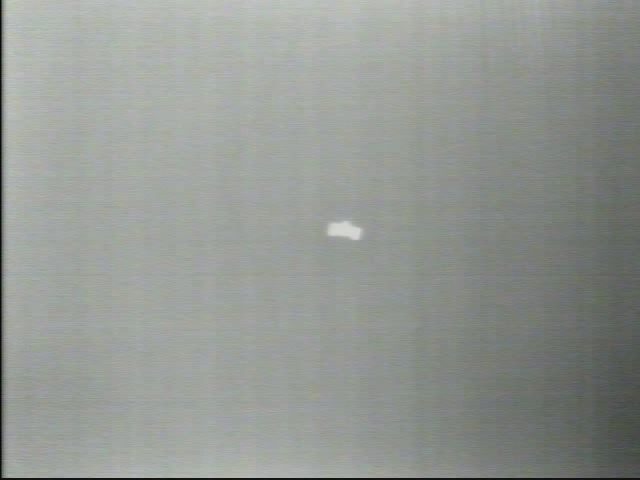
6:02 a.m., May 25, 2012. Dragon has held 72 meters below the space station for half an hour. The laser that measures the distance has been fooled by reflections. This room follows the twelve days around this minute, by the clock.
Kathy Lueders, the NASA manager who wrote the rules for the new cargo ships. (Berger, Reentry, ch. 5, p. 116)
Two test flights became one. Dragon would fly under the station, then come back and be caught. If it failed, NASA would have no cargo ship that could bring science home, and SpaceX would not be paid for cargo. A NASA manager called it “our Hail Mary pass.”
NASA had planned three test flights. The second would pass under the station; only the third would berth. In 2011 SpaceX proposed doing both on one flight, and NASA agreed.
Berger, Reentry, ch. 5, pp. 114 to 115
“Three or four times a week, someone would come up and say, ‘I’d hate to have your job.’” With the shuttle retired, only Dragon could carry science home: “if Dragon did not work, the massive and costly station NASA built in orbit would become effectively useless for biological experiments.” For SpaceX, most of the $1.6 billion cargo contract paid only once cargo flew; “only a successful C2 would unlock this funding.”
Berger, Reentry, ch. 5, pp. 113 to 117
“I think anyone who wasn’t worried about that flight was foolish.”
Gwynne Shotwell, president. NASA oral history, p. 13, 2013.
The night before the first attempt, Musk said he felt calm. He did not expect the launch to worry him most. He expected the last few meters to the station, three days later.
3
May 19
1:55 a.m. Hawthorne
08:55:18 UTC · T-00:00:00.5
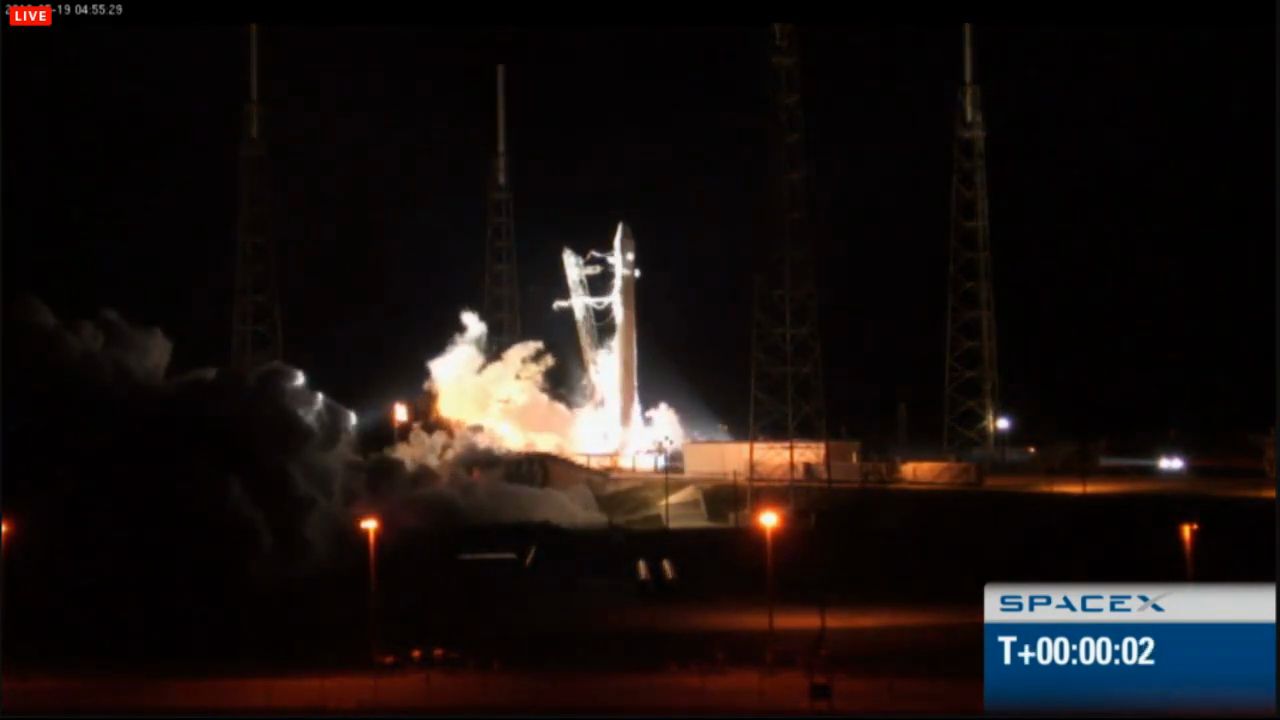
The abort.
SpaceX’s webcast of the first attempt. The count reaches zero at 41:03. The webcast’s own sound plays in YouTube’s player.SpaceX webcast, May 19, 2012. Uploaded by K R. Watch it on YouTube
T-2 min. SpaceX launch director and Air Force range give final approval.
All nine engines lit. Half a second before release, the flight computer saw high pressure in engine 5 and shut them down. The rocket never left the pad. Shotwell, that morning: “We aborted with purpose.”
NASA news conference, 6:30 a.m. EasternMay 19, 2012
Gwynne Shotwell: “We hold the vehicle down with purpose to watch for this exact issue. Just like a pilot at the end of a runway revs the engines and looks at the gauges, we were revving the engines, we were looking at the gauges and we decided not to fly.” … “this is not a failure. We aborted with purpose.”
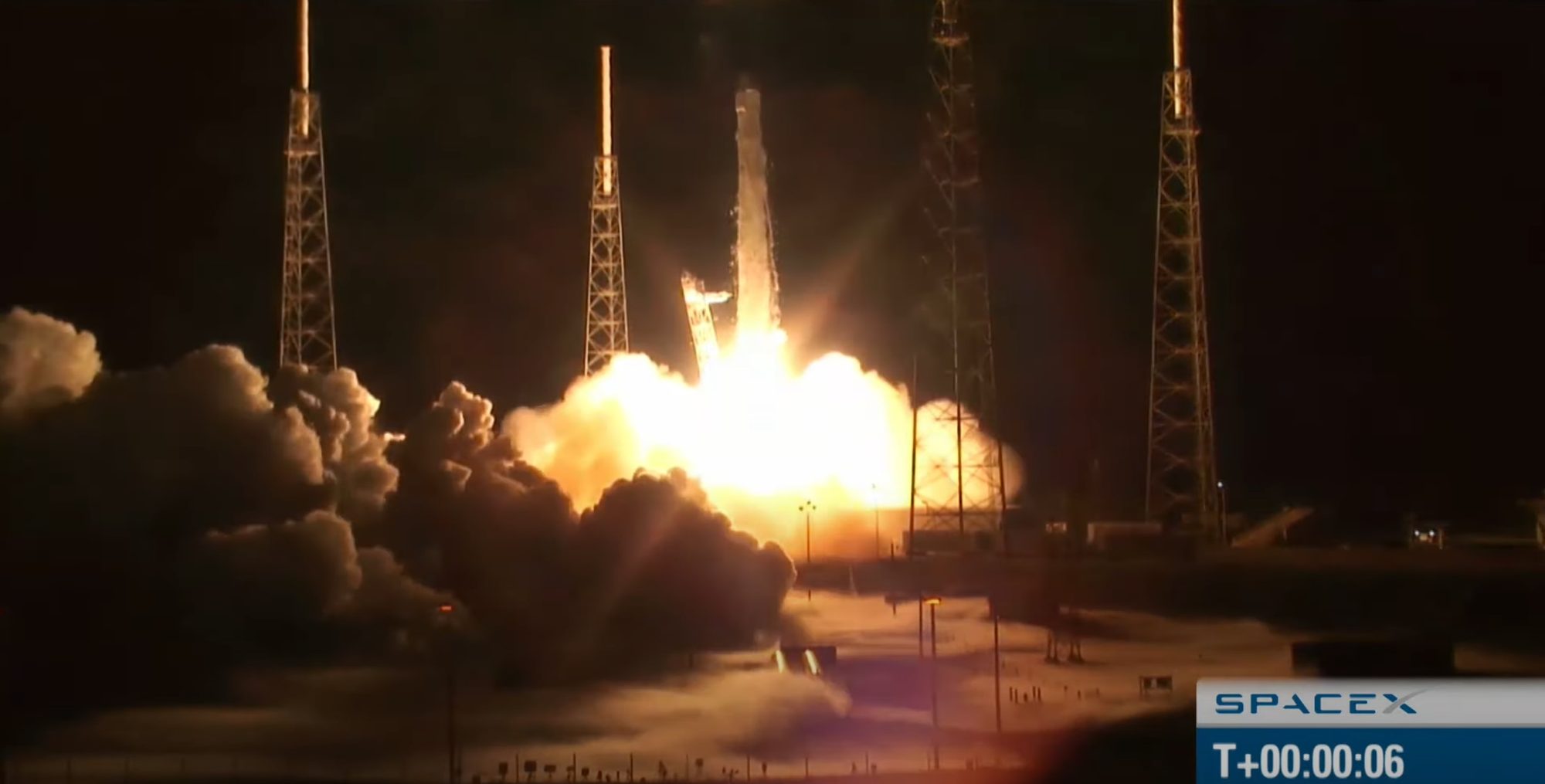
Falcon 9, six seconds after liftoff.Image: SpaceX, update of May 22, 2012
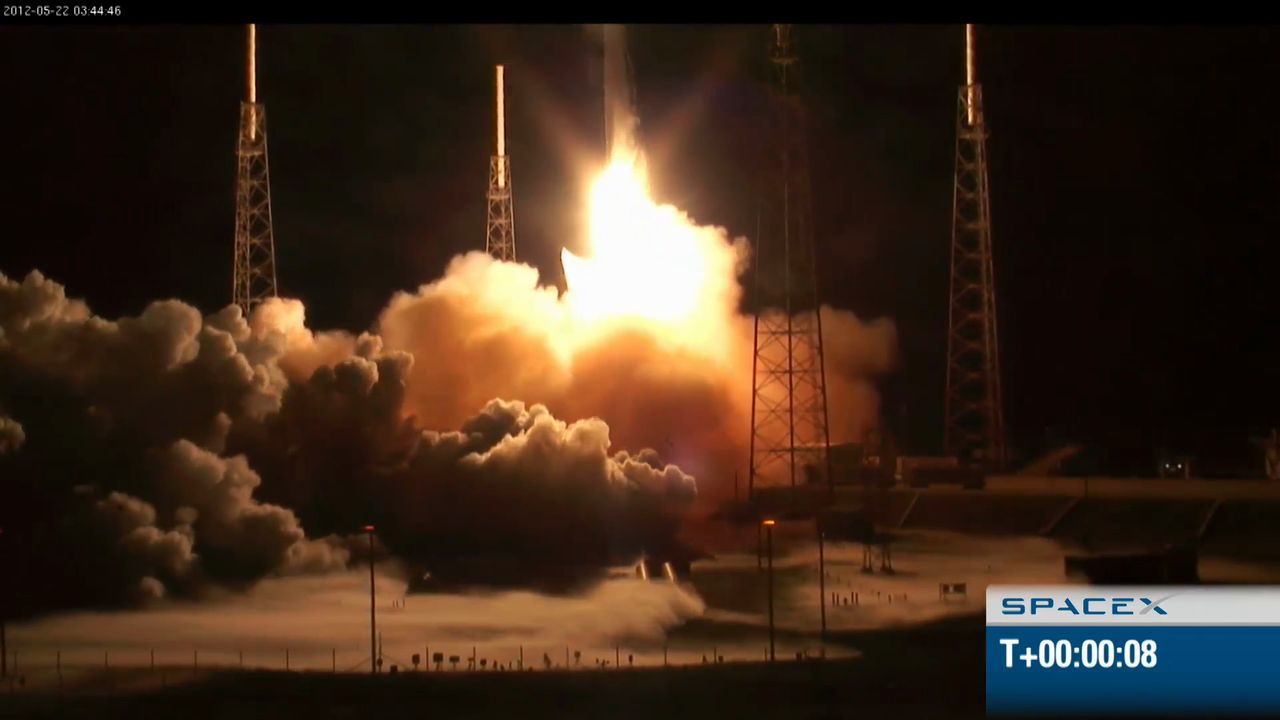
Falcon 9 lifted off from Cape Canaveral at 3:44:38 a.m. Eastern, in a window one second long. It was the rocket’s third flight. In Hawthorne it was 12:44 a.m.
“…we launched at night, and we launched on the second.”
Hans Koenigsmann, SpaceX vice president for mission assurance. NASA oral history, p. 17, 2013.
A launch window of one second: a day late or a second late meant the station had moved on.
Falcon flew perfectly!! Dragon in orbit, comm locked and solar arrays active!! Feels like a giant weight just came off my back :)
See the tweetsOn the station, the crew watched the launch on a laptop. NASA’s camera time: 07:44:45 UTC, seven seconds after liftoff.Photo: NASA, ISS031-E-140385
7
May 22
3:31 a.m. Hawthorne
10:31 UTC · T+00 02:46
The sensor bay.
Elon Musk (@elonmusk), 3:31 a.m.
Dragon spaceship opens the navigation pod bay door without hesitation. So much nicer than HAL9000 :)
The door covered the instruments Dragon would steer by near the station: a laser rangefinder (LIDAR) and thermal cameras. At 11:51 UTC NASA said both appeared to work.
LIDAR and thermal imager appear to work as expected.
A door on Dragon’s side opened on its laser rangefinder and thermal cameras. They would measure the last few hundred meters to the station. Three days later, near the station, one of them would see too much.
Part two: the fly-under
May 24, 2012
9
May 23
11:24 p.m. Hawthorne
May 24, 06:24 UTC · T+01 22:39
The radio.
177 km
Musk tweets: “About 110 miles away and the spacecraft is now in direct communication with the space station.”
Dragon heard the station from 110 miles away. The link mattered: through it, the crew could order Dragon to hold, back away or abort. The first test was a light.
Spaceflight NowMay 23, 2012
Holly Ridings, NASA’s flight director: “It’s the first time the crew on-board the ISS will send a command to the Dragon and get a response. … it’s leading towards the crew potentially needing to send more invasive commands, such as a hold, retreat, or even an abort later.”
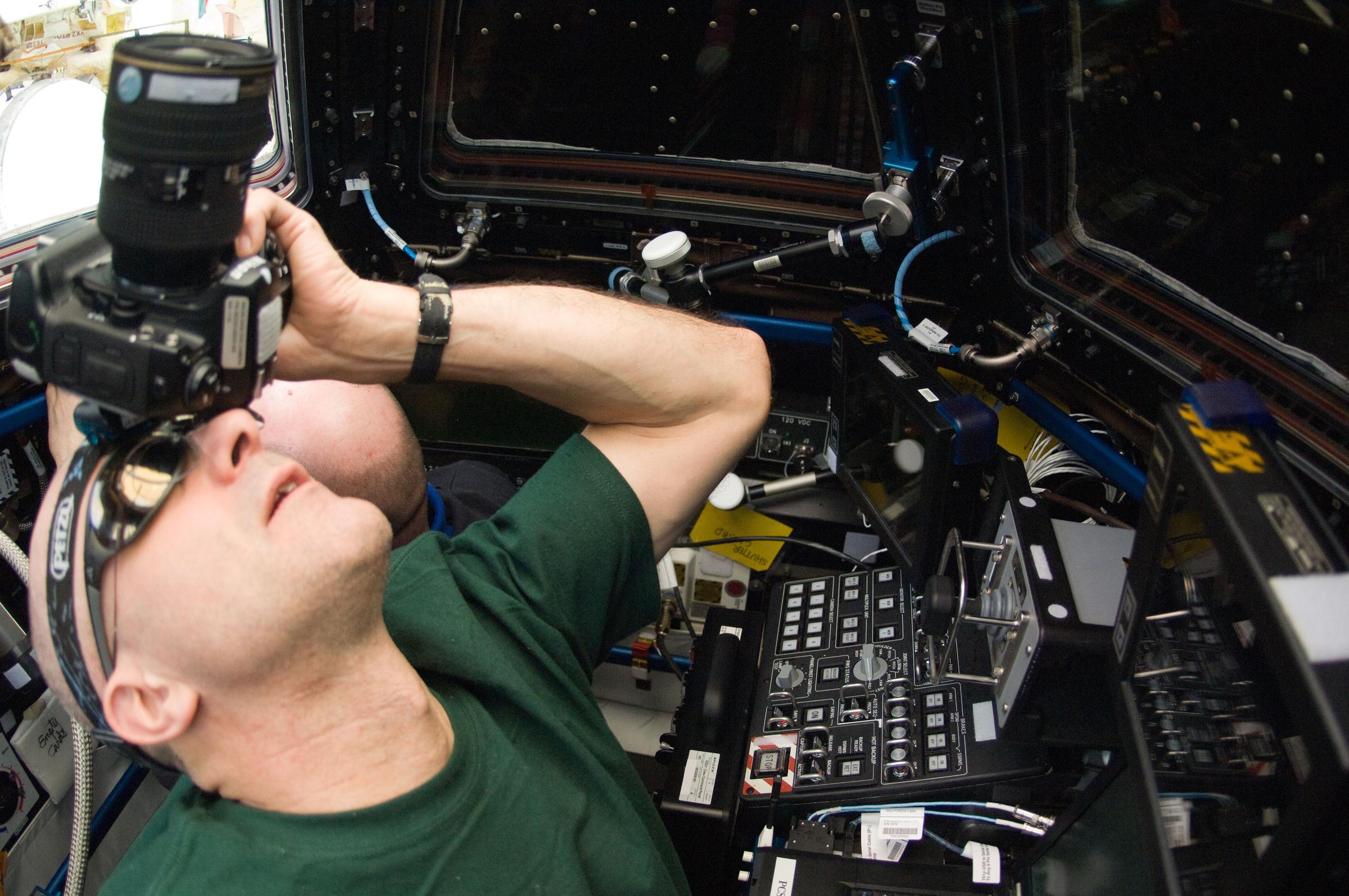
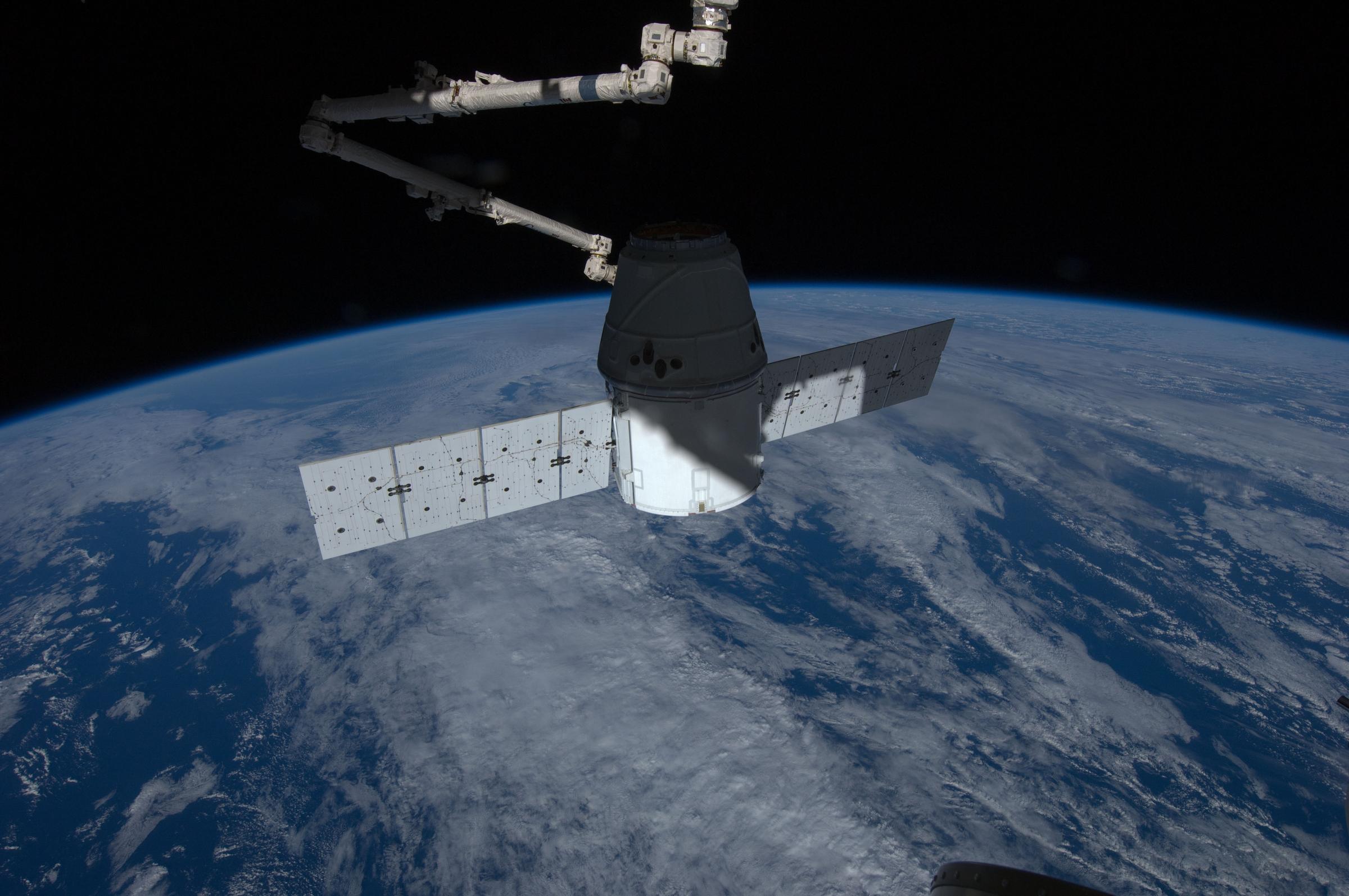
Don Pettit photographs Dragon from the Cupola. Camera time 10:58:33 UTC.Photo: NASA, ISS031-E-069294
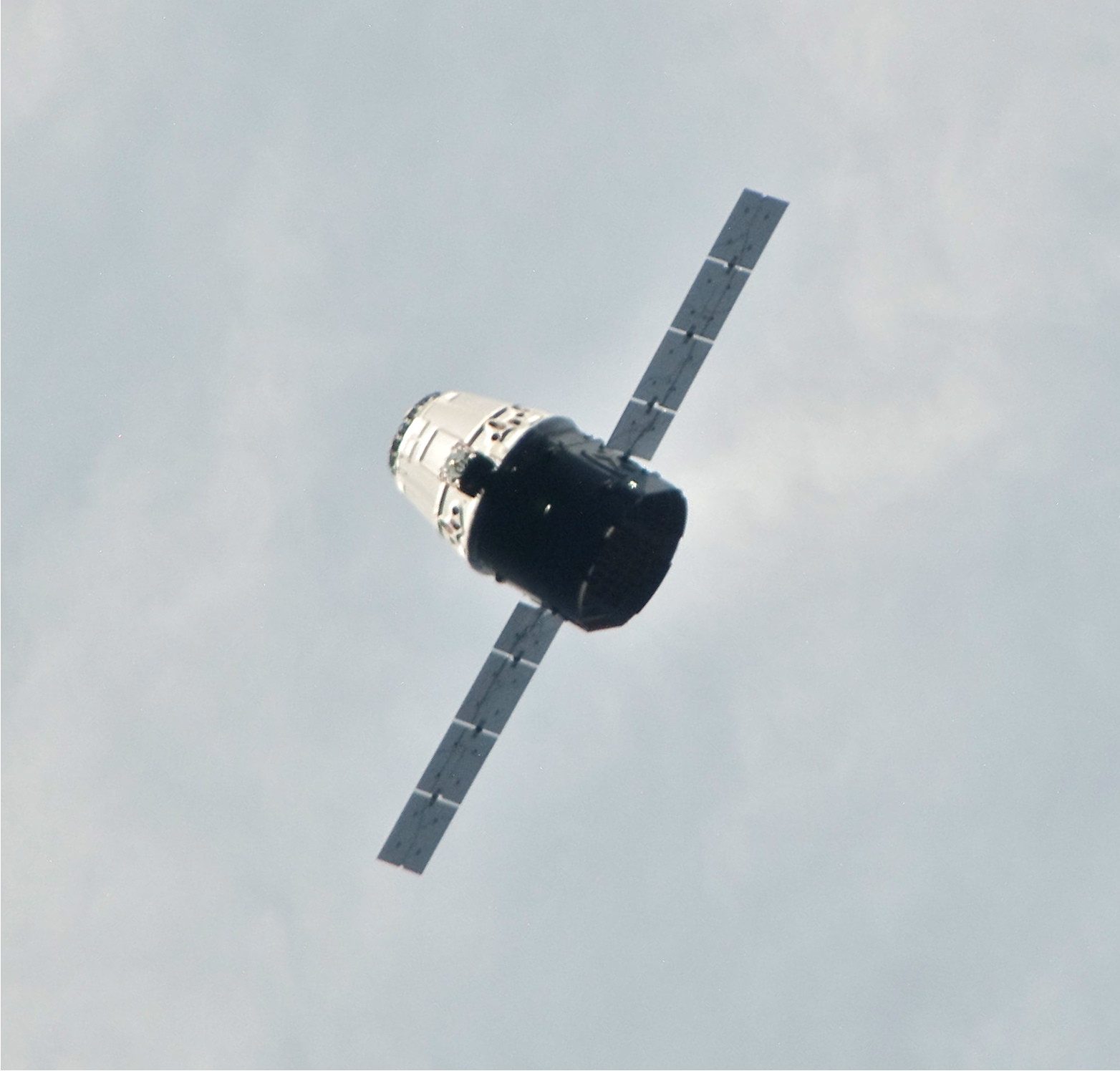
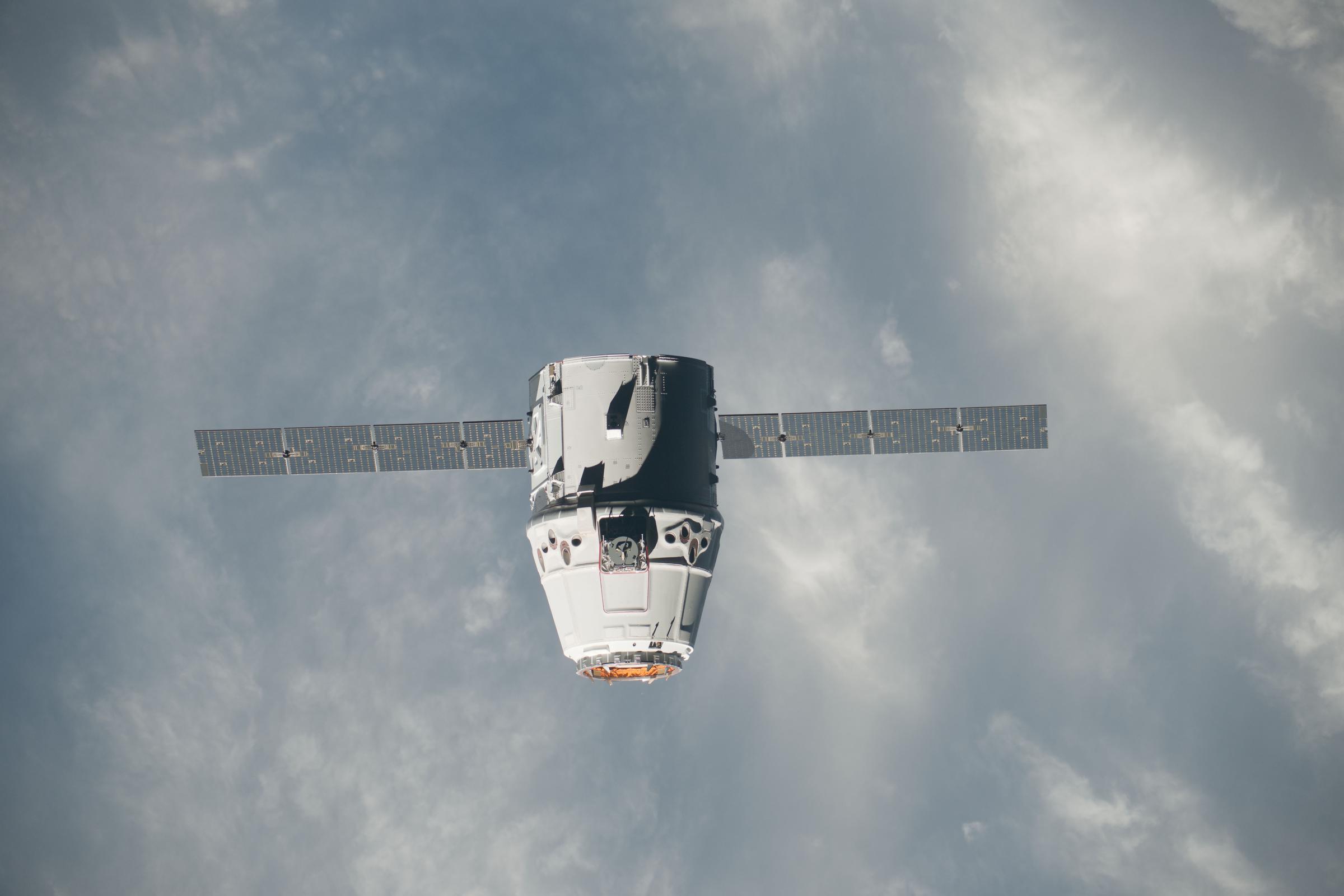
Dragon over the clouds, seen from the station, three minutes before it passed underneath. Camera time 11:21:23 UTC.Photo: NASA, ISS031-E-067328, May 24, 2012
2.5 km
Closest approach. Dragon crosses the R-bar under the station.
Pettit’s film of the fly-under, from the station.Video: NASA, filmed by Don Pettit, May 24, 2012. Watch it on YouTube
Dragon passed 2.5 km beneath the station. Pettit, in the Cupola, saw it out the window. Several of Dragon’s systems failed on the way, and backups took over each one. Everything the original second flight had to prove was now proved.
SpaceX updateMay 24, 2012
The station, as Dragon’s thermal camera saw it.Image: SpaceX, update of May 24, 2012
Early this morning, Dragon’s thrusters fired, bringing the vehicle 2.4 kilometers below the International Space Station.
…as it flew under the station, Dragon experienced more than half a dozen failures, including the loss of its GPS system for navigation. Each was cleared by switching to a backup.
Berger, Reentry, ch. 5, p. 120
11
May 24 to 25
Evening to 1 a.m. Hawthorne
The night.
SpaceX updateMay 24, 2012
Dragon has been performing well, but the most difficult aspects of the mission are still ahead.
Sometime around 6:00 AM Pacific/9:00 AM Eastern, astronauts on the space station will grapple Dragon with the space station’s robotic arm and the spacecraft will attach to the station.
NASA cleared Dragon to try. The plan put the capture at about six in the morning, Hawthorne time. Inside 1.5 miles of the station, the decisions passed to NASA’s flight director in Houston.
John Couluris, SpaceX’s mission director and a former Navy pilot, came back to his console that evening. Once Dragon came within 1.5 miles, the station’s flight director in Houston, Holly Ridings, had the final say.
Berger, Reentry, ch. 5, p. 120
Part three: the approach
May 25, 2012, 1:19 to 6:56 a.m. Hawthorne
12
May 25
1:19 to 1:44 a.m. Hawthorne
08:19 to 08:44 UTC · T+03 00:34
Into the ellipsoid.
Approach initiation burn. Aim point is 350 m directly below the station, in about 45 minutes.
Dragon fired its thrusters and rose toward the station from below. From here NASA could stop it at any point, and the crew could send it away. Pettit would fly the station’s robotic arm; Kuipers would watch Dragon and give the commands.
…she gave the go for Dragon to start slowly climbing.
Berger, Reentry, ch. 5, p. 120
Play the approach
The approach player needs JavaScript. The same beats follow below, in order, with their times.
Distance to the station
–
Close up
To scale. Drawn by Explorist.
Drawn by Explorist from the distances the record reports, with straight lines between them. Distance on a log scale; Hawthorne time, with UTC under it.
The crew's photos appear here at the times they were taken.
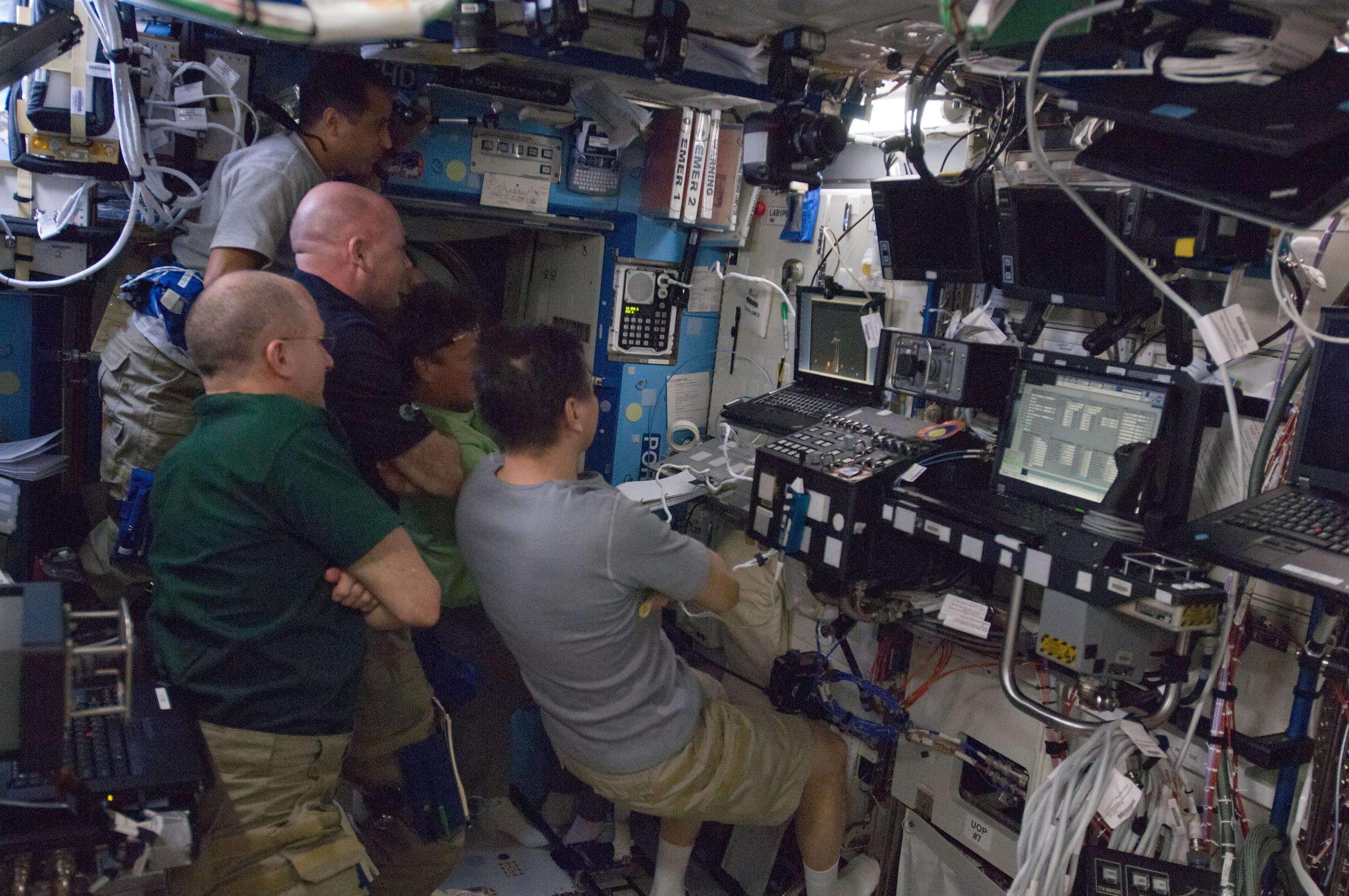
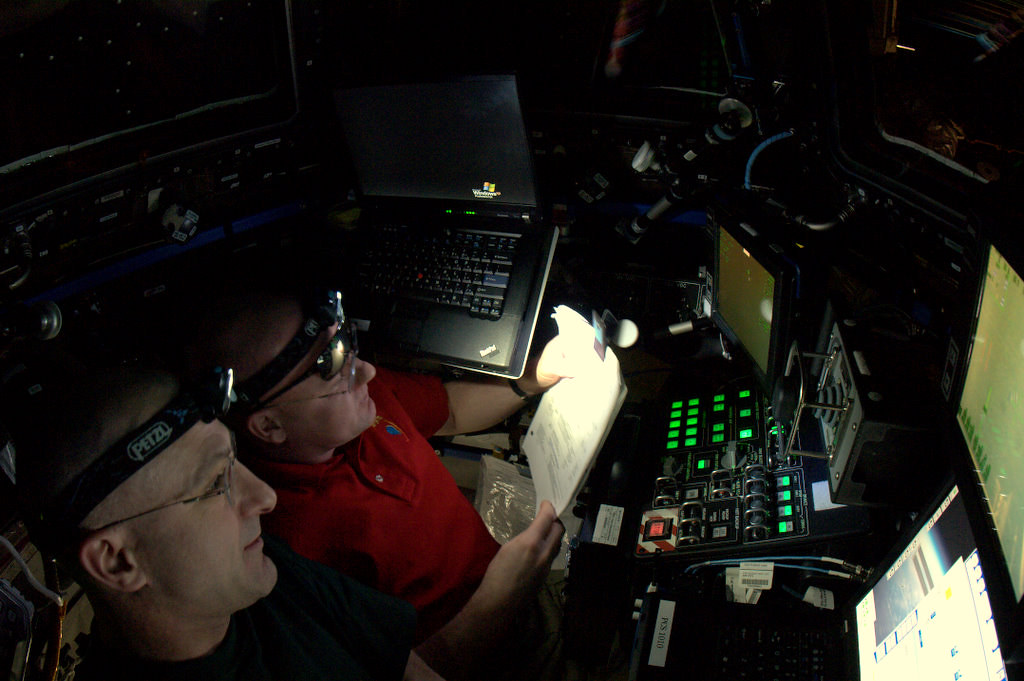
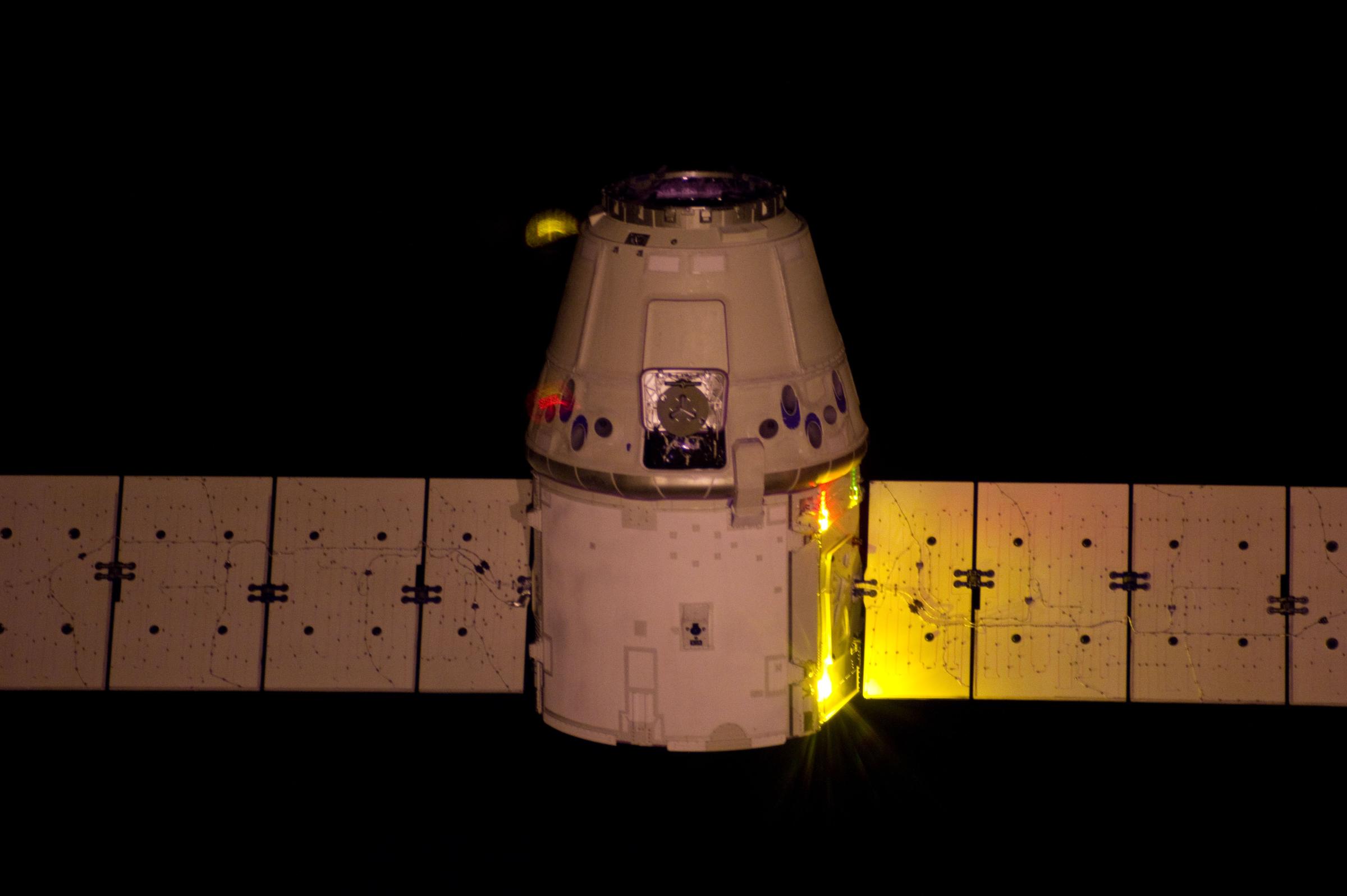
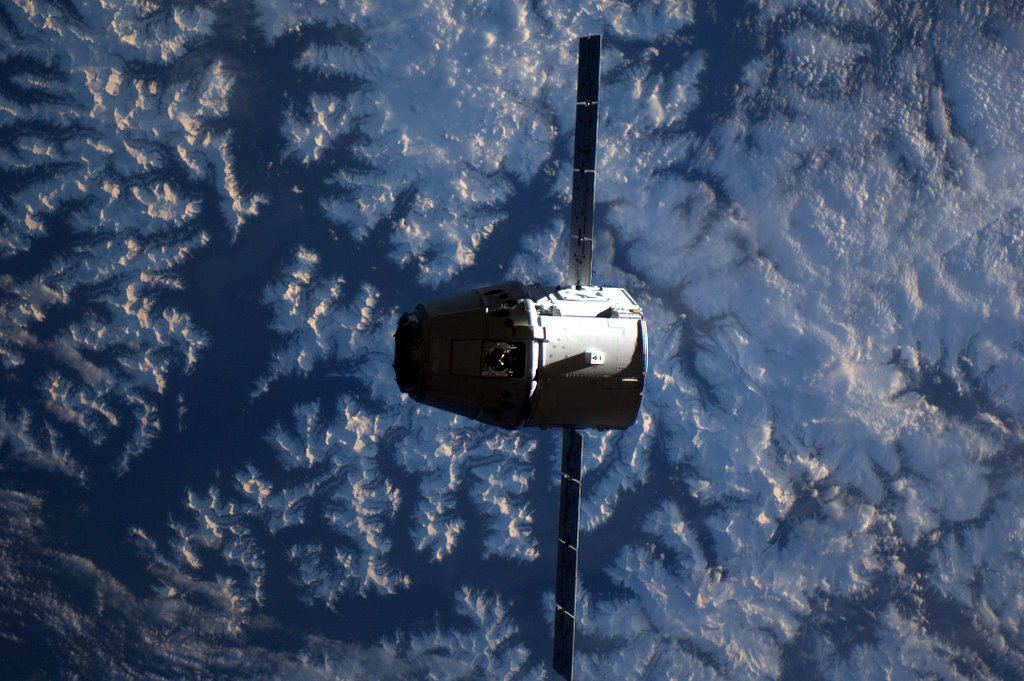
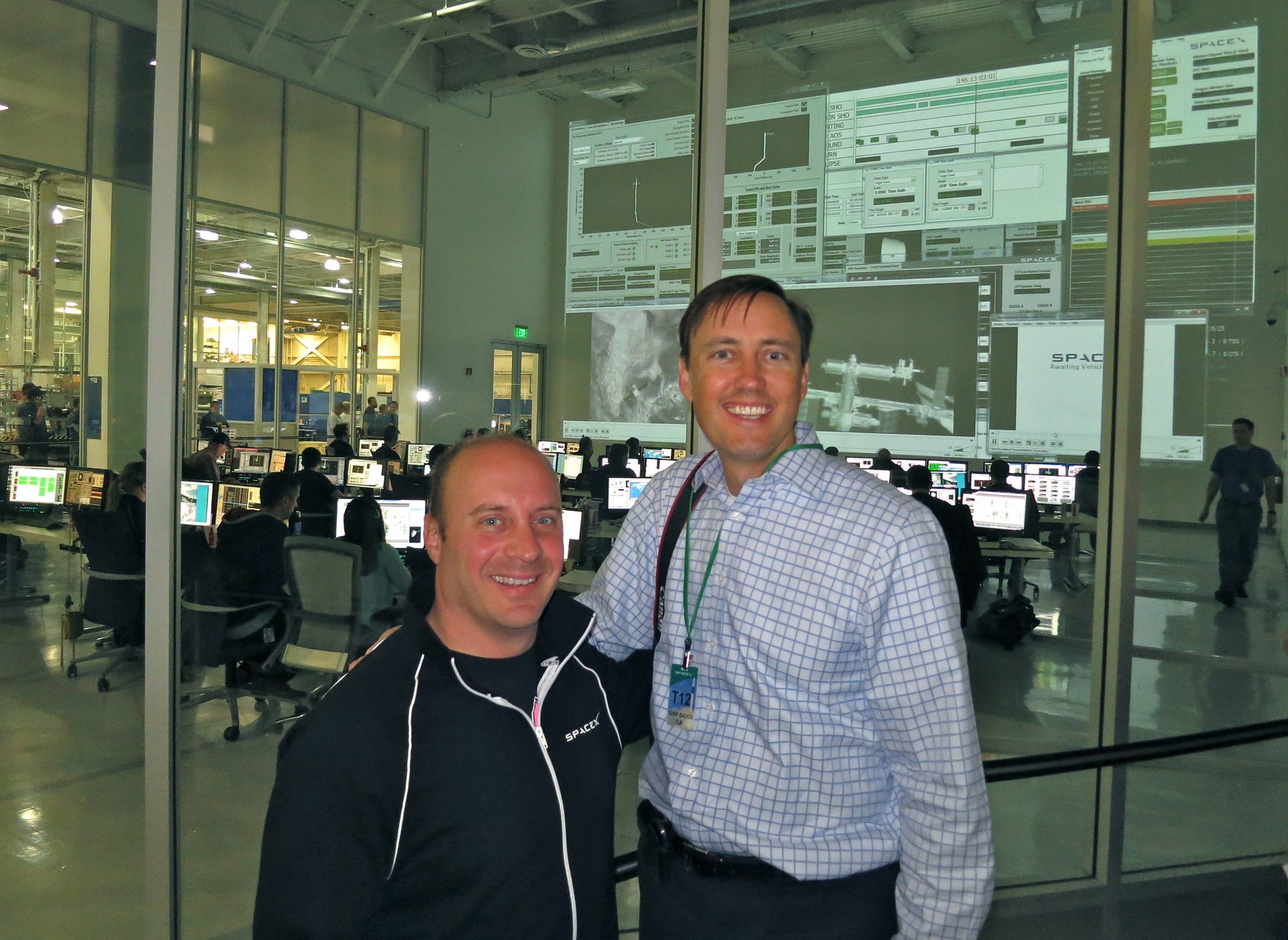
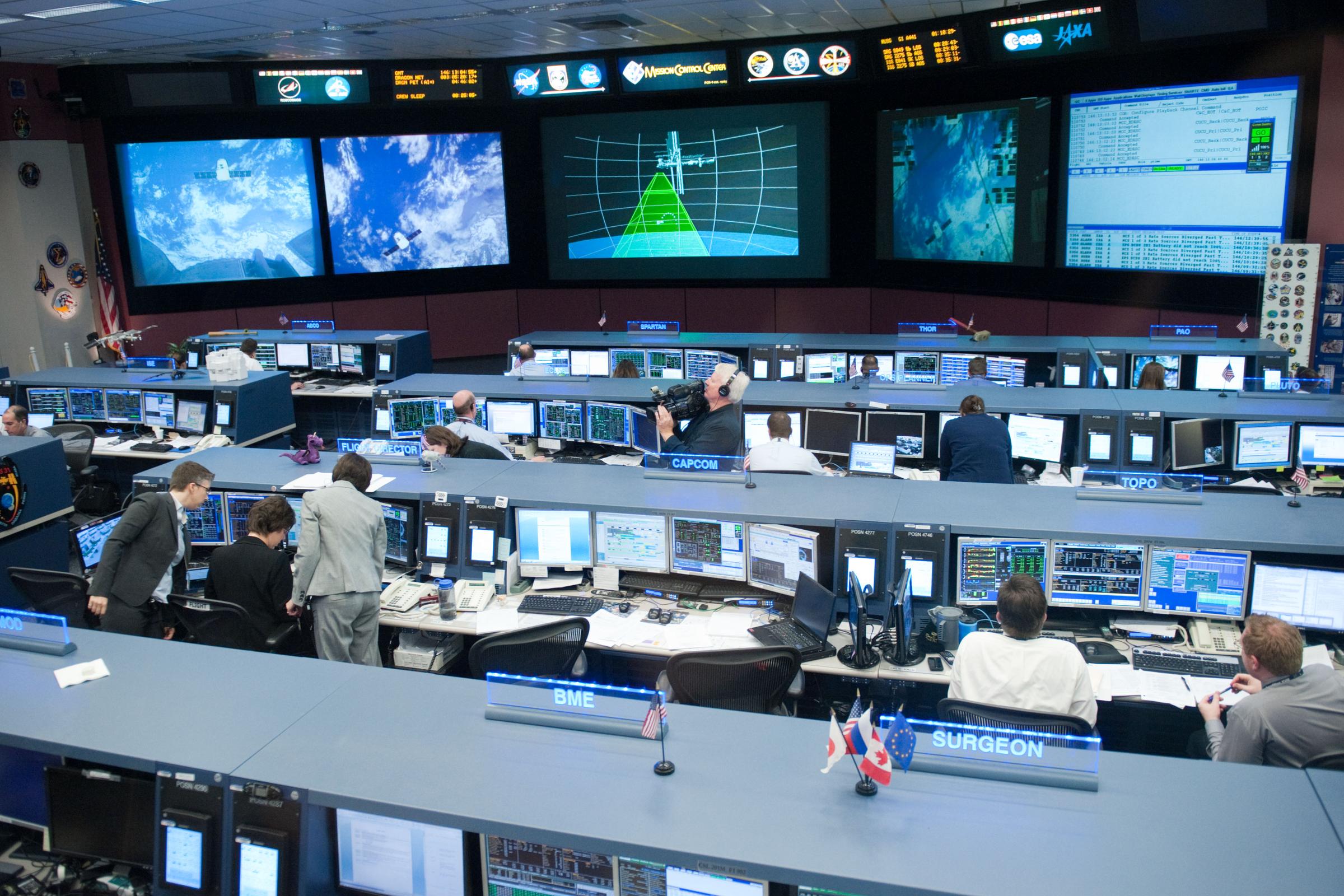
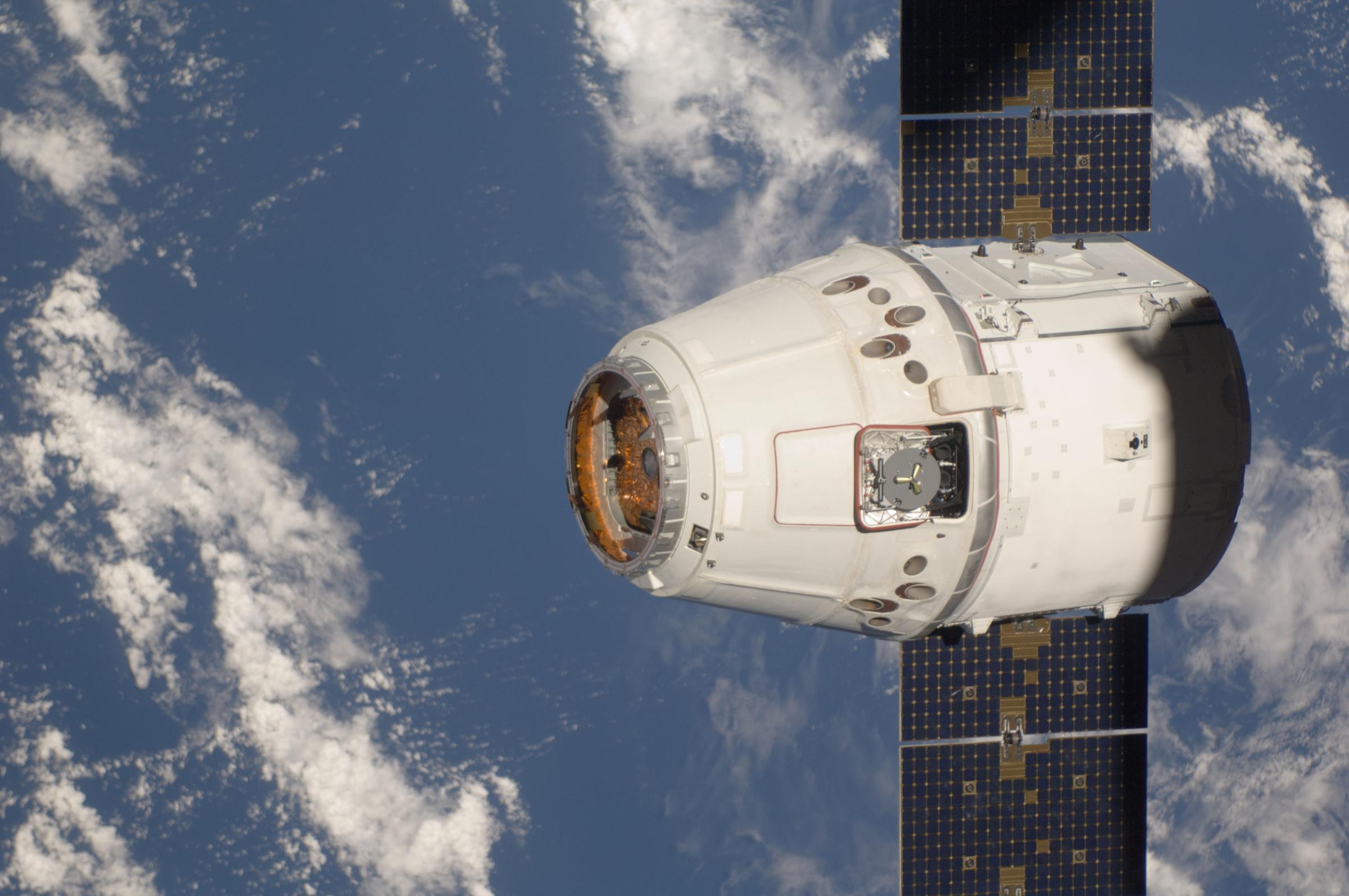
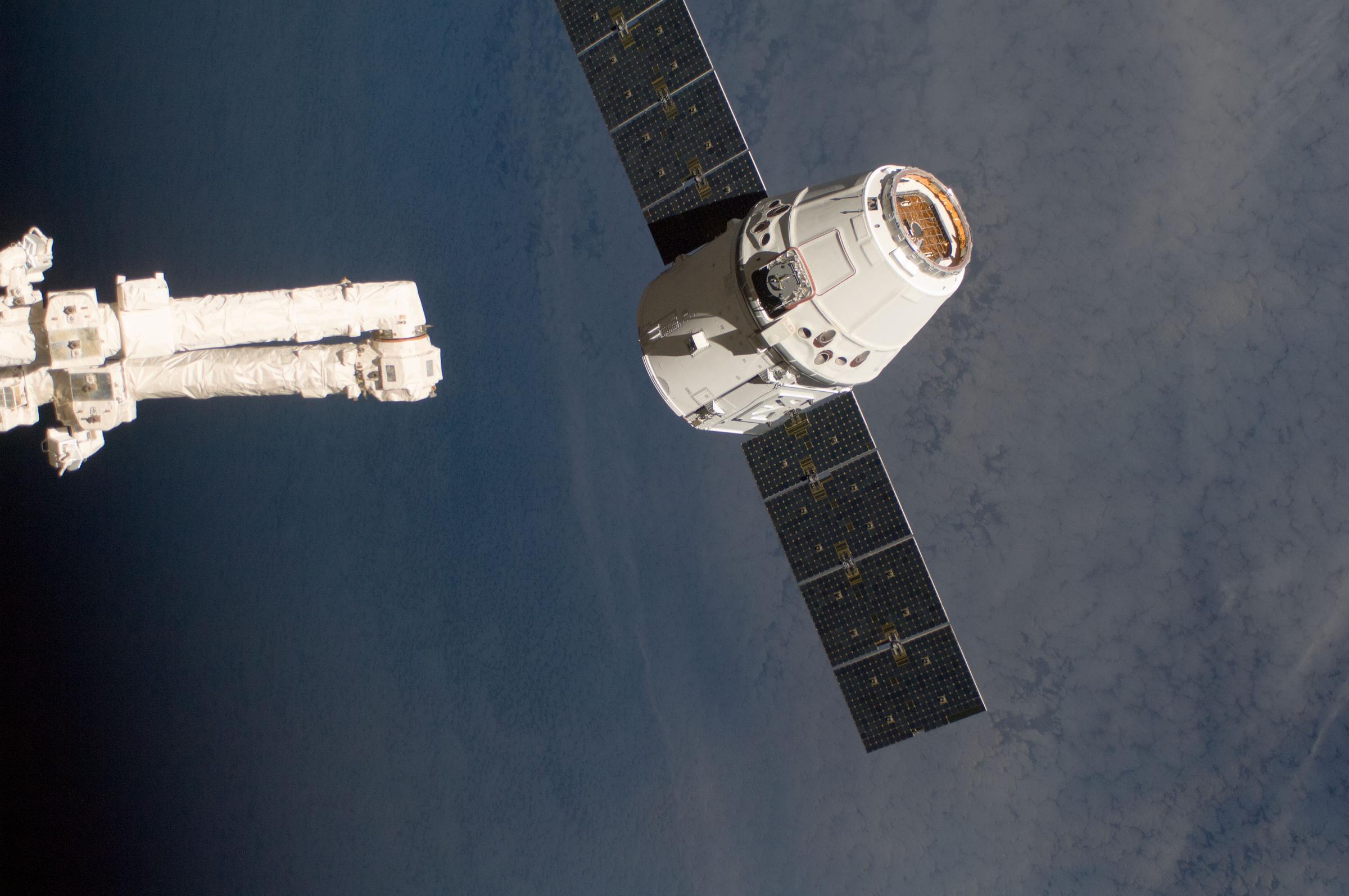
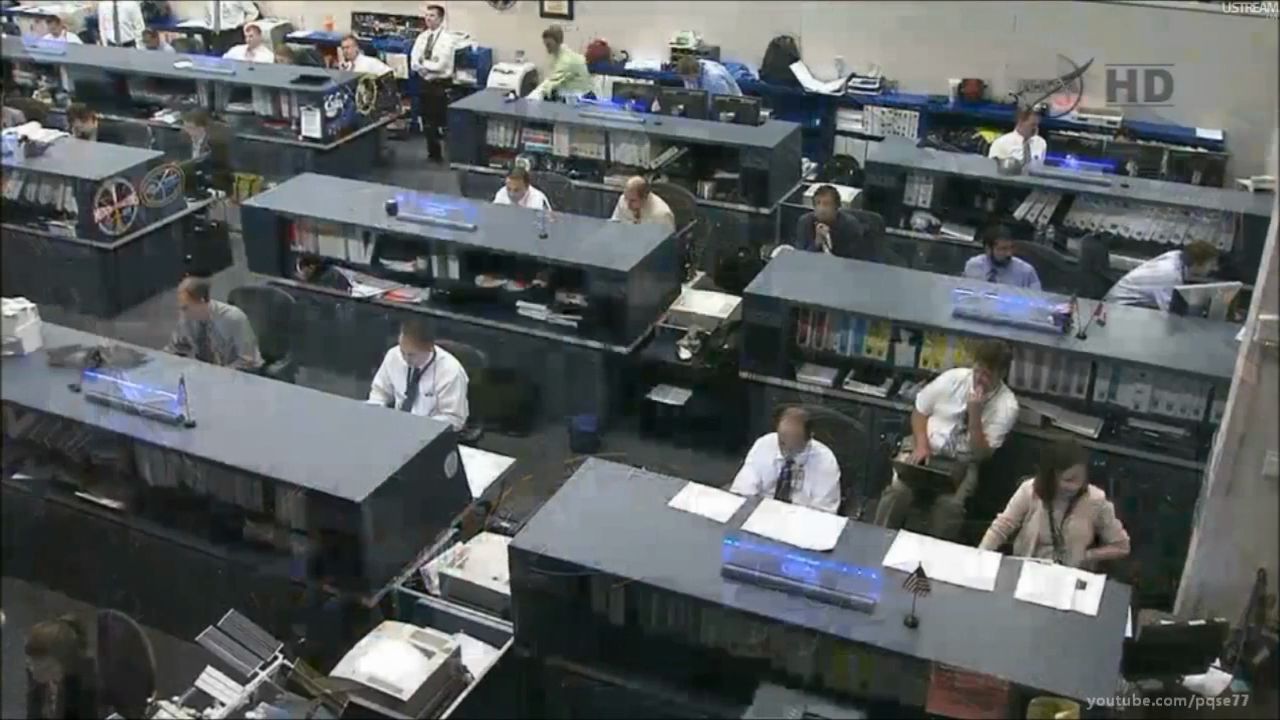
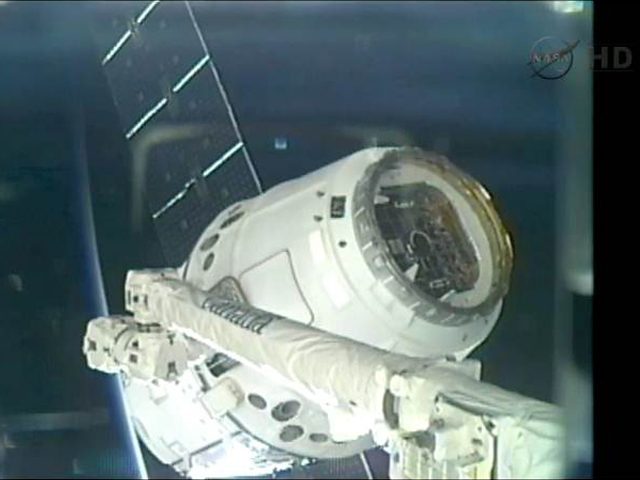
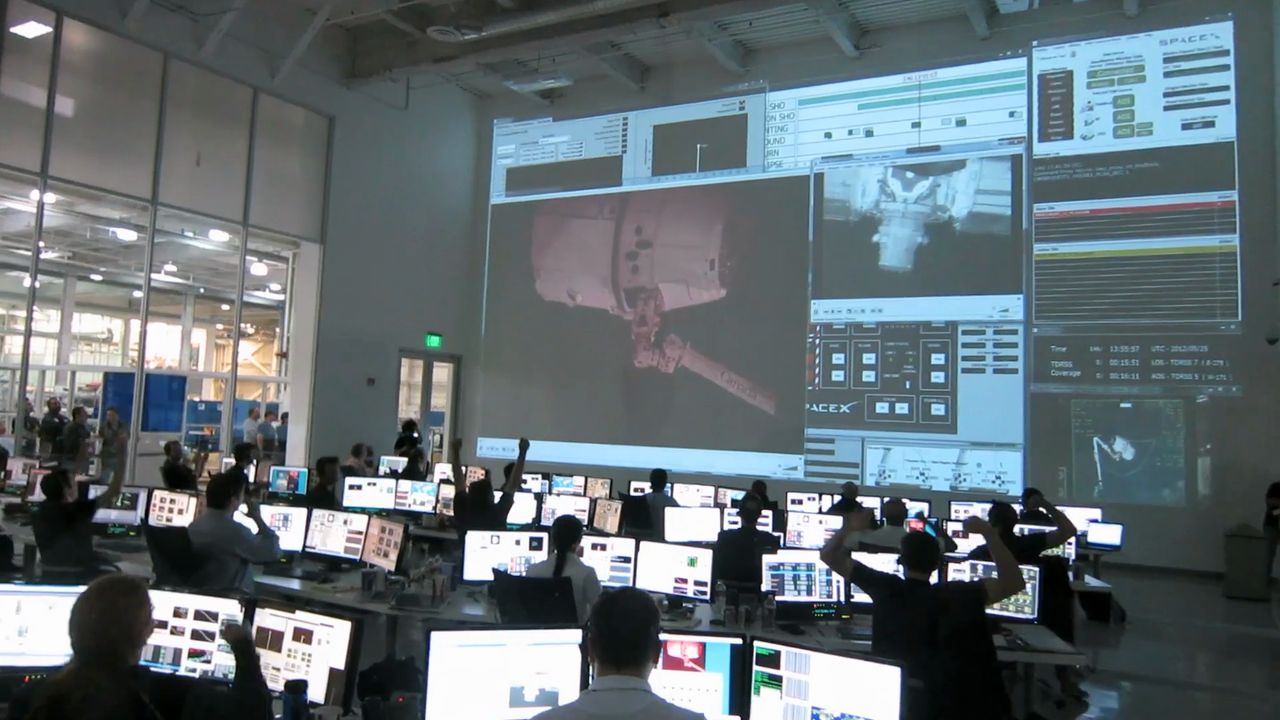
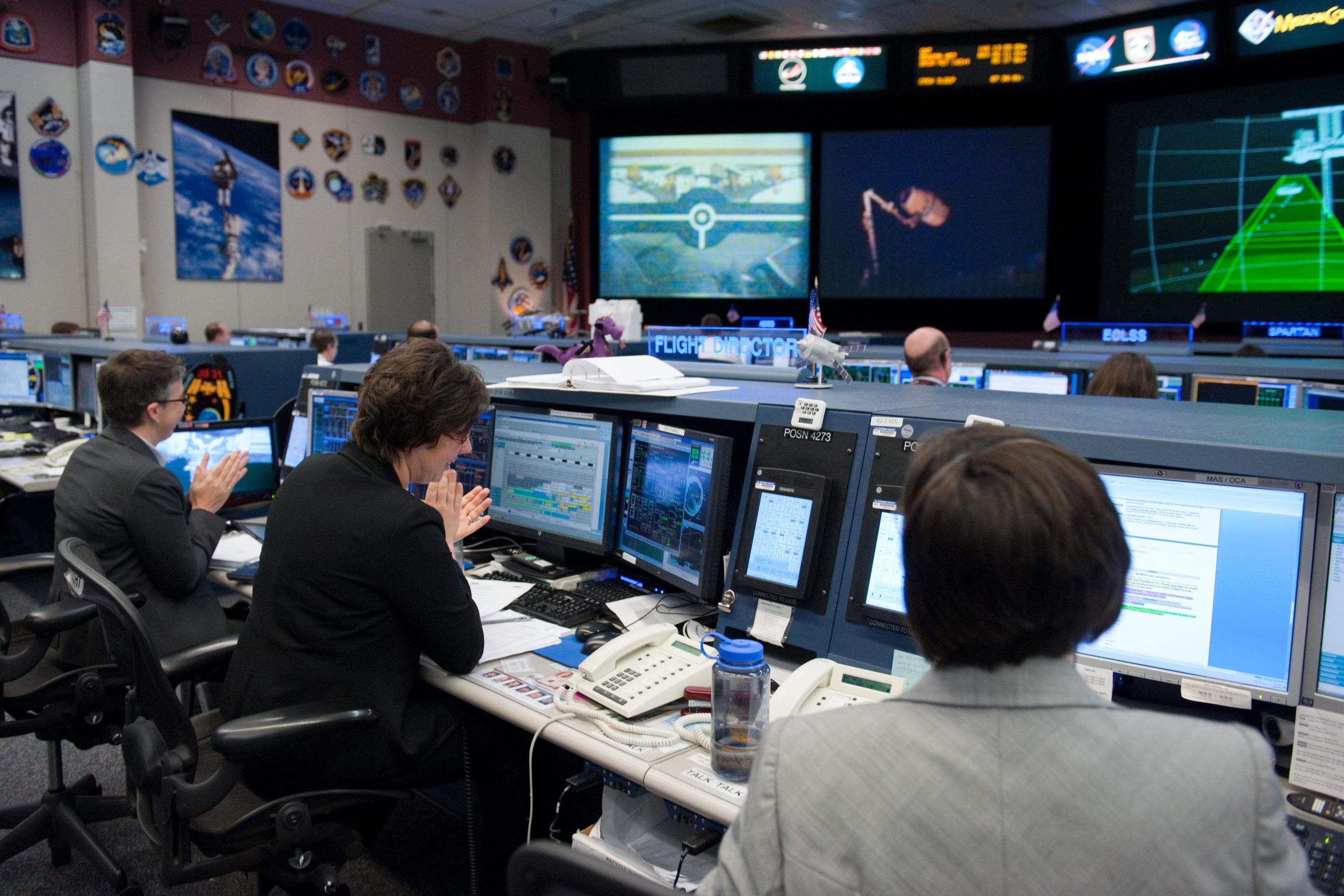
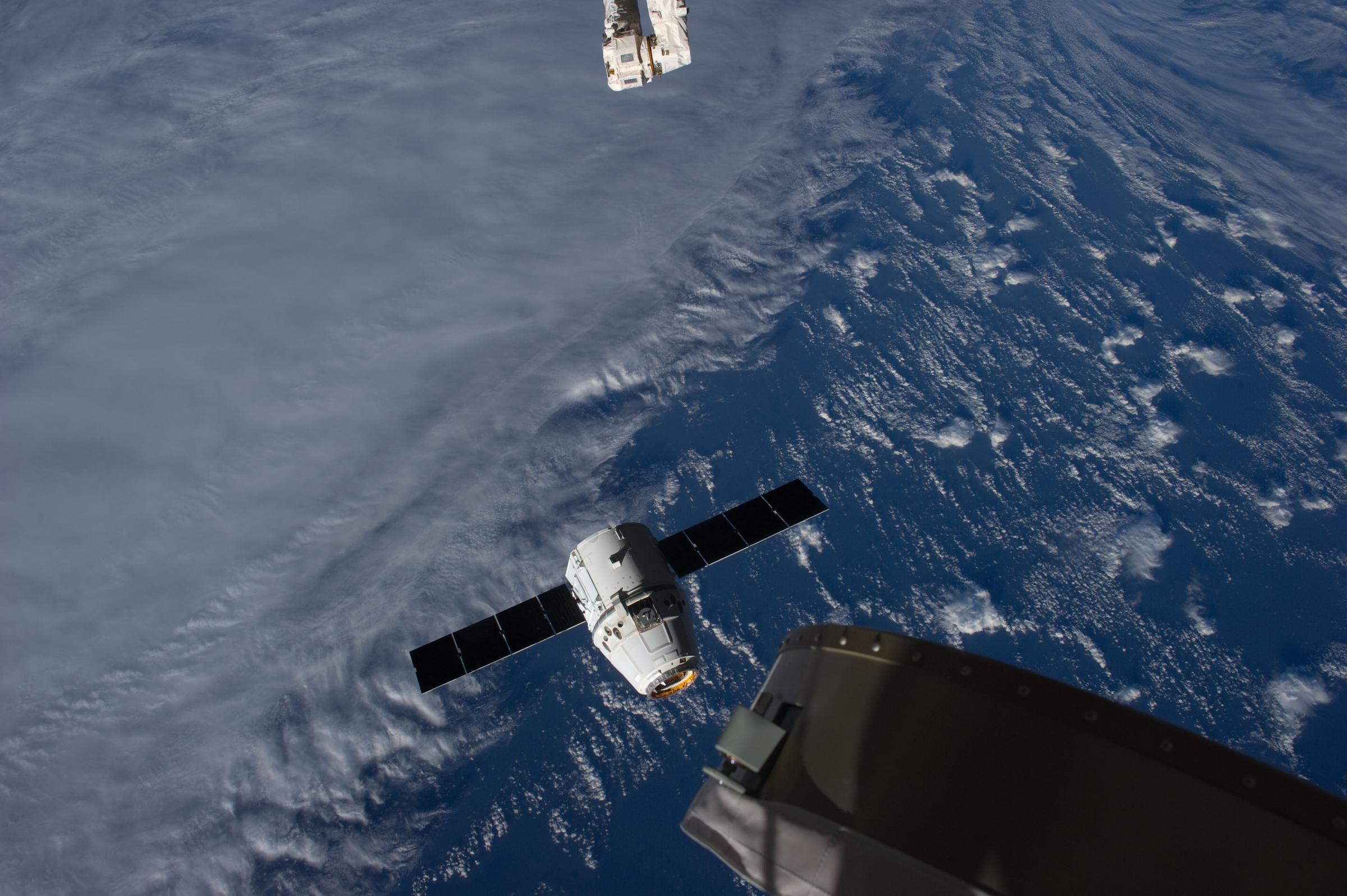
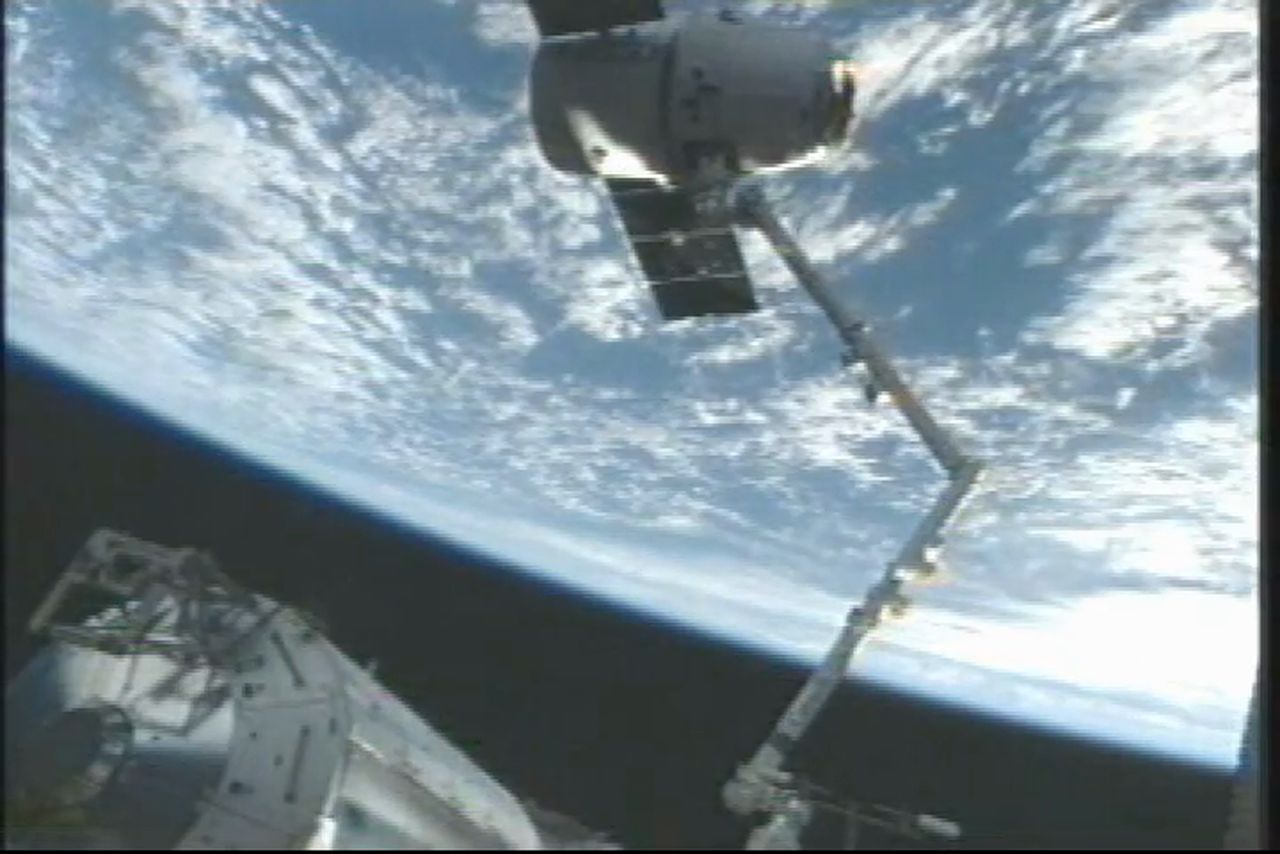
Don Pettit and André Kuipers at the robotics station in the Cupola.Photo: André Kuipers, ESA/NASATaken 2:27:38 a.m. Hawthorne · 09:27:38 UTCDragon below the station during the retreat test.Photo: NASA, ISS031-E-070745Taken 3:05:25 a.m. Hawthorne · 10:05:25 UTCDragon below the station, at the hold.Photo: NASA, ISS031-E-070663Taken 3:29:03 a.m. Hawthorne · 10:29:03 UTCDragon over Namibia.Photo: NASA, ISS031-E-070943Taken 4:52:36 a.m. Hawthorne · 11:52:36 UTCDragon below the station, moving in toward 78 meters.Photo: NASA, ISS031-E-071075Taken 4:59:32 a.m. Hawthorne · 11:59:32 UTCDragon in an infrared view from the station, during the hold.Photo: NASA, ISS031-E-084463Taken 5:39:18 a.m. Hawthorne · 12:39:18 UTCDragon over the Rocky Mountains, during the hold.Photo: André Kuipers, ESA/NASATaken 5:51:22 a.m. Hawthorne · 12:51:22 UTCGarrett Reisman and Steve Jurvetson in SpaceX mission control, Hawthorne. The clock on the screen behind Reisman reads 13:03:01. The approach resumes that minute. The record’s page.Photo: Steve Jurvetson, May 25, 2012 (CC BY 2.0)Taken 6:02:40 a.m. Hawthorne · 13:02:40 UTCIn Houston, the station’s flight control room during the approach.Photo: NASA/Lauren Harnett, JSC2012-E-054285Taken 6:05:28 a.m. Hawthorne · 13:05:28 UTCDragon below the station as the approach resumes.Photo: NASA, ISS031-E-071135Taken 6:07:17 a.m. Hawthorne · 13:07:17 UTCDragon at the 30-meter hold.Photo: NASA, ISS031-E-071140Taken 6:17:16 a.m. Hawthorne · 13:17:16 UTCApproach to 10 meters: Dragon below the station, about to be grappled.Photo: NASA, ISS031-E-071146Taken 6:35:15 a.m. Hawthorne · 13:35:15 UTC
The crew has until 7:02 a.m. Hawthorne time (14:02 UTC) to capture Dragon, or must wait until 7:28. A capture before 7:02 happens in darkness.Spaceflight Now, status log
Orbital darkness over the Southern Ocean. Station floodlights on as Dragon moves inside 50 feet.Spaceflight Now, status log
10 mDragon at the capture point. Flight director Holly Ridings polls for “go” for capture. Kuipers: “The crew is ready.”Spaceflight Now, status log
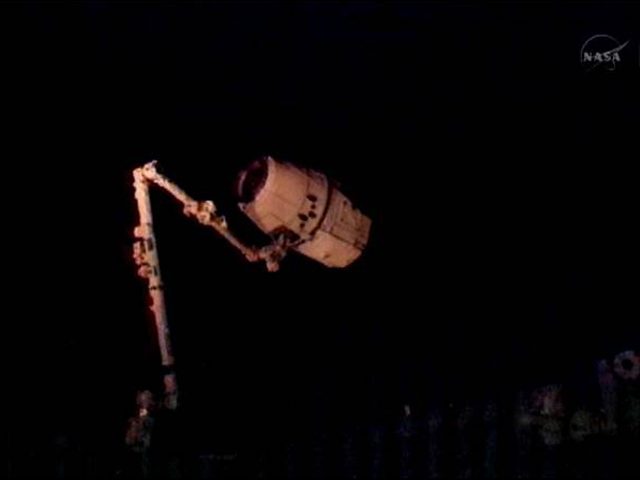
10 mCAPTURE. Pettit grapples Dragon with Canadarm2 over northwest Australia, 251 miles up, in darkness.Spaceflight Now, status log
10 mPettit: “Looks like we got us a Dragon by the tail.” Then: “Looks like this sim went really well. We’re ready to turn it around and do it for real.” Applause in Houston and Hawthorne.NASA TV
About four and a half hours in about five minutes at 60 times real speed, stopping at each beat. NASA TV plays at real speed.
Speed
2:23 a.m.
7:00 a.m.
13
May 252:29 to 3:22 a.m. Hawthorne09:29 to 10:22 UTC · T+03 01:44
250 meters.
At 250 meters the crew tested the two commands they might need for real: back away, and stop. Both worked. But Dragon’s two ways of measuring distance did not agree, and the controllers loosened the limit to keep going.
One of the two lasers “started to return some glitchy data.” The thermal cameras, meant to agree with the laser within 10 percent, were off by up to 20. Couluris and Ridings agreed on their private line to widen the limit.
Berger, Reentry, ch. 5, p. 120
14
May 254:14 to 4:44 a.m. Hawthorne11:14 to 11:44 UTC · T+03 03:29
200 and 150 meters.
Dragon entered the 200-meter sphere around the station that only cleared vehicles may enter. Then it stopped again at 150 meters, so the engineers could look at the thermal cameras. The capture was now an hour behind plan.
15
May 255:01 to 5:28 a.m. Hawthorne12:01 to 12:28 UTC · T+03 04:16
The retreat.
At 59 meters one of Dragon’s two lasers failed. SpaceX backed Dragon away before the station could order an abort. The command went out 19 seconds after the failure. Dragon stopped at 72 meters and waited.
“Then lidar two outright failed. Paul Wooster called for Dragon to retreat back to a safe distance. Couluris turned to the engineer in charge of navigation, Jeff Tooley. For critical spacecraft maneuvers both had to send a command … They issued the command, and Dragon began to back away. … Nineteen seconds had elapsed since the lidar’s failure.”
Berger, Reentry, ch. 5, p. 121
“One of the GNC engineers made a brilliant call. … luckily he called a retreat. Because otherwise I think they would have said, ‘abort,’ and then we would have had to spend 24 hours going around and coming back.”
Gwynne Shotwell, president. NASA oral history, p. 14, 2013.16
May 255:28 to 6:03 a.m. Hawthorne12:28 to 13:03 UTC · T+03 04:43
Thirty-five minutes at 72 meters.
The laser was seeing reflections off Japan’s module on the station. SpaceX proposed narrowing its view, a change to Dragon’s settings this close to the station. Berger writes that NASA’s flight rules forbade it. Fuel and thruster heat left little time. In Houston, flight director Holly Ridings said go.
The lasers were bouncing “not just … off dedicated reflectors on the station but also off the nearby Japanese module, Kibō, a phenomenon known as ‘dazzling.’” The fix: shrink the part of the station the laser looks at. “This involved a minor software change, however, and doing that in proximity to the station violated NASA’s flight rules. The decision was in Ridings’s court.”
Berger, Reentry, ch. 5, p. 121
Fuel might not last for a second try the next day, and the thrusters, pulsing to hold position, were heating toward their limit. “It was excruciating watching the temperatures creep up … We really had to go, one way or the other, or the mission was done.” David Giger.
Berger, Reentry, ch. 5, pp. 121 to 122
Ridings sat, which she never did. “Normally I just pace, pace, pace. But I was sitting, with absolute total focus.” Some of her controllers voted no-go. “She overrode the concerns of some members of her team and told Couluris to update the software.”
Berger, Reentry, ch. 5, pp. 102, 123
“…we had to send the command that we... That wasn’t part of any procedure.” … “…to segment the optical field of view to eliminate some of the reflections that we’re seeing on the on the on the Japanese module.” … “…this is burned into my memory for the rest of my life.”
Boris Lipchin, Dragon guidance software engineer. It’s Not Rocket Science, 10:26 to 11:05, 2026.
“…she knew that this was the guy that wrote the code in the first place … So she trusted him and she did a hard thing. She said, ‘Um, go, go for it.’”
Garrett Reisman, SpaceX. Planetary Radio, 2020.
“I wasn’t actually sure we were going to make it.”
Gwynne Shotwell, president. NASA oral history, p. 14, 2013.
How the accounts differ
What went wrong
Who says so
Laser reflections
The record, Berger, Lipchin
A glint on the thermal cameras
Shotwell, NASA’s COTS history
Laser against GPS
Jeff Ward
A command
The record (SpaceX “finished its commanding”), Lipchin
New code
Reisman, Shotwell, Singh
The record leads.
17
May 256:03 to 6:47 a.m. Hawthorne13:03 to 13:47 UTC · T+03 05:18
One laser.
With both lasers reset, Dragon moved in at less than three inches a second. Near 17 meters the second laser was dazzled again, by the docking ring, and failed. Dragon went on with one. At 6:47 a.m. it stopped ten meters below the station.
At 55 feet the second laser “started to dazzle off the docking ring. Then it failed.” “We were just sitting there sweating because we were on one lidar, and two thermal imagers. If we lose the cross-check, or we lose the lidar, it’s game over.” John Couluris.
Berger, Reentry, ch. 5, p. 123
“Megan sending a friendly reminder right before they grappled us that we’re only on one LIDAR.”
John Couluris, mission director, on the CAPCOM, Megan McArthur Behnken. NASA oral history, p. 15, 2013.18
May 256:47 to 6:56 a.m. Hawthorne13:47 to 13:56 UTC · T+03 06:02
Go for capture.
Dragon stopped firing its thrusters and floated free. Pettit had about fifteen minutes to catch it with the station’s 58-foot arm before it drifted away. It was dark: the station was over the Indian Ocean, on the night side of the Earth.
“I was just like, really, Don, could you go any slower? … He didn’t really go slower than the simulations. But we were so close.” Kathy Lueders. Pettit had about fifteen minutes before Dragon drifted out of reach.
Berger, Reentry, ch. 5, pp. 123 to 124
“I wasn’t going to let the future of commercial space get muffed up because of some mistake on my part, so I spent a lot of time practicing.”
Don Pettit, NASA astronaut, at the arm. NASA oral history, p. 17, 2015.19
May 256:56 a.m. Hawthorne13:56 UTC · T+03 06:11
Capture.
At 6:56 a.m. in Hawthorne, Don Pettit closed the station’s arm on Dragon. “Looks like we got us a Dragon by the tail,” he radioed. No company had built a spacecraft that reached the station before.
SpaceX mailing listMay 25, 2012
SpaceX Makes History
CAPTURE COMPLETE!!! The space station’s robotic arm has grappled SpaceX’s Dragon spacecraft!
The team had given Dragon “a 50 percent chance, at best.” Musk walked to Couluris and shook his hand. Laura Crabtree, the operations planner, “sat back in her chair and cried.”
Berger, Reentry, ch. 5, pp. 124 to 125
“…it felt like an eternity at the time, but now that I look at it, that’s the fastest grapple operation I’d ever seen.”
John Couluris, mission director. NASA oral history, p. 14, 2013.
“I happened to be in mission control delivering breakfast burritos at the time. And I was standing next to [Gwynne]. And when Dragon docked successfully, [Gwynne] turned around and hugged me.”
Ted Cizma, SpaceX’s chef. It’s Not Rocket Science, 19:45, 2026.
He says 2013. The flight was in 2012.
The approach in pictures
Every photo and film of the morning, at its Hawthorne time. Press one to play the approach from that minute.
May 252:29 to 3:22 a.m. Hawthorne09:29 to 10:22 UTC · T+03 01:44
250 meters.
At 250 meters the crew tested the two commands they might need for real: back away, and stop. Both worked. But Dragon’s two ways of measuring distance did not agree, and the controllers loosened the limit to keep going.
One of the two lasers “started to return some glitchy data.” The thermal cameras, meant to agree with the laser within 10 percent, were off by up to 20. Couluris and Ridings agreed on their private line to widen the limit.
Berger, Reentry, ch. 5, p. 120
14
May 254:14 to 4:44 a.m. Hawthorne11:14 to 11:44 UTC · T+03 03:29
200 and 150 meters.
Dragon entered the 200-meter sphere around the station that only cleared vehicles may enter. Then it stopped again at 150 meters, so the engineers could look at the thermal cameras. The capture was now an hour behind plan.
15
May 255:01 to 5:28 a.m. Hawthorne12:01 to 12:28 UTC · T+03 04:16
The retreat.
At 59 meters one of Dragon’s two lasers failed. SpaceX backed Dragon away before the station could order an abort. The command went out 19 seconds after the failure. Dragon stopped at 72 meters and waited.
“Then lidar two outright failed. Paul Wooster called for Dragon to retreat back to a safe distance. Couluris turned to the engineer in charge of navigation, Jeff Tooley. For critical spacecraft maneuvers both had to send a command … They issued the command, and Dragon began to back away. … Nineteen seconds had elapsed since the lidar’s failure.”
Berger, Reentry, ch. 5, p. 121
“One of the GNC engineers made a brilliant call. … luckily he called a retreat. Because otherwise I think they would have said, ‘abort,’ and then we would have had to spend 24 hours going around and coming back.”
Gwynne Shotwell, president. NASA oral history, p. 14, 2013.16
May 255:28 to 6:03 a.m. Hawthorne12:28 to 13:03 UTC · T+03 04:43
Thirty-five minutes at 72 meters.
The laser was seeing reflections off Japan’s module on the station. SpaceX proposed narrowing its view, a change to Dragon’s settings this close to the station. Berger writes that NASA’s flight rules forbade it. Fuel and thruster heat left little time. In Houston, flight director Holly Ridings said go.
The lasers were bouncing “not just … off dedicated reflectors on the station but also off the nearby Japanese module, Kibō, a phenomenon known as ‘dazzling.’” The fix: shrink the part of the station the laser looks at. “This involved a minor software change, however, and doing that in proximity to the station violated NASA’s flight rules. The decision was in Ridings’s court.”
Berger, Reentry, ch. 5, p. 121
Fuel might not last for a second try the next day, and the thrusters, pulsing to hold position, were heating toward their limit. “It was excruciating watching the temperatures creep up … We really had to go, one way or the other, or the mission was done.” David Giger.
Berger, Reentry, ch. 5, pp. 121 to 122
Ridings sat, which she never did. “Normally I just pace, pace, pace. But I was sitting, with absolute total focus.” Some of her controllers voted no-go. “She overrode the concerns of some members of her team and told Couluris to update the software.”
Berger, Reentry, ch. 5, pp. 102, 123
“…we had to send the command that we... That wasn’t part of any procedure.” … “…to segment the optical field of view to eliminate some of the reflections that we’re seeing on the on the on the Japanese module.” … “…this is burned into my memory for the rest of my life.”
Boris Lipchin, Dragon guidance software engineer. It’s Not Rocket Science, 10:26 to 11:05, 2026.
“…she knew that this was the guy that wrote the code in the first place … So she trusted him and she did a hard thing. She said, ‘Um, go, go for it.’”
Garrett Reisman, SpaceX. Planetary Radio, 2020.
“I wasn’t actually sure we were going to make it.”
Gwynne Shotwell, president. NASA oral history, p. 14, 2013.
How the accounts differ
What went wrong
Who says so
Laser reflections
The record, Berger, Lipchin
A glint on the thermal cameras
Shotwell, NASA’s COTS history
Laser against GPS
Jeff Ward
A command
The record (SpaceX “finished its commanding”), Lipchin
New code
Reisman, Shotwell, Singh
The record leads.
17
May 256:03 to 6:47 a.m. Hawthorne13:03 to 13:47 UTC · T+03 05:18
One laser.
With both lasers reset, Dragon moved in at less than three inches a second. Near 17 meters the second laser was dazzled again, by the docking ring, and failed. Dragon went on with one. At 6:47 a.m. it stopped ten meters below the station.
At 55 feet the second laser “started to dazzle off the docking ring. Then it failed.” “We were just sitting there sweating because we were on one lidar, and two thermal imagers. If we lose the cross-check, or we lose the lidar, it’s game over.” John Couluris.
Berger, Reentry, ch. 5, p. 123
“Megan sending a friendly reminder right before they grappled us that we’re only on one LIDAR.”
John Couluris, mission director, on the CAPCOM, Megan McArthur Behnken. NASA oral history, p. 15, 2013.18
May 256:47 to 6:56 a.m. Hawthorne13:47 to 13:56 UTC · T+03 06:02
Go for capture.
Dragon stopped firing its thrusters and floated free. Pettit had about fifteen minutes to catch it with the station’s 58-foot arm before it drifted away. It was dark: the station was over the Indian Ocean, on the night side of the Earth.
“I was just like, really, Don, could you go any slower? … He didn’t really go slower than the simulations. But we were so close.” Kathy Lueders. Pettit had about fifteen minutes before Dragon drifted out of reach.
Berger, Reentry, ch. 5, pp. 123 to 124
“I wasn’t going to let the future of commercial space get muffed up because of some mistake on my part, so I spent a lot of time practicing.”
Don Pettit, NASA astronaut, at the arm. NASA oral history, p. 17, 2015.
19
May 25
6:56 a.m. Hawthorne
13:56 UTC · T+03 06:11
Capture.
SpaceX mailing listMay 25, 2012
SpaceX Makes History
CAPTURE COMPLETE!!! The space station’s robotic arm has grappled SpaceX’s Dragon spacecraft!
At 6:56 a.m. in Hawthorne, Don Pettit closed the station’s arm on Dragon. “Looks like we got us a Dragon by the tail,” he radioed. No company had built a spacecraft that reached the station before.
Capture, in their own words and the books19
May 256:56 a.m. Hawthorne13:56 UTC · T+03 06:11
Capture.
At 6:56 a.m. in Hawthorne, Don Pettit closed the station’s arm on Dragon. “Looks like we got us a Dragon by the tail,” he radioed. No company had built a spacecraft that reached the station before.
SpaceX mailing listMay 25, 2012
SpaceX Makes History
CAPTURE COMPLETE!!! The space station’s robotic arm has grappled SpaceX’s Dragon spacecraft!
The team had given Dragon “a 50 percent chance, at best.” Musk walked to Couluris and shook his hand. Laura Crabtree, the operations planner, “sat back in her chair and cried.”
Berger, Reentry, ch. 5, pp. 124 to 125
“…it felt like an eternity at the time, but now that I look at it, that’s the fastest grapple operation I’d ever seen.”
John Couluris, mission director. NASA oral history, p. 14, 2013.
“I happened to be in mission control delivering breakfast burritos at the time. And I was standing next to [Gwynne]. And when Dragon docked successfully, [Gwynne] turned around and hugged me.”
Ted Cizma, SpaceX’s chef. It’s Not Rocket Science, 19:45, 2026.
He says 2013. The flight was in 2012.
Part four: aboard
May 25 to 30, 2012
20
May 25
9:02 a.m. Hawthorne
16:02 UTC · T+03 08:17
Berthed.
Early inspection looks good. Pettit and Kuipers start moving Dragon to the install position.
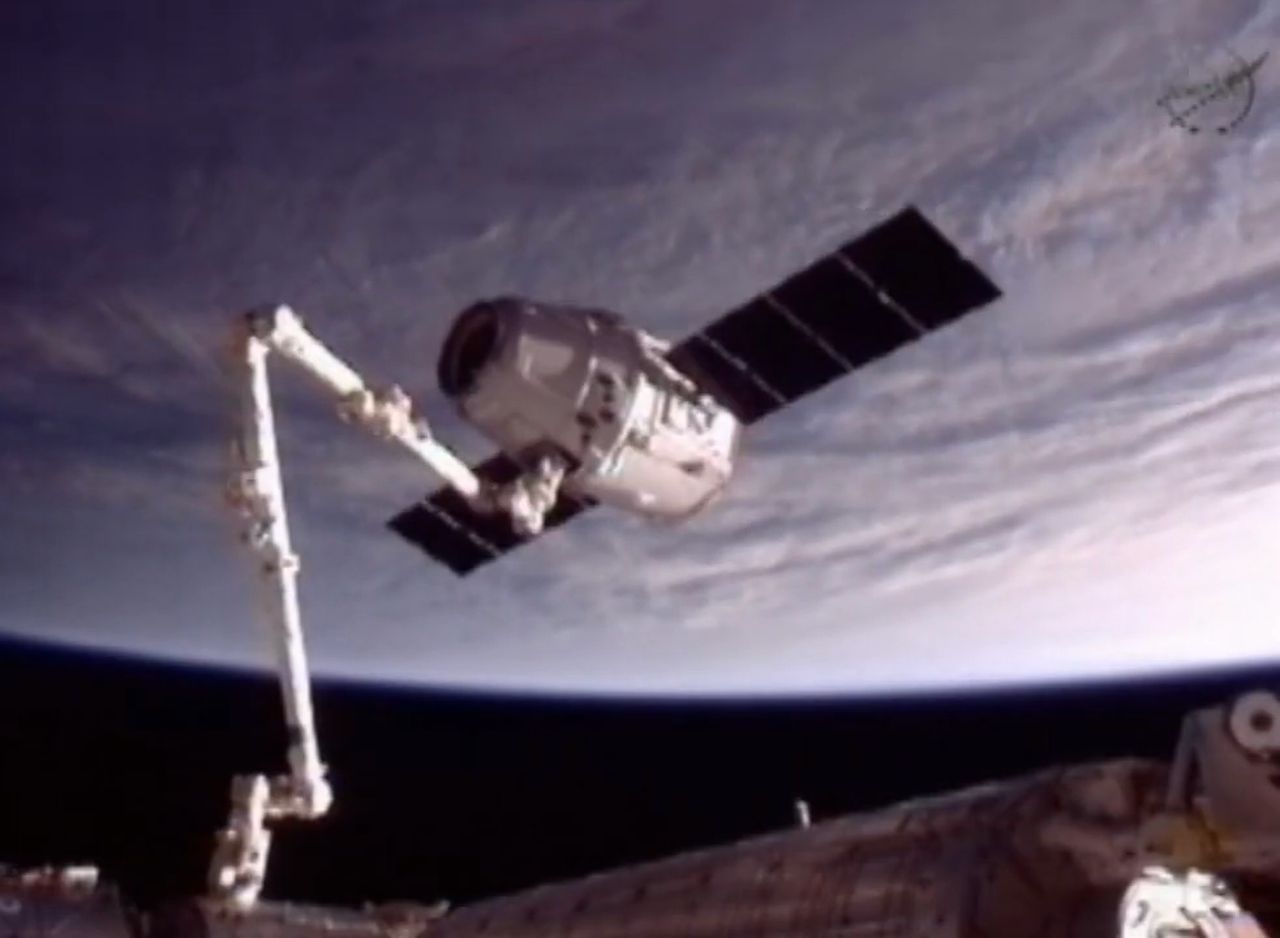
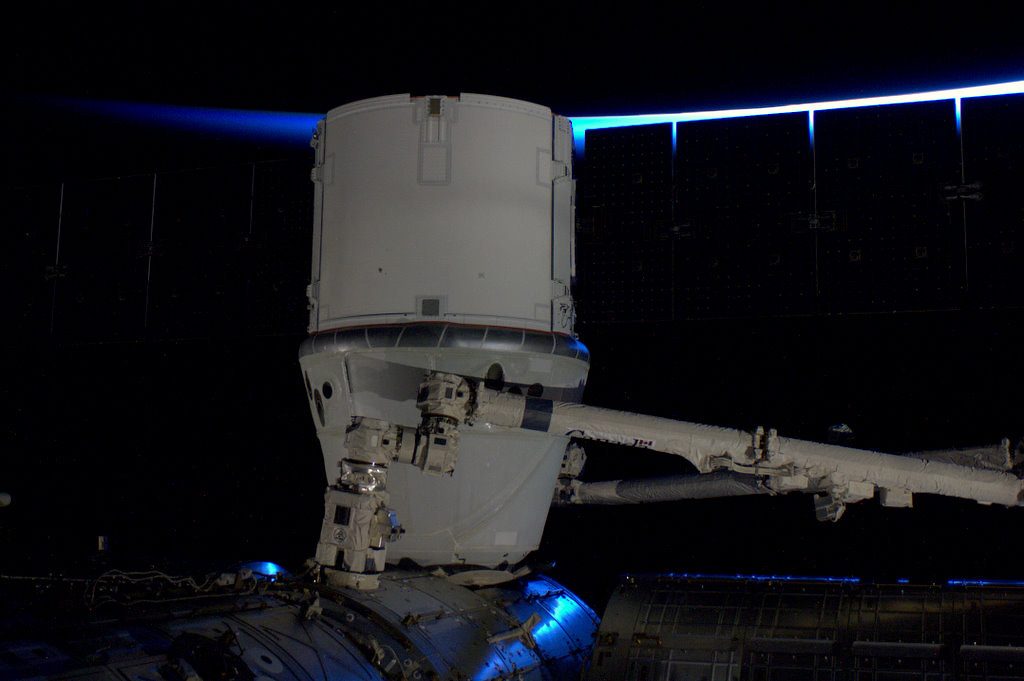
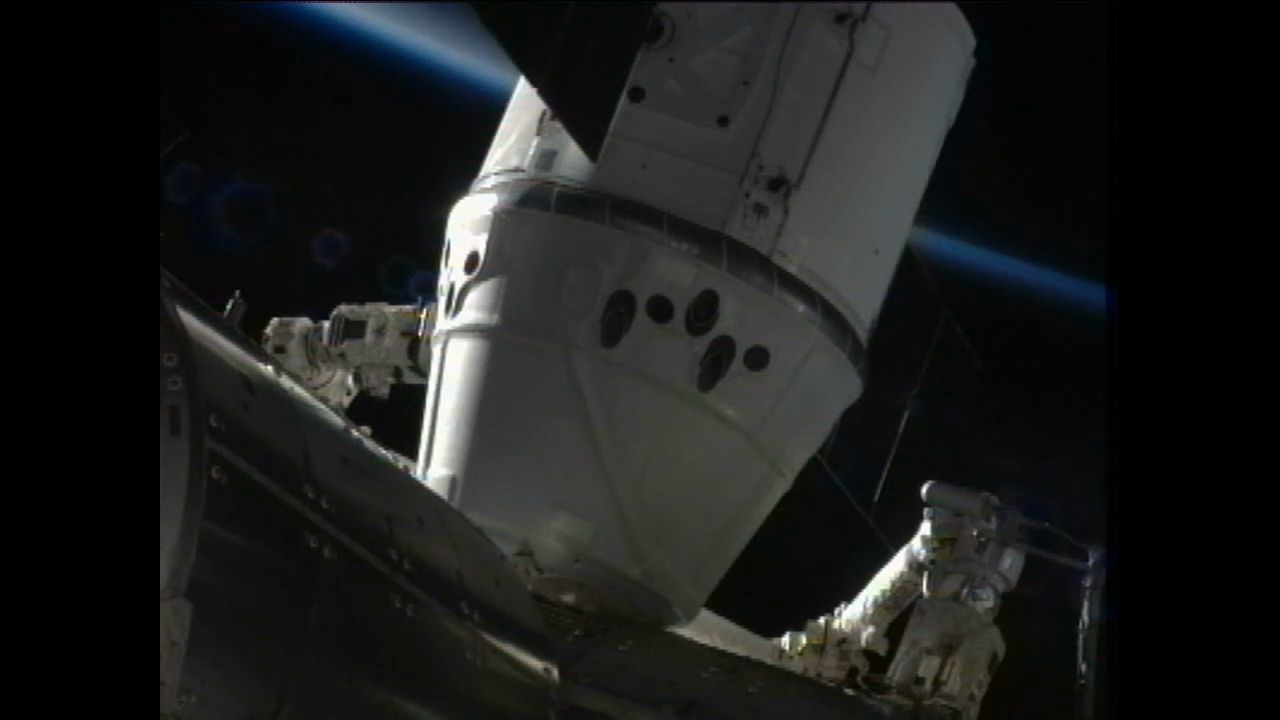
Dragon on the arm, about an hour before the bolts were driven. NASA’s caption calls it berthed; the camera’s time says otherwise. Camera time 15:01:42 UTC.Photo: NASA, ISS031-E-071547
“And the Dragon is in its lair!” Camera time 15:49:18 UTC.Photo: André Kuipers, ESA/NASA
First-stage capture complete. NASA credits Kuipers with installing the capsule.
NASA’s film of the grapple and berthing.Video: NASA, May 25, 2012. Watch it on YouTube
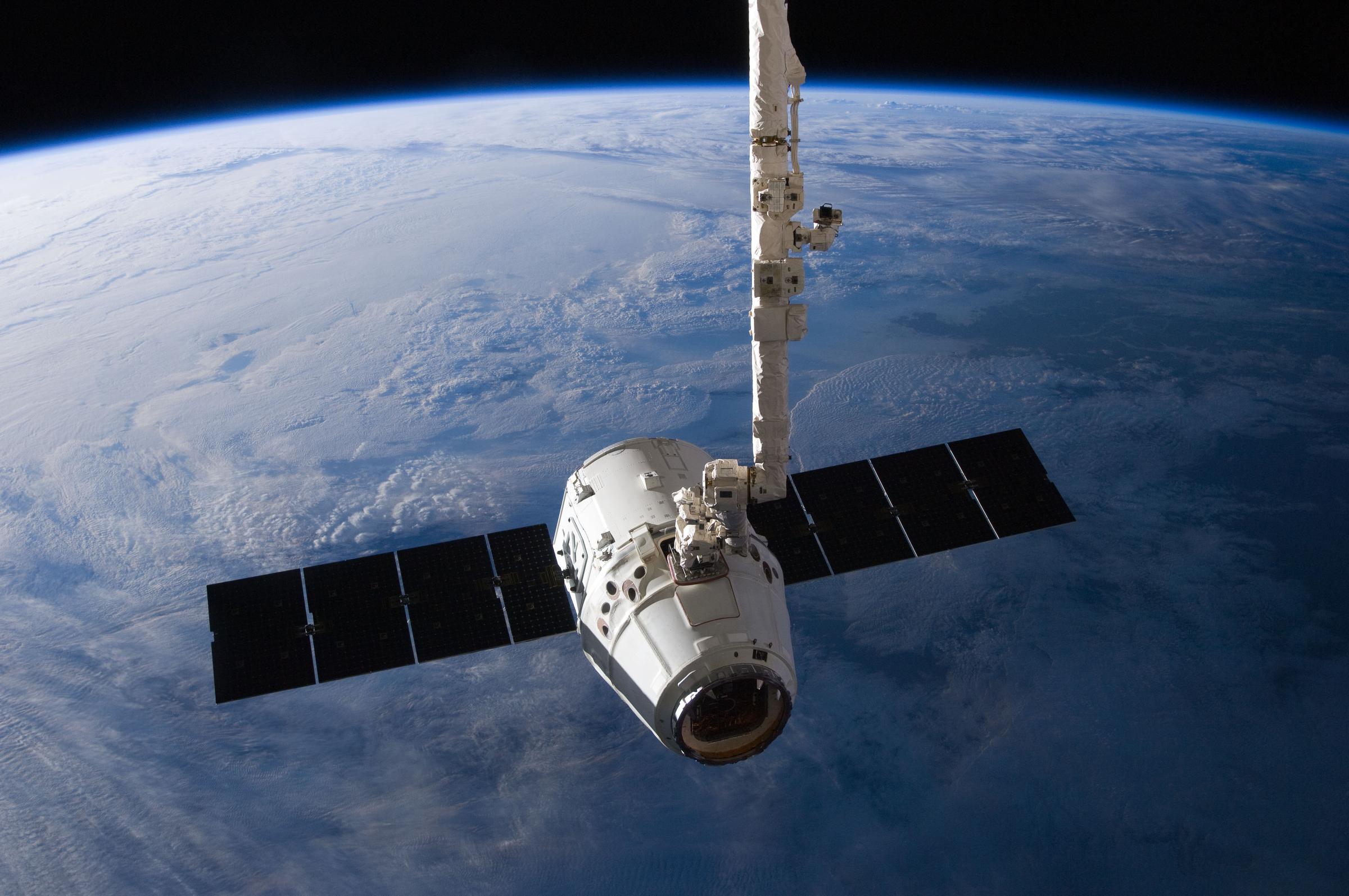
Kuipers moved Dragon to the station on the arm, and Joe Acaba drove the sixteen bolts. Dragon was berthed: attached by the arm, not docked under its own power. It had flown 3 days, 8 hours and 18 minutes.
“When Dragon was safely attached to the robotic arm I flew it slowly to the ISS and docked it to the bottom of Node-2, also known as Harmony.”
André Kuipers, ESA astronaut. his blog, May 27, 2012.
Explorist’s noteThe arm moved Dragon to the Earth-facing port on the Harmony module. First-stage capture came at 15:52 UTC; all 16 bolts were driven at 16:02.
21
May 25
10:00 a.m. Hawthorne
17:00 UTC
“Elon! Elon! Elon!”
The news conference after berthing.Video: NASA, May 25, 2012. Watch it on YouTube
Spaceflight Now, 17:22 UTC; CBS NewsMay 25, 2012
Musk: “There’s so much that could have gone wrong, and it went right. We were able to overcome some last-minute issues with some fast thinking at NASA mission control and SpaceX mission control, and we got it there.”
“There were definitely some close moments where we potentially could have called an abort … in particular narrowing the field of view of the LIDAR.”
Musk spoke in front of the whole company, beside the Dragon that had flown in 2010. He said there had been close moments, and named the fix. The crowd chanted his name. Then the Dragon team went to the beach.
Several hundred bottles of champagne lined up outside mission control. The crowd chanted “Elon! Elon! Elon!” Afterward the Dragon team, awake for days, went to a Swiss restaurant on the Venice Beach boardwalk.
Berger, Reentry, ch. 5, pp. 125 to 126
“I’d been digesting my guts. And then I am drinking champagne at six in the morning.”
Gwynne Shotwell, president. to Ashlee Vance, Elon Musk, ch. 9, 2015.
“Pouring champagne at like four in the morning, and I hadn’t showered.”
Gwynne Shotwell, president. NASA oral history, p. 14, 2013.
Capture was at 6:56 a.m.
22
May 26
2:53 a.m. Hawthorne
09:53 UTC · T+04 02:08
The hatch.
Harmony-side hatch already open. Pressure equalizing. Crew nearly two hours ahead of plan.
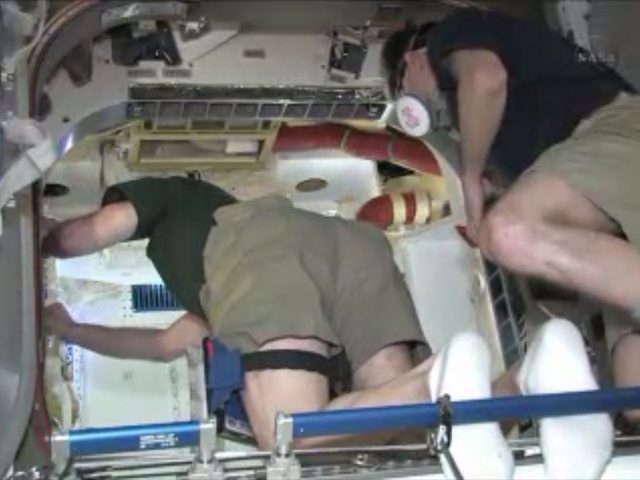
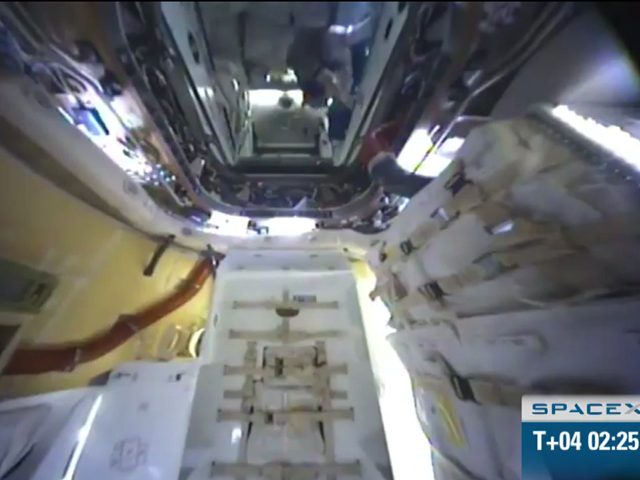
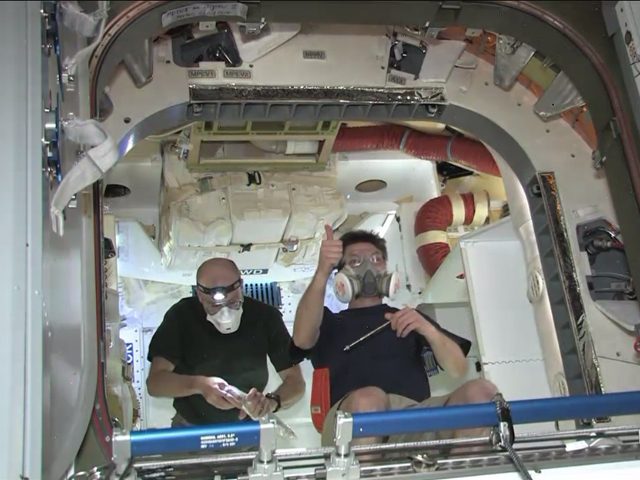
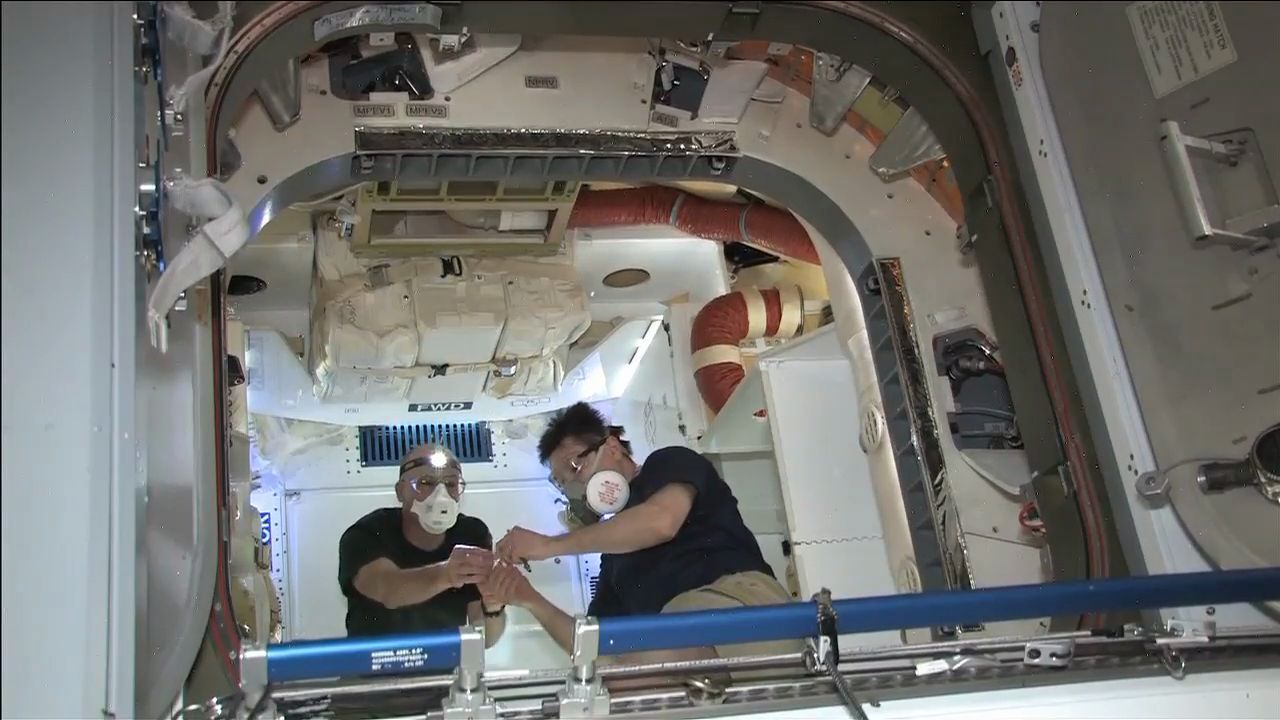
Pettit and Kononenko go in, in masks.Image: SpaceX, update of May 28, 2012SpaceX’s clock in the corner reads T+04 02:25.Image: SpaceX, update of May 28, 2012Inside Dragon.Image: SpaceX, update of May 28, 2012
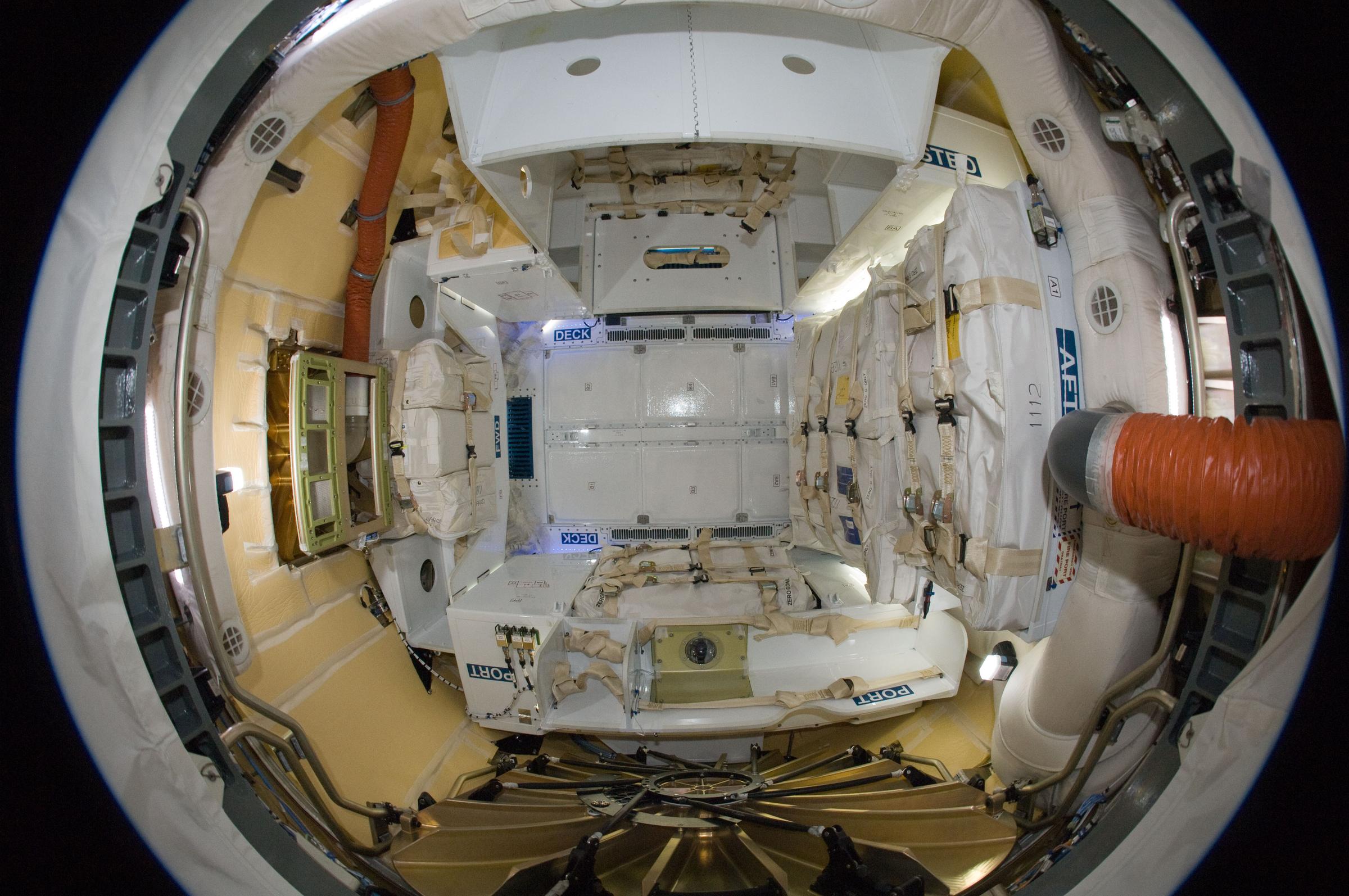
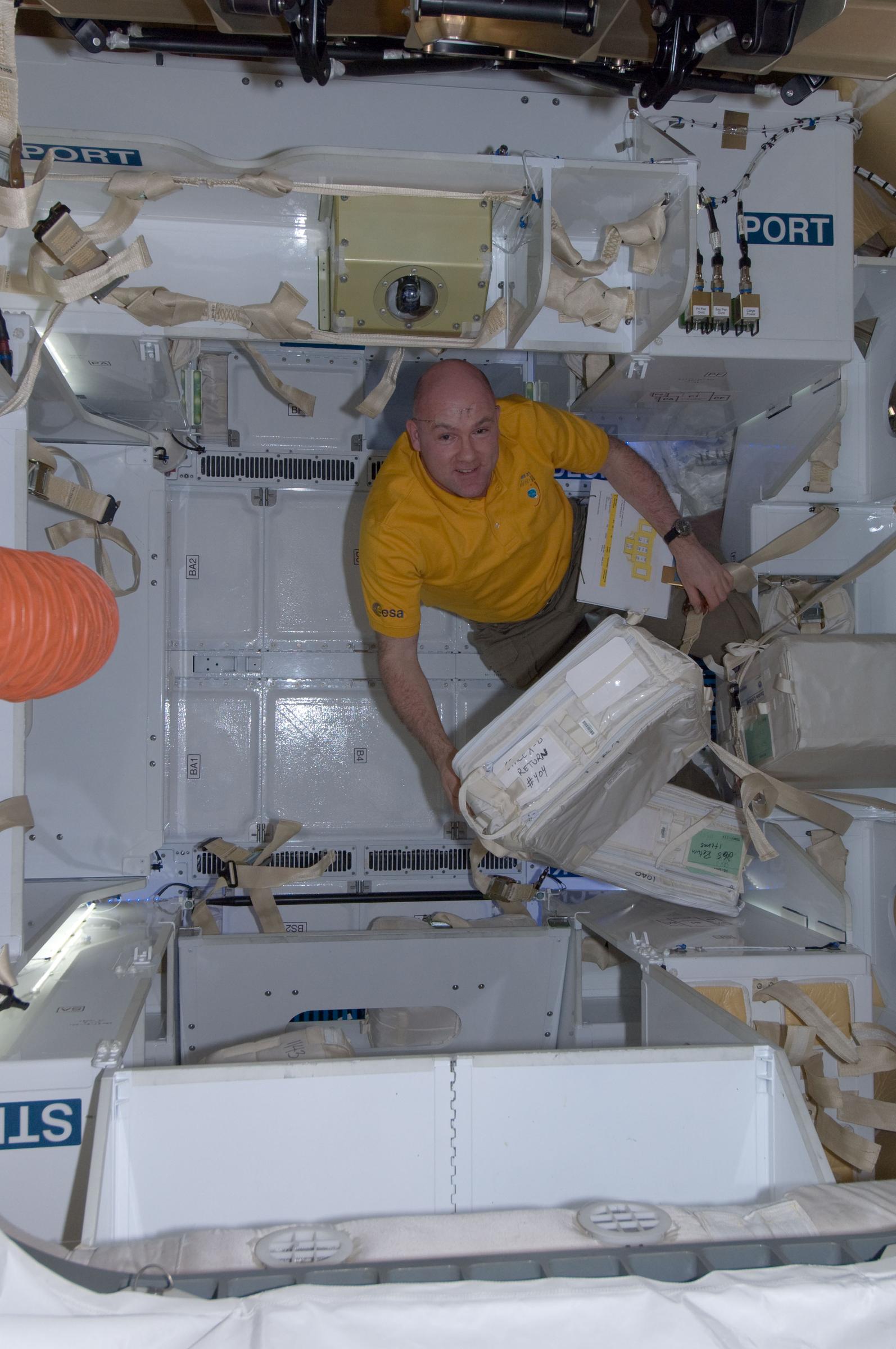
The next morning Pettit opened the hatch, nearly two hours ahead of plan, and floated in with Oleg Kononenko. Dragon smelled like a new car, he said. By Monday the crew had emptied it and packed it with cargo for Earth.
NASA’s film of the hatch opening.Video: NASA, May 26, 2012. Watch it on YouTube
Spaceflight Now, 10:14 UTC; Space.comMay 26, 2012
Don Pettit: “…the smell inside smells like a brand new car.”
“This is sort of the equivalent of the golden spike.”
Dragon, unbolted, on the arm. Camera time 09:11:50 UTC.Photo: NASA, ISS031-E-079326, taken by André Kuipers, ESA
Dragon on the arm, twenty minutes before release. Kuipers titled it “Dragon smoothly undocked, moved out, released and on its way home.” Camera time 09:27:41 UTC.Photo: André Kuipers, ESA/NASA
10 m
RELEASED by the arm. Pettit at the cupola controls. Over the Southern Ocean southeast of Africa.
NASA’s film of the departure.Video: NASA Johnson, May 31, 2012. Watch it on YouTube
The arm unbolted Dragon, carried it ten meters out, and let go at 2:49 a.m. Hawthorne time. Three short burns took it out of the station’s 200-meter sphere.
24
May 31
7:51 to 8:42 a.m. Hawthorne
14:51 to 15:42 UTC · T+09 07:57
Splashdown.
DEORBIT BURN begins over the Indian Ocean. 9 min 50 s planned.
NASA’s film of the splashdown.Video: NASA, May 31, 2012. Watch it on YouTube
SpaceX press releaseMay 31, 2012
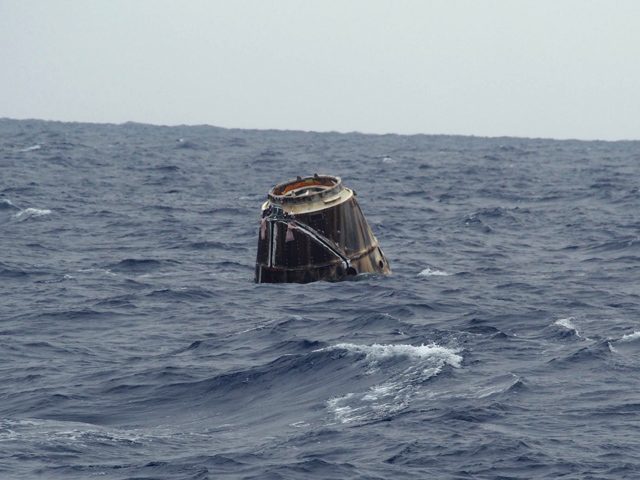
Dragon in the Pacific.Image: SpaceX, update of May 31, 2012
Dragon Spacecraft Safely Completes Historic Mission to the Space Station
This morning, at approximately 8:42 AM Pacific/11:42 AM Eastern, Space Exploration Technologies (SpaceX) completed its historic mission when the Dragon spacecraft splashed down safely in the Pacific.
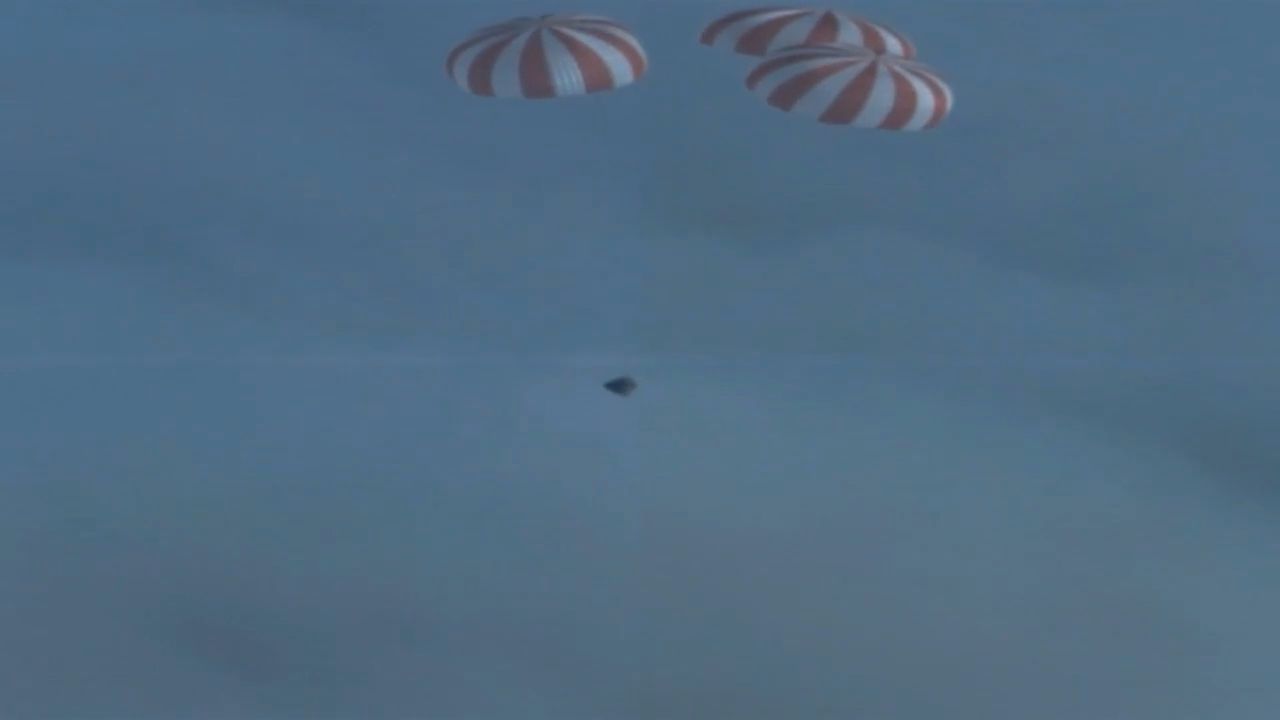
Dragon came down under three parachutes, about 560 miles west of Baja California, 9 days and 8 hours after launch. NASA’s cargo manager told Musk: “We became your customer today.”
Spaceflight NowMay 31, 2012
Musk, 8:49 a.m. Hawthorne: “Splashdown successful!! Sending fast boat to Dragon lat/long provided by P3 tracking planes.”
Musk, that afternoon: “In baseball terminology, this would be a grand slam.”
Alan Lindenmoyer, NASA’s commercial cargo manager: “We became your customer today.”