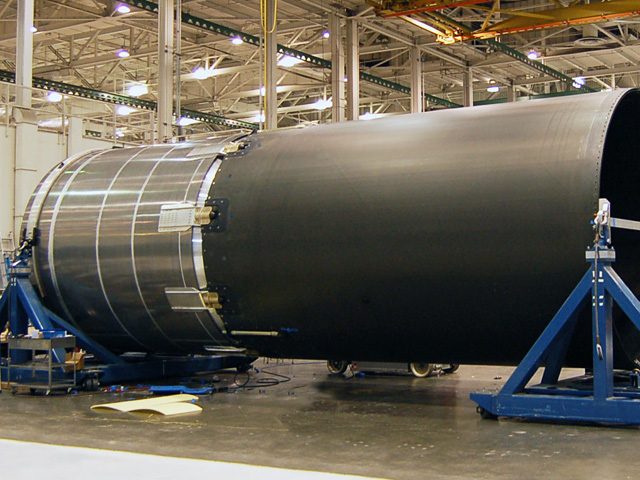
Despite the holiday, there were people working around the clock over the weekend. Our F9 1st stage skirt (shown below) is being shipped to Texas tonight.
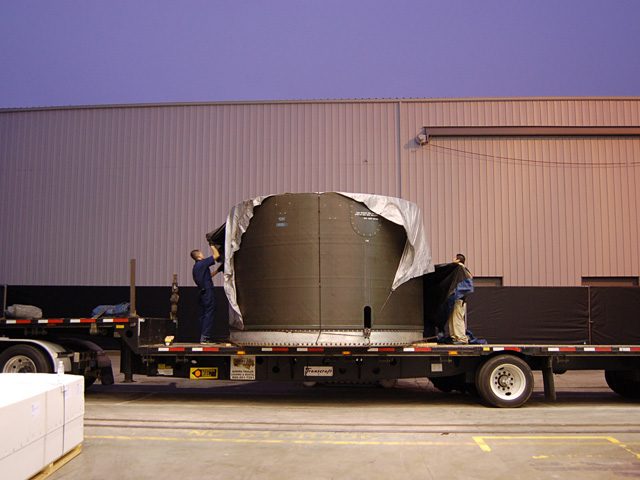
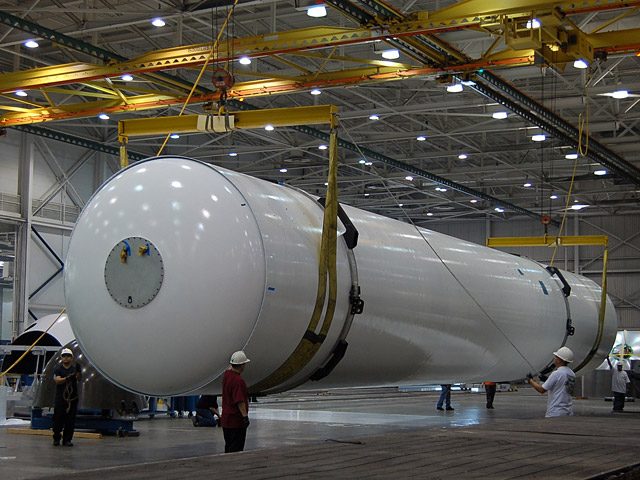
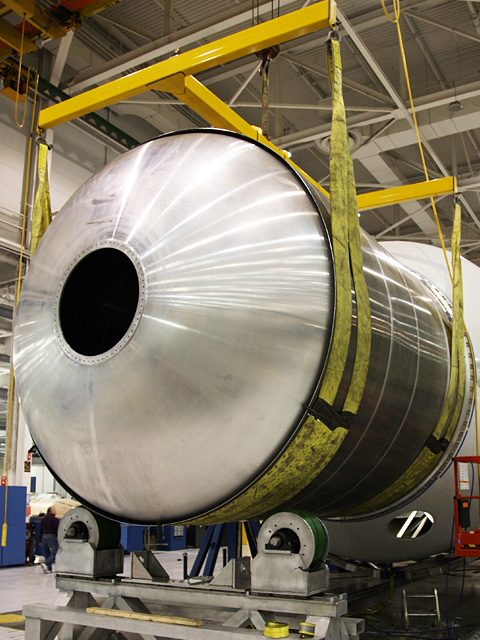
Today we used our overhead cranes to load the F9 first stage tank onto the shipping cradles. Nine SpaceX Merlin engines power the Falcon 9 first stage, with 95,000 lbs-f sea level thrust per engine for a total thrust on liftoff of 855,000 lbs-f.
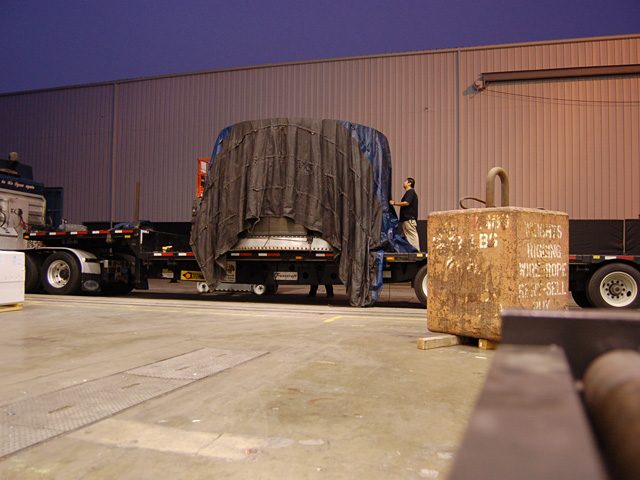
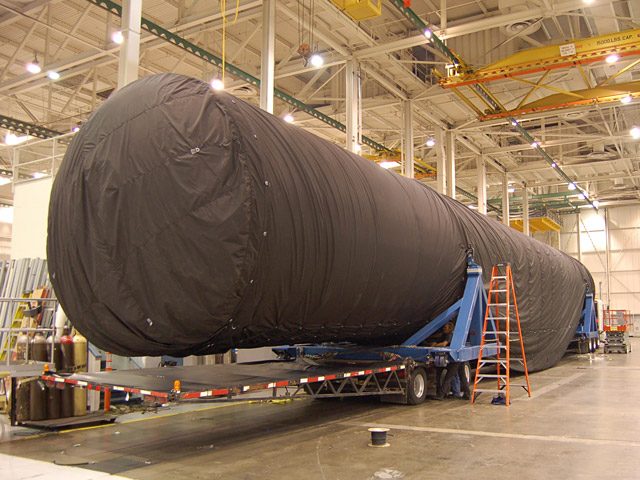
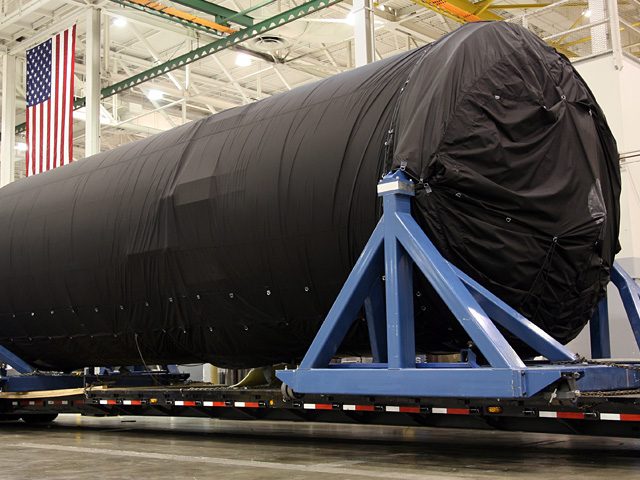
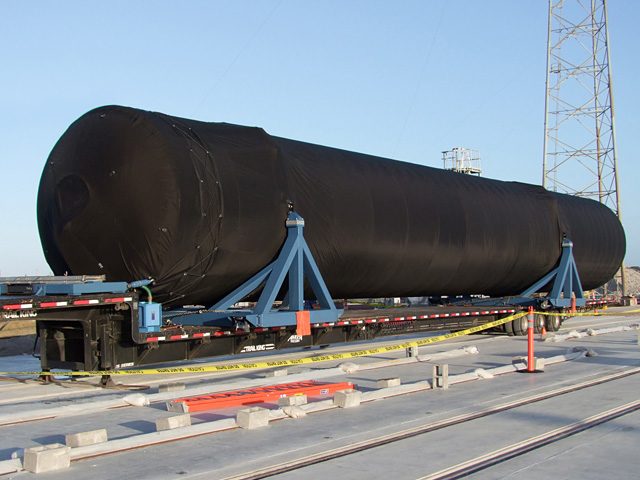
At 87 feet long, the first stage tank will travel by flatbed truck on Thursday to arrive at the Cape in mid-December. In preparation for the trip, we wrapped the F9 1st stage tank with a custom fit tarp to protect it on the road. Once it arrives at the Cape, we will integrate the 1st stage tank with the engine assembly, which includes the F9 skirt, truss, prop lines and engines.
Following our successful nine-engine firing, we were scheduled to begin disassembling the engine on Wednesday, December 3rd around 5 a.m. CST, but high winds prevented our team from climbing the vertical test stand (over 100ft tall) to begin the project. However, the winds calmed down on Thursday and we removed both the tank and engine assembly.
The thrust structure with nine Merlin engines descend by crane from the big vertical test stand. (The engine exhaust nozzles were removed and brought down separately.) These nine Merlin engines performed the recent mission-duration firing that lasted nearly three minutes, and we’re now sending the entire assembly to the Cape for integration onto the Falcon 9 first stage flight tank hardware.
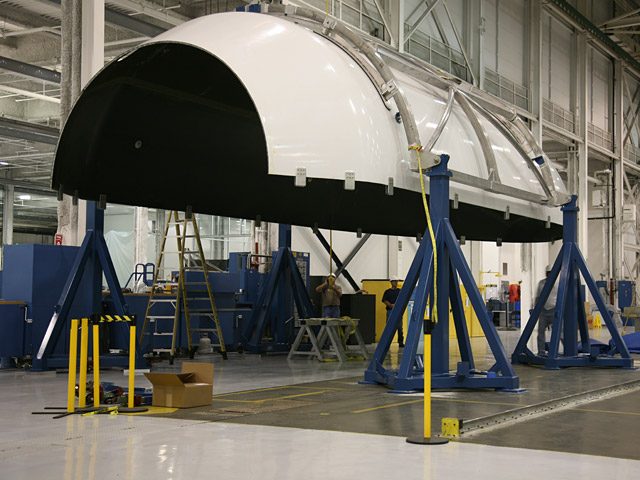
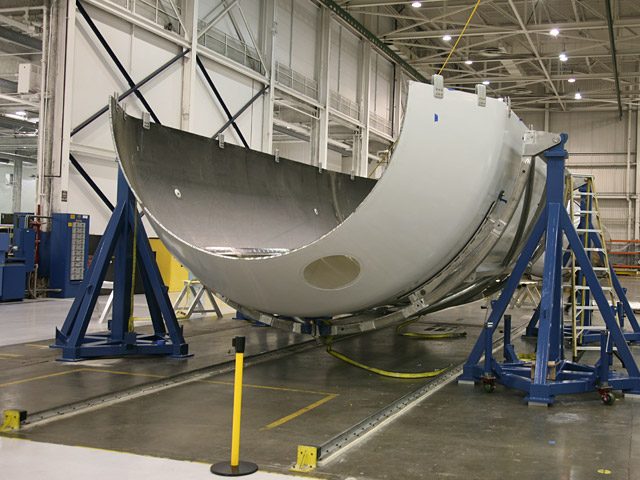
This afternoon, we rotated the first half of the F9 payload fairing in order to bring in the second fairing half and mate it to the first. At a diameter of 5.2m, the F9 payload fairing is capable of housing large payloads for delivery to both Low Earth Orbit (LEO) and Geostationary Transfer Orbit (GTO). Once joined, we will test-fit the complete fairing to the second stage and then both structures will head to the Cape.
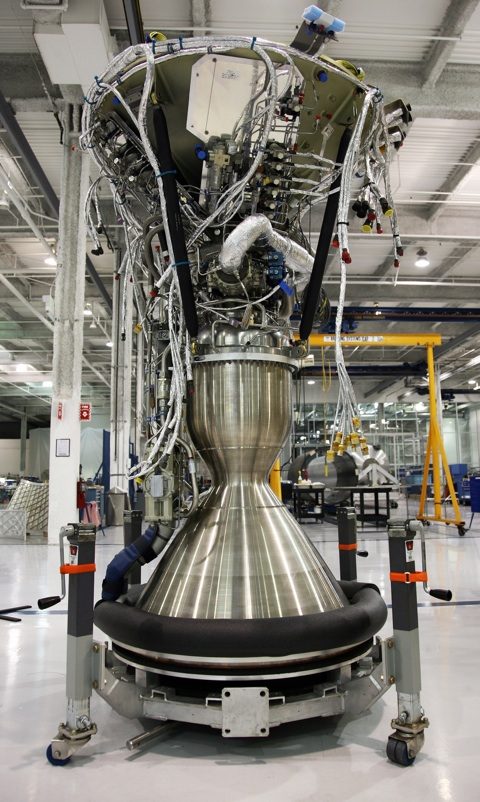
The third variant of our Merlin engine, the Merlin Vacuum, powers the Falcon 9 second stage to orbit. The base of the regeneratively cooled combustion chamber and exhaust nozzle, shown here, attaches to an even larger expansion nozzle for maximizing performance in the vacuum of space. We will ship this flight hardware out to the Cape for integration onto the Falcon 9 second stage.
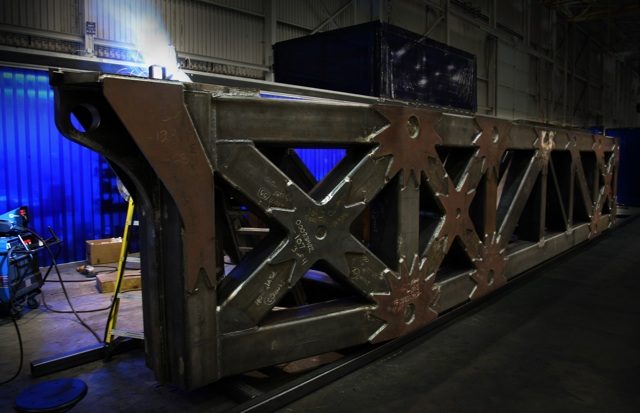
Welders at work on a portion of the giant launch mount. Fabricated completely in-house, this structure will help support the Falcon 9 on the launch pad at Complex 40.
Technicians move a tank dome onto the circumferential stir welding system to begin assembly of the Falcon 9 second stage tank. Constructed in the same manner as the first stage, and using similar domes and barrel sections, the second stage tank measures about 17 feet long, compared to the 87 foot length of first stage tank.
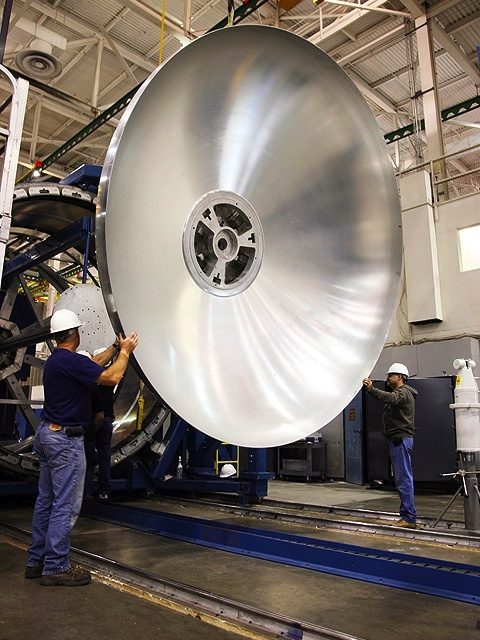
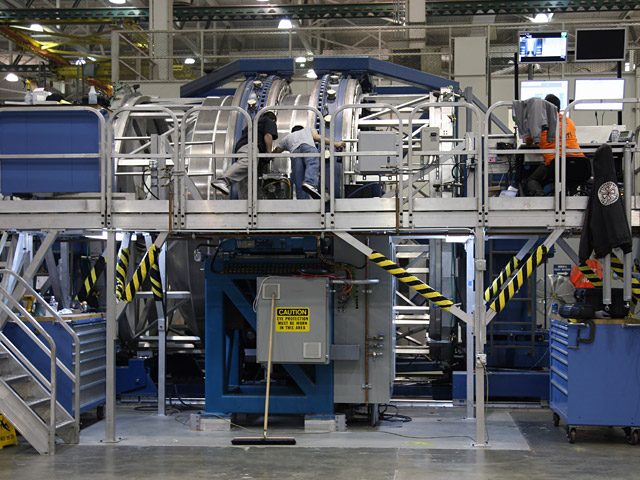
Below is a recent pic of us joining the barrel sections of the F9 second stage using the circumferential friction stir welding (FSW) machine shown below. The FSW joins metal without flames, sparking, inert gasses, or fumes, and produces a far superior weld in aluminum-lithium alloys as compared to traditional methods.
Also received the two side pieces of the launch mount today (shown below). Each piece measures roughly 14 feet long by 7 feet high.
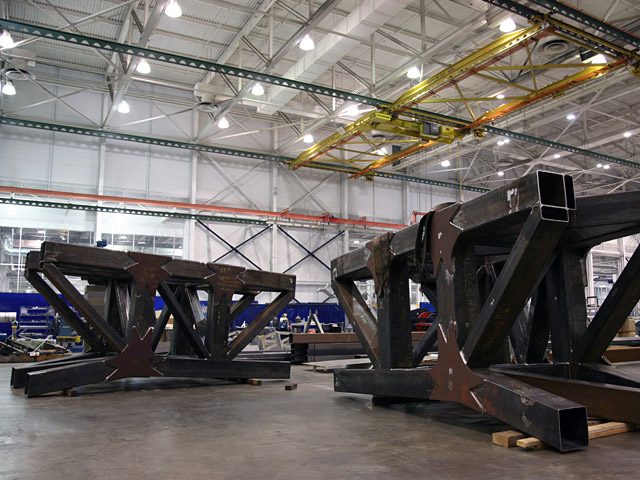
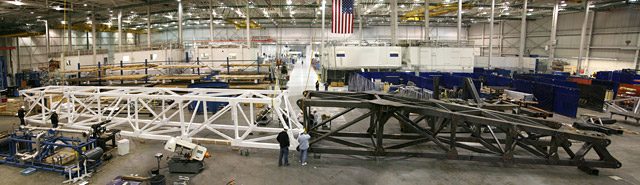
Below you can see the F9 erector just before the aluminum section (in white) was loaded on a flat bed truck headed for the Cape. The erector is built in sections for weight and cost optimization—the main sections pin together for easy setup and break down (if necessary).
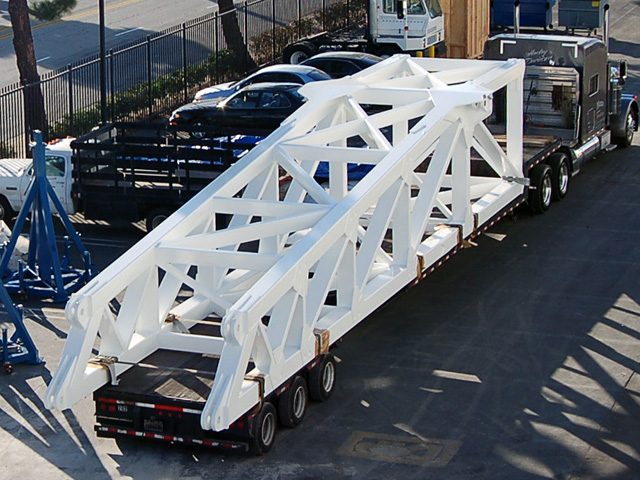
The aluminum section is 74 ft long, weighing 8,000 pounds, and the steel section is 53ft long, weighing 35,000 pounds. The steel section will be painted on Friday; our team of welders worked 24 hours a day for almost 6 weeks straight to complete the steel section.
The picture below shows us test fitting the Falcon 9 second stage tank assembly onto the big 5.2 meter diameter fairing. The F9 second stage is simply a shorter version of the first stage, and uses most of the same tooling, material and manufacturing techniques. The Merlin Vacuum engine assembly will attach to the round opening on the dome. The Merlin Vacuum engine is similar to the Merlin 1C engine used in the first stage, but has a larger vacuum nozzle for efficiency.
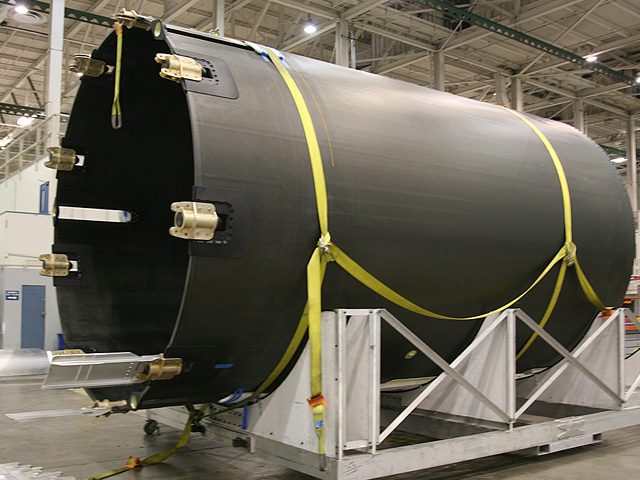
The silver “fittings” at the top of the carbon composite interstage (shown below) attach to the second stage and fit into the nine release system brackets, equally spaced around the top edge. Three long pusher assemblies will be installed into the long slots, also equally spaced around the top edge. After the first stage engines shut down, the pushers impart an all-important impulse to separate the stages before the second stage engine ignites.
Over the weekend, we sandblasted, primed and painted the steel portion of the giant “strongback”, then strapped it to a truck for the ride to Florida. This structure forms the base of the strongback that raises the Falcon 9 to vertical on the pad.
Attached to the second stage, but not visible here, the Merlin Vacuum engine rests within the carbon composite interstage (shown below connected to the shorter second stage). In actual flight, the Merlin Vacuum will have a large expansion nozzle that will nearly fill the interior of the interstage. However, the nozzle will not be used during this first standup at the Cape.
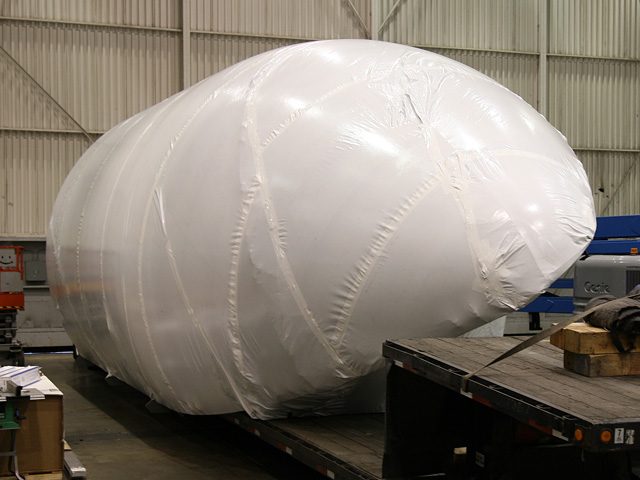
The combined interstage / Merlin Vacuum engine / second stage structure is wrapped and ready for the road. Though only half as long as the Falcon 9 first stage tank, this assembly has the same 12 foot diameter plus the width of the blue cradles, and so must travel as an oversized load. By tomorrow, all Falcon 9 sections and ground support hardware will have left Hawthorne headed for the Cape.
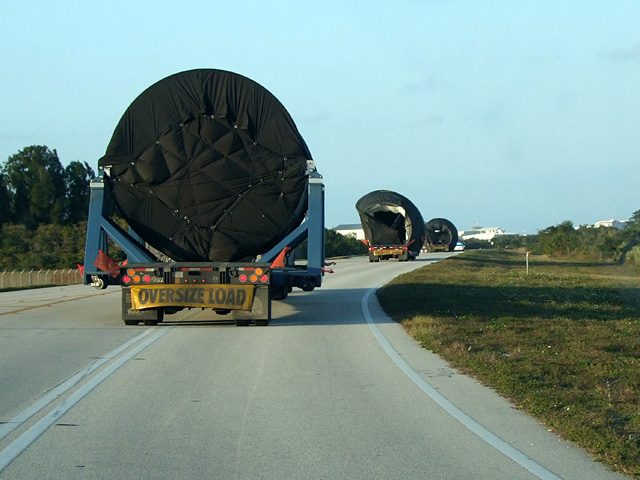
Separated and shrink wrapped for travel, the two halves of the 5.2 meter diameter (17 foot) fairing take to the highway as oversized loads on a pair of flatbed trucks. Even though they’re designed to move at many times the speed of sound and reach the vacuum of space, the wrapping helps keep them clean and safe during their 2,600 mile trip along the Earth’s surface.
The last of the assemblies leaves the Hawthorne headquarters on a rainy day in Los Angeles. In total, we have twelve trucks heading to the Cape with the rocket and supporting parts. All of the oversized loads in the shipment must follow a “daytime only” driving plan, which should get them to the Cape in about a week and a half.
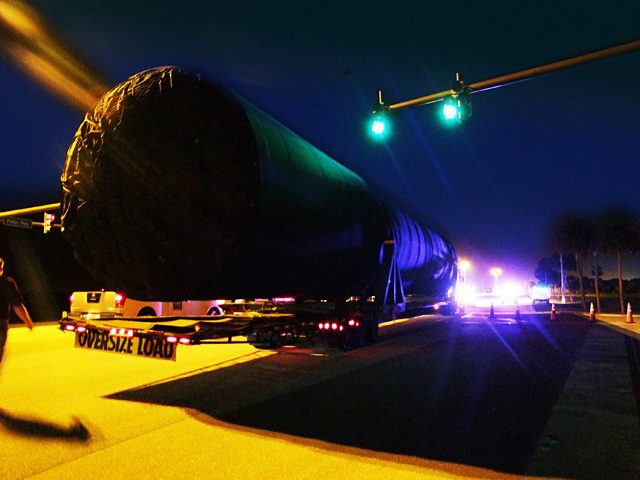
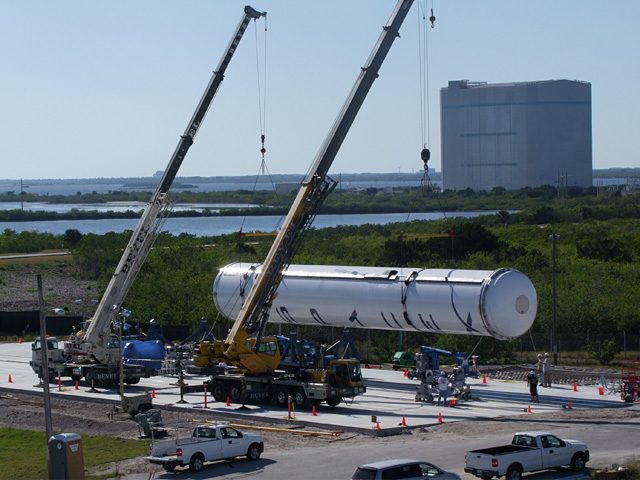
The Falcon 9 first stage flight propellant tank arrived Tuesday night at Cape Canaveral, Florida, after its cross-country journey from Los Angeles. The tank measures 87 feet long and 12 feet in diameter — approximately the size of a 737 fuselage. As of December 16th, all Falcon 9 sections and ground support hardware had left Hawthorne and were on their way to the Cape.
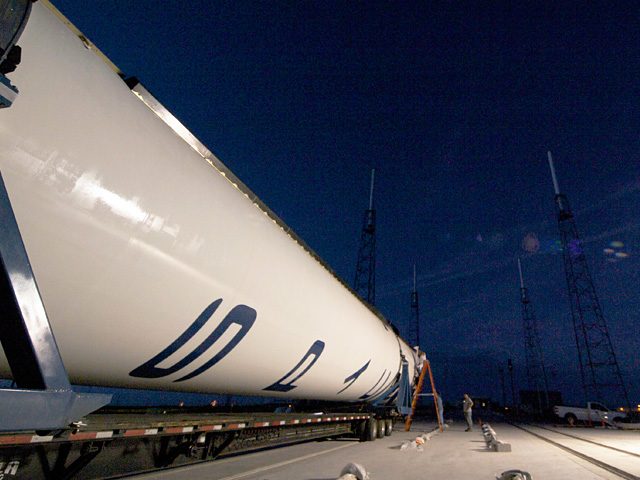
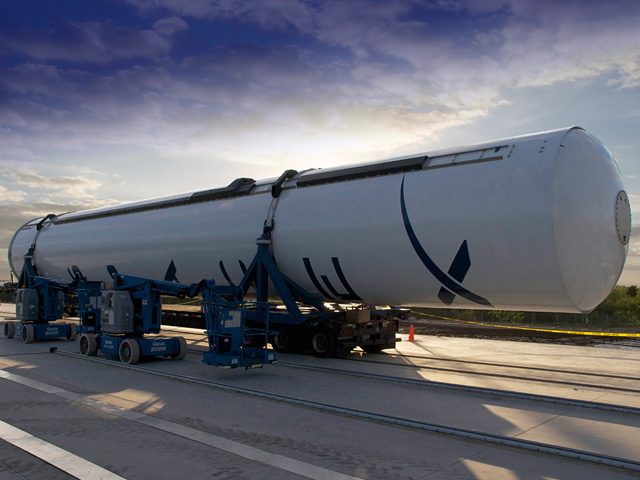
Today we applied the large SpaceX logo to the side of the first stage flight tank. In the background, you can see the four lightning towers, positioned around the launch mount area, which will provide protection from Florida’s frequent lightning storms.
A portion of the giant launch mount arrives and is moved into place by crane. Barring unforeseen road delays, all parts for the rocket and mount should arrive by the New Year.
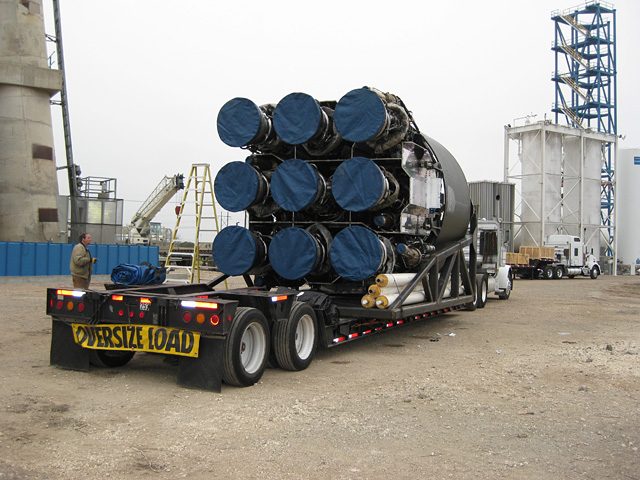
Scheduled to arrive Monday at the Cape, the Falcon 9 engine assembly is shown below (minus the heat shield panels) as it was being prepped in Texas last week. Prior to shipping, the assembly was covered with a protective tarp and tie downs to protect it on the journey.
Yesterday we lifted the first stage off the shipping truck and lowered it onto the integration assemblies (shown below). With all of the F9 hardware currently at or on its way to the Cape, we are on track for a fully integrated launch vehicle by year’s end.
Barring any unforeseen delays, the second stage and fairing are expected to arrive at the Cape by December 28th and will be mated on December 31st, just in time for the New Year.
The erector is also on track towards operational status in early January, with the base assembly to be aligned and tacked by December 26th and welding to be complete early in the New Year. Hold down assemblies are expected to arrive shortly after the New Year and with our ground control system at SLC-40 currently operational, it’s just a matter of days before F9 is vertical at the Cape.
Big news today was SpaceX winning the NASA CRS contract for an initial $1.6 billion, representing 12 flights to the International Space Station starting in 2010. The team here worked extremely hard to make this happen and we couldn’t be more excited about not only our future, but the future of commercial spaceflight in the US and the impact this will have on our long-term efforts towards human space exploration.
Today was also a day of great progress at the Cape. The second stage arrived via flat bed truck (see below), along with both halves of the Falcon 9 fairing. In addition, our Falcon 9 engine assembly arrived as scheduled from Texas yesterday. Most major structures are now on site and being prepped for integration by December 31st.